Armored Core VI: Fires Of Rubicon
FromSoftware's mech combat masterclass rewards players who treat their garage like a loadout puzzle, and punishes anyone who coasts on reflex alone.
GamerScout Verdict
Essential for action players who want a tight, build-driven mech game, skip if open-world exploration or a relaxed difficulty curve are non-negotiable.
Compare Prices(0 stores)
Loading prices...
We may earn a commission when you buy games through links on this page — at no extra cost to you. It never affects our rankings or verdicts.
Screenshots & Media
About Armored Core VI: Fires Of Rubicon
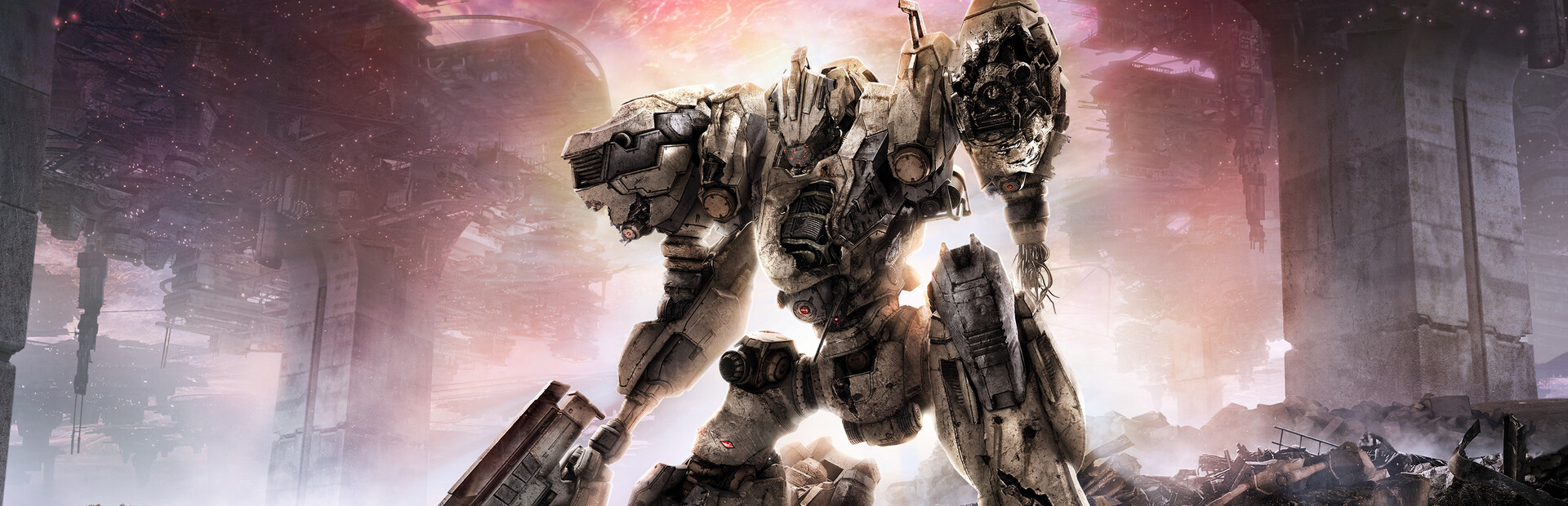
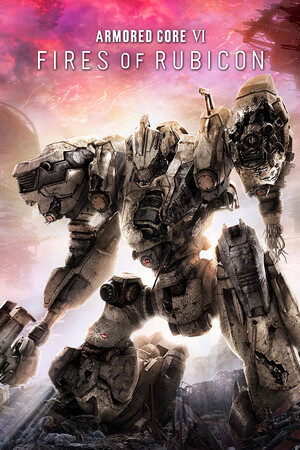
My first hour with Armored Core VI felt like being handed a fighter jet with no runway and told to figure it out. That initial friction is the point. This is a mission-based, linear mech action game built around a tight loop: deploy on sorties, earn COAM currency based on combat performance, return to the garage, rebuild, repeat. It sounds simple on paper, and then Balteus shows up at the end of Chapter One and reminds you that this is still FromSoftware. The combat is the headline, and it earns that billing. Your mech, configured from a deep pool of arms, legs, generators, boosters, and up to four weapon slots, can be a nimble Reverse Joint skirmisher, a hovering Tetrapod artillery platform, or a Tank-legged bruiser that soaks punishment and dishes it back. Heavier builds carry bigger guns but drain the energy system faster, meaning you boost less and dodge more sparingly. Lighter frames zip around at speeds that turn firefights into three-dimensional bullet-hell skirmishes. The Attitude Control System (ACS) stagger mechanic ties all of this together: sustained damage fills an enemy's ACS bar, and breaking it opens a window for direct, multiplied damage. Learning to read those windows during boss fights, while managing your own stability bar, your energy gauge, and four different weapons simultaneously, is where the game gets genuinely exceptional. The mission structure is linear and deliberate, refreshingly free of open-world padding. Most sorties run ten to twenty minutes, cannon-fodder enemies clear quickly, and the real tests are the bosses and rival AC duels that punctuate each chapter. The Arena mode lets you fight named AI pilots for COAM and OS Chips, permanent upgrades that unlock abilities like quick-turn or shoulder-mounted hand weapons, and the online NEST mode opens up after Chapter Two for 1v1 and 3v3 PvP matches. The mid-mission reassembly feature deserves a specific mention: if you hit a checkpoint and realize your loadout is wrong for the boss ahead, you can swap builds on the spot without restarting, which is a genuinely clever quality-of-life call. NG+ and NG++ add new missions, alternate story branches, and exclusive boss encounters, so the roughly fifteen-to-twenty-hour first run is not the ceiling. The honest weaknesses are worth naming. The story is functional dystopian sci-fi, corporations fighting over Coral, a mysterious energy source, on the frontier planet Rubicon 3, and it does enough with the supporting cast (particularly a pilot named Rusty, who became something of a fan favorite post-launch) to carry its weight. But the narrative rarely surprises, and the level design leans heavily on compact, restricted arenas with invisible walls that occasionally frustrate during combat. The online component, while technically solid with good netcode, is slim on modes. Players who came expecting Elden Ring's sense of discovery in a vast world will find something much more focused and deliberately old-school in structure. Who is this for? Action game players who enjoy build optimization almost as much as execution. Anyone who has ever wanted to feel like the star of a mecha anime for thirty to fifty hours across multiple playthroughs. Souls veterans looking for something mechanically adjacent but structurally different. It is not for players who need a difficulty slider, open exploration, or a story that leads with drama over atmosphere. Come with patience for the garage and a willingness to lose a few boss fights badly before the loadout clicks, the payoff when it does is one of the better action game highs of the last few years.

Catch-all
Tags
System Requirements
Minimum
- OS
- Windows 10
- Processor
- Intel Core i7-4790K | Intel Core i5-8400 or AMD Ryzen 7 1800X | AMD Ryzen 5 2600
- Memory
- 12 GB RAM
- Graphics
- NVIDIA GeForce GTX 165…
Recommended
- OS
- Windows 10/11
- Processor
- Intel Core i7-7700 | Intel Core i5-10400 or AMD Ryzen 7 2700X | AMD Ryzen 5 3600
- Memory
- 12 GB RAM
- Graphics
- NVIDIA GeForce…
Keep exploring
Community Discussion
Be the first to comment on Armored Core VI: Fires Of Rubicon.
Reviews & Ratings
Game Info
- Developer
- FromSoftware, Inc.
- Publisher
- FromSoftware, Inc., Bandai Namco Entertainment Inc.
- Release Date
- Aug 24, 2023