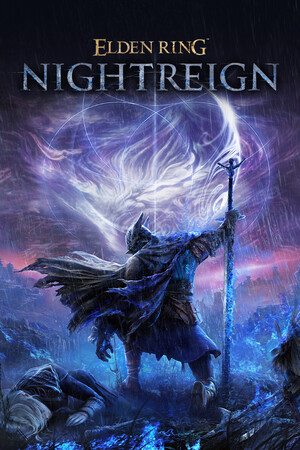
Elden Ring: Nightreign
Forty-five minutes, three Nightfarers, eight Nightlords, and zero time to breathe. Nightreign is FromSoftware's most radical self-reinvention, and it mostly works if you bring two friends.
GamerScout Verdict
Essential with two committed co-op partners; a significantly rougher sell for solo players or those expecting deep roguelite build variety.
Compare Prices(8 stores)
Every store in this table quotes us in euros, so the EUR figure is the price the seller actually set, not our arithmetic — which is why EUR is also the currency we rank in. We only list an offer here when the store gives us its price in euros, so nothing in this table is a number we invented.
Pick USD, PLN, GBP, CAD or AUD in the header and we convert from EUR at the European Central Bank reference rate — converted amounts are prefixed with ~. Your bank or the store may apply a different rate at checkout. We never hide offers based on where you are: everyone sees this whole table.
We may earn a commission when you buy games through links on this page — at no extra cost to you. It never affects our rankings or verdicts.
Price History
Screenshots & Media
About Elden Ring: Nightreign
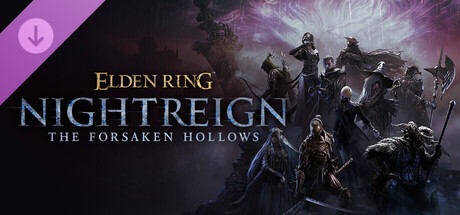
I came into Nightreign expecting to hate it. Stripping out character creation, replacing careful stat allocation with auto-leveling, and wrapping Elden Ring's measured world in a Fortnite-style shrinking circle felt, on paper, like everything I love about FromSoftware getting fed into a wood chipper. Somewhere around hour twelve, something clicked. The procedurally generated island of Limveld stopped feeling like a heist gone wrong and started feeling like a game I could actually master, one where knowing the geometry of a crypt or the exact aggro range of a roaming field boss became the competitive edge that separated a clean run from a wipe. The core loop is ruthlessly efficient: three in-game days, each capped by a major boss fight, and a shrinking circle of hostile night that pushes you relentlessly toward the action. You pick one of eight preset Nightfarer classes, each with a fixed starting loadout, a passive ability, an active skill, and an ultimate. The Guardian plays exactly how a big-shield type should; the Ironeye's ranged kit lets her revive allies from across the map; the Raider swings a signature hammer with the subtlety of a freight train. Stat allocation is gone, replaced by automatic level-ups at Sites of Grace and a relic system that drops buff items from bosses and chests. Relics range from genuinely build-defining power to junk you immediately sell for murk, and that variance is both the system's charm and its chief frustration. A run where you piece together an elemental damage stack feels brilliant. A run where RNG gives you four minor health-regen scraps does not. What Nightreign does better than almost anything FromSoftware has shipped before is force you out of your comfort zone with class selection. I am, historically, a coward who rebuilds the same shield-and-longsword character across every Souls title. Nightreign's preset loadouts make that impossible. I spent sessions two-handing weapons I would never normally touch, running caster builds I would have dismissed as fragile, and finding out mid-boss that a Recluse in the right hands is terrifying. The class variety holds up well past hour forty because each Nightfarer has meaningfully different team roles, and group synergy genuinely shifts the difficulty ceiling. The December DLC, The Forsaken Hollows, added two more Nightfarers (Undertaker and Scholar), a new shifting-earth map event, and some deeply nostalgic cameo bosses pulled from across FromSoftware's catalogue, which is the kind of post-launch content this game needed. The elephant in the room is solo play, and I will not soften this: Nightreign was not built for it. Enemies and Nightlord bosses are tuned around three players drawing aggro, and the death penalty, losing a purchased level on a full wipe, stings disproportionately when you have no teammates to revive you. The shrinking circle that feels exhilarating in co-op becomes a time bomb that punishes careful exploration when you are alone. If you do not have two reasonably committed Elden Ring friends, the experience degrades fast. Matchmaking with randoms is workable but volatile, and the absence of crossplay between platforms remains a genuine annoyance in 2025. The roguelite bones are also thinner than genre veterans might expect; run-to-run variety comes more from Limveld's procedural geography and rotating field bosses than from any deep build-crafting system. Fans of Hades-style escalating power curves will notice the shallow end. None of that changes the fact that a well-coordinated three-player expedition, one where you coordinate routes on the fly, chain ultimates into a Nightlord phase transition, and just barely drag yourselves to a win with one flask left, is one of the best multiplayer highs available on PC right now. Nightreign is a focused, sometimes brutal experiment that earns most of its 82% Steam rating. It is not a replacement for the base game's open-world depth or narrative texture; the lore whispers through environmental detail as always, but it rewards speed more than contemplation. Go in with a group, accept that the roguelite layer is more structure than substance, and you will find something genuinely exciting under the time pressure.

RPGs
Tags
System Requirements
Minimum
- OS
- Windows 10
- Processor
- Intel Core i5-10600 / AMD RYZEN 5 5500
- Memory
- 12 GB RAM
- Graphics
- NVIDIA GeForce GTX 1060 3GB / AMD Radeon RX 580 4GB
- DirectX
- Ve…
Recommended
- OS
- Windows 11
- Processor
- Intel Core i5-11500 / AMD RYZEN 5 5600
- Memory
- 16 GB RAM
- Graphics
- NVIDIA GeForce GTX 1070 8GB / AMD Radeon RX Vega-56 8GB Dir…
Keep exploring
Community Discussion
Be the first to comment on Elden Ring: Nightreign.
Reviews & Ratings
Game Info
- Developer
- FromSoftware, Inc.
- Publisher
- FromSoftware, Inc., Bandai Namco Entertainment
- Release Date
- May 29, 2025