
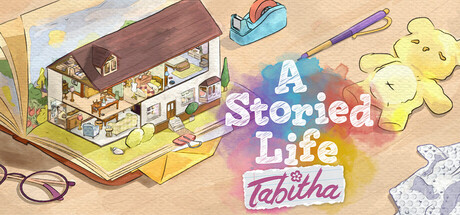
A Storied Life: Tabitha
Sorting through a dead woman's cottage is the whole game, and somehow that's enough - if you commit to one of her many possible lives instead of trying to keep a little of everything.
GamerScout Verdict
Worth it for the first playthrough's atmosphere alone; approach the memoir like a puzzle with a correct answer, not a canvas, and it delivers.
Compare Prices(6 stores)
Every store in this table quotes us in euros, so the EUR figure is the price the seller actually set, not our arithmetic — which is why EUR is also the currency we rank in. We only list an offer here when the store gives us its price in euros, so nothing in this table is a number we invented.
Pick USD, PLN, GBP, CAD or AUD in the header and we convert from EUR at the European Central Bank reference rate — converted amounts are prefixed with ~. Your bank or the store may apply a different rate at checkout. We never hide offers based on where you are: everyone sees this whole table.
We may earn a commission when you buy games through links on this page — at no extra cost to you. It never affects our rankings or verdicts.
Price History
Screenshots & Media
About A Storied Life: Tabitha
My first hour with A Storied Life: Tabitha felt like discovering a beautifully wrapped gift I hadn't earned yet. You arrive at Tabitha Kettlewell's British cottage to clear it out, and from the first room the hand-drawn spaces pull you in completely. Cupboard doors creak. Lifting a rug reveals something forgotten underneath. The sound design has that rare quality of making silence feel inhabited rather than absent. It is the kind of craft I want to press my ear against. The core loop asks you to move room by room, sorting every object into three piles: recycle it, auction it off to fund a holiday, or pack it into your single cardboard box to keep. The box is a grid puzzle - items must be rotated and arranged like soft Tetris pieces, their weight and fragility factored in. Tape reinforces the box to hold heavier loads. Bubble wrap protects breakable china. Vacuum bags compress soft goods. The tactility of it is quiet and satisfying in a way few casual games manage. What you keep is what builds Tabitha's memoir: each saved object unlocks a set of associated words, and after each room you fill in the damaged, water-blurred manuscript in a Mad Libs style. One run might paint her as a loving grandmother. Another reveals a horticultural obsession. Another suggests witchcraft, or fraud, or a decades-long grief that never fully lifted. Here is where the game's honest tension lives. The memoir system works best when you commit hard to a single narrative thread per playthrough - the witch strand, the lover strand, the grieving widow. Items within each theme are gently signposted with matching dot patterns on the box. Follow them faithfully and the memoir produces something coherent, even affecting. Stray from the path, packing one gardening glove and one mourning veil and one witchy candle because all of it feels true to a life, and the resulting prose turns grammatically strange and emotionally inert. The game calls this freedom. Critics and players both noticed it reads more like constraint in disguise. The single-box limit amplifies this: most rooms are full of things you simply cannot bring home, and that scarcity forces a focus the game frames as meaningful choice but which functions more like a required solution. Labelling that a flaw feels reductive, though. Two modes give players an immediate option: Cosy mode applies full weight and fragility rules, while Relaxed mode strips the physics requirements away so the memoir stays central. The daily puzzles, which strip out the story entirely and just ask you to pack efficiently, are a pleasant aside for the spatially-minded. And the endings themselves - several of them, ranging from warmth to quiet devastation - do arrive with genuine weight when a playthrough holds its thread. The first run takes roughly two hours. Seeing all the versions of Tabitha across multiple playthroughs lands somewhere between eight and fifteen hours, depending on patience with chapter repetition, since rooms must be replayed with different selections to unlock new strands. Some players will find that loop compelling. Others will speed through rooms they have already memorised, waiting for the memoir screen. What stays with me is the cottage itself. The cramped kitchen, the cluttered garage with Tabitha's ancient car, the living room wall where the lighter patches of wallpaper mark where frames once hung. Lab42 built a space that earns its quiet sadness through specificity rather than sentiment. It is a small, handmade thing that knows what it is and mostly knows when to stop. I wish the memoir system trusted the player's instincts as much as the art direction trusts the player's eye. It does not, quite. But the hour you spend in that house for the first time, not yet knowing what works and what doesn't, is the kind of hour I play games to find.

Indie & narrative
Tags
System Requirements
Minimum
- OS
- Windows 10
- Memory
- 4 GB RAM
- Storage
- 5 GB available space
- Graphics
- Nvidia GeForce GTX 1050 Ti 4GB or AMD Radeon RX 550 4GB
- Processor
- Intel i3-6100 or AMD Ryzen 3 1200
Recommended
- OS
- Windows 10
- Memory
- 8 GB RAM
- Storage
- 5 GB available space
- Graphics
- Nvidia GeForce GTX 1660 6GB or AMD Radeon RX 5500 8GB
- Processor
- Intel i5-8600K or AMD Ryzen 5 3600
Keep exploring
Community Discussion
Be the first to comment on A Storied Life: Tabitha.
Reviews & Ratings
Game Info
- Developer
- Lab42
- Publisher
- Secret Mode
- Release Date
- Apr 14, 2026