
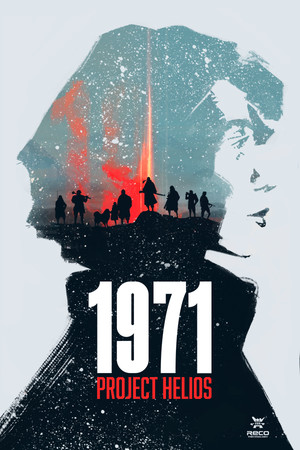
1971 PROJECT HELIOS
Eight strangers, a frozen wasteland, and an action-point system that punishes patience harder than XCOM ever did. Worth a look at sub-5 pricing, barely.
GamerScout Verdict
Best for bargain-bin XCOM fans who can stomach interface jank in exchange for a clever environmental pressure mechanic.
Compare Prices(0 stores)
Loading prices...
We may earn a commission when you buy games through links on this page — at no extra cost to you. It never affects our rankings or verdicts.
Price History
Screenshots & Media
About 1971 PROJECT HELIOS
I respect a game that commits to one mechanical idea, and 1971 Project Helios commits hard to its central conceit: the cold kills you just as reliably as any enemy does. At the end of each round of turns, frostbite chips HP from every unit on an outdoor map, friend and foe alike. Sit back, play conservatively, and the environment finishes the job for your opponents. That single design decision forces the kind of forward pressure you normally only see when a timer is ticking, except here the pressure is baked into the world rather than bolted on as a countdown clock. As a mechanic it genuinely works, and it is probably the most interesting thing in the game. The setup involves eight characters from two opposing factions forming a reluctant alliance to track down a scientist named Dr. Margaret Blythe in a post-apocalyptic, permanently frozen version of 1971. Each character occupies a clear combat role: melee bruisers like Willheim and Renzo soak damage and push forward, shotgunners handle mid-range pressure, snipers Hanna and Alexei glass-cannon from distance, and Domi the grenadier drops area-of-effect bombs at the cost of his entire action budget for the turn. A resource called Fulgor lets you revive downed teammates or shorten ability cooldowns, so managing that pool becomes the closest thing the game has to a strategic layer between fights. Character interactions happen largely at campsites between missions, and the writing is genuinely more interesting than the packaging suggests. The eight characters each carry personal motivations that do not perfectly align, and that tension holds the story together better than the main rescue plot does. The problems, unfortunately, stack up fast once you engage with the actual systems. The camera offers only four fixed positions and has a habit of locking onto the last enemy who acted instead of your own units, which is maddening when enemies are tucked into corners. Characters auto-deploy at combat start with no player input, sometimes in badly exposed positions. Movement is permanent, no undo available, which would be fine if the controls were reliable, but clicking on the correct tile often requires more precision than the interface deserves. A hit-or-miss probability layer exists without the gear ecosystem to make variance feel meaningful, so missed shots register as noise rather than risk management. Bugs reported at launch included a game-breaking softlock in the final battle, and the PC version sitting at a mostly negative Steam rating five years later suggests these issues were never comprehensively patched. The tutorial explains the basics but leaves players to discover interface quirks the hard way. Where the game earns genuine credit is the art direction. A cel-shaded visual style and thoughtful level variety, including an oil rig, an airbase, a canyon, and a nomadic village, give the frozen world texture that keeps exploration from feeling monotonous. The ambient soundtrack during exploration is atmospheric, even if the combat loop it accompanies grows repetitive by mid-campaign. The whole thing runs maybe six to eight hours, which at sub-5 pricing is hard to fully dismiss if your tolerance for rough edges is high. At any original full price, the short runtime and unpatched friction combine into a harder sell. For the strategy player considering this: think of it as a compact XCOM-adjacent experience with one clever environmental mechanic, eight well-sketched characters, a setting that has more atmosphere than its budget implies, and a second tier of mechanics that needed another development pass. It is not a deep decision space, there is no mod ecosystem, the AI competence varies by encounter, and the campaign does not branch in any meaningful way. The frostbite system is the hook. Everything around it is uneven.

Strategy & simulation
Tags
System Requirements
Minimum
- OS
- Windows 7 / 8 / 10 (64 bit)
- Memory
- 6 GB RAM
- Storage
- 3 GB available space
- Graphics
- NVidia GTX 580 / AMD Radeon HD 7870
- Processor
- Intel Core i5-760 / AMD Phenom II X4 965
Recommended
- OS
- Windows 7 / 8 / 10 (64 bit)
- Memory
- 8 GB RAM
- Storage
- 3 GB available space
- Graphics
- Nvidia GTX 970 or higher / AMD Radeon RX 480 or higher
- Processor
- Intel Core i7-6700K/ AMD Ryzen 5 1600X
Keep exploring
Community Discussion
Be the first to comment on 1971 PROJECT HELIOS.
Reviews & Ratings
No ratings available
Game Info
- Developer
- Recotechnology S.L.
- Publisher
- Recotechnology S.L.
- Release Date
- Jun 9, 2020