Transistor
Six hours of isometric sci-fi mood that hits harder than its runtime suggests, if you can tolerate a story that withholds more than it reveals.
Veredicto de GamerScout
Best for players who want a handcrafted six-hour mood piece with surprising combat depth and a soundtrack they won't shake for weeks.
Comparar precios(4 tiendas)
Todas las tiendas de esta tabla nos dan el precio en euros, así que la cifra en EUR es el precio que fijó el vendedor, no un cálculo nuestro, y por eso EUR es también la moneda en la que calculamos el ranking. Solo incluimos aquí una oferta cuando la tienda nos da su precio en euros, de modo que ninguna cifra de esta tabla es inventada por nosotros.
Elige USD, PLN, GBP, CAD o AUD en la cabecera y convertimos desde EUR con el tipo de cambio de referencia del Banco Central Europeo — los importes convertidos llevan el prefijo ~. Tu banco o la tienda pueden aplicar un tipo distinto al pagar. Nunca ocultamos ofertas según dónde estés: todo el mundo ve esta tabla completa.
We may earn a commission when you buy games through links on this page — at no extra cost to you. It never affects our rankings or verdicts.
Historial de precios
Capturas y multimedia
Acerca de Transistor
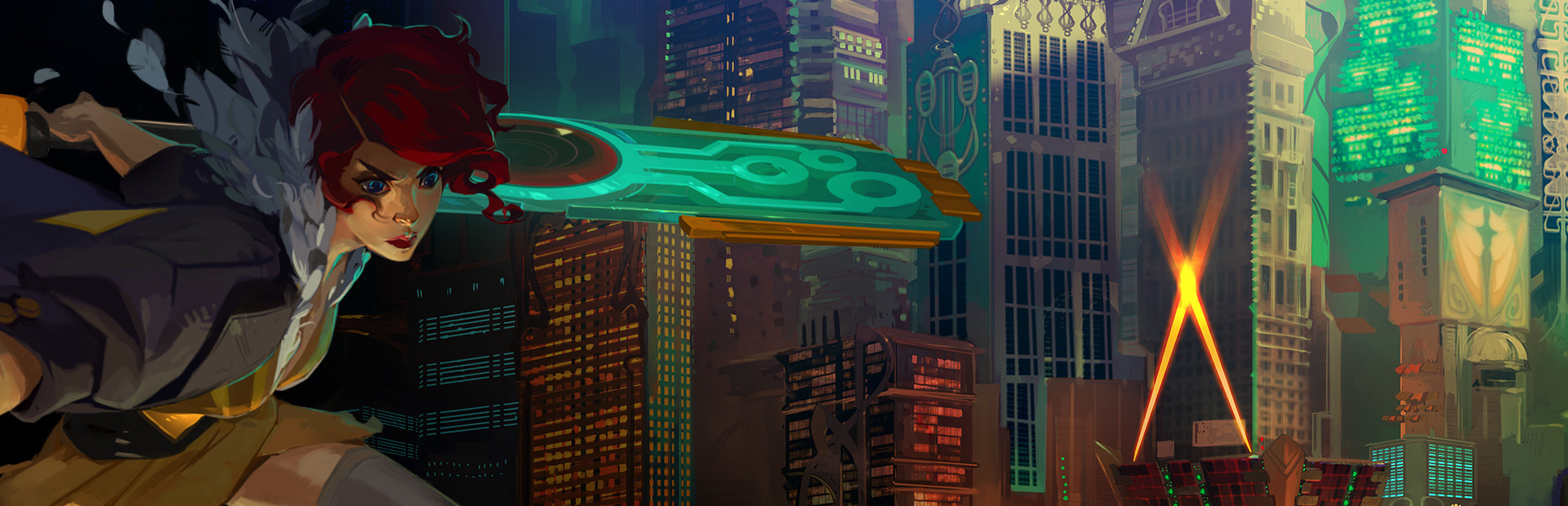
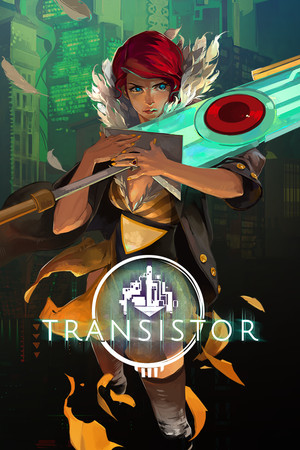
I've thought about Transistor's soundtrack more often than I've thought about most 40-hour games. That alone should tell you something. Supergiant's second title drops you into Cloudbank, a luminous city built to look like a living motherboard, and hands you an enormous glowing greatsword that contains the soul of a man you apparently loved. Red, the silent protagonist, a famous singer who has lost her voice, says nothing. The sword does all the talking, voiced with extraordinary warmth by Logan Cunningham, and that dynamic becomes the emotional engine for everything that follows. The combat is where Transistor earns its replay value. On the surface it runs in real time: four Functions mapped to buttons, enemies known as the Process swarming from all angles. But the real game opens up when you activate Turn(), a frozen planning mode that pauses the action, lets you queue up movements and attacks, then executes them all in a single fluid burst. After that burst your action bar is empty and you are briefly powerless, forced to dodge and reposition until it refills. That vulnerability window is what keeps Turn() from feeling overpowered. What makes the system sing is the stacking mechanic: each Function can also be slotted as a passive modifier onto another, and those combinations number in the hundreds. Spark() as a primary fires a wide area blast; Spark() socketed into another Function widens that Function's own area of effect instead. The design lineage reportedly traces to Magic: The Gathering and Final Fantasy Tactics, and you can feel it, there is a genuine deckbuilding logic hiding under the cyberpunk aesthetics. Limiters layer on top of that, acting as optional self-imposed debuffs that increase experience gain, which matters most when you Recurse (the game's new-game-plus mode) and need the extra challenge to stay engaged. The honest caveats are real, though. The story is deliberately oblique, and that opacity divides players cleanly down the middle. Cloudbank's lore is distributed across Function descriptions and message board posts rather than delivered in scenes, so piecing it together feels like archaeology. Some reviewers found that thrilling; others hit the midpoint still unsure what they were fighting for. The final boss has disappointed more than a few people who wanted a climactic spectacle. And the combat loop, for players who find one dominant build early and stick with it, can start to feel narrow before the credits roll. The game is short enough, around six hours on a first run, that it ends before the repetition becomes a real problem, but it is a legitimate thing to weigh. None of that dims what Transistor does extraordinarily well. The art direction is one of the most cohesive visual statements in the indie space: art deco architecture dissolving into circuit-board geometry, soft neon light on rain-slicked streets, an isometric camera that frames every encounter like a painting. The soundtrack by Darren Korb and Ashley Barrett is genuinely haunting. Red can hum along to songs she sang before her voice was taken, and the ability to do that at any moment, with no mechanical purpose whatsoever, is one of the most quietly devastating design choices I have encountered in a small game. Transistor is the kind of title that knows exactly what it is, and commits to it completely.

Indie & narrative
Etiquetas
Requisitos del sistema
Mínimos
- OS
- Windows 7 32-bit
- Memory
- 4 GB RAM
- Storage
- 3 GB available space
- Graphics
- 1GB of VRAM: Intel HD 3000 GPU / AMD HD 5450 / Nvidia 9400 GT
- Processor
- Dual Core CPU - 2.6ghz
Sigue explorando
Community Discussion
Be the first to comment on Transistor.
Reseñas y valoraciones
Información del juego
- Desarrolladora
- Supergiant Games
- Distribuidora
- Supergiant Games
- Fecha de lanzamiento
- 20 may 2014