Thronebreaker: The Witcher Tales
A card-battling RPG with a real story behind it, Meve's war across Lyria and Rivia is bleak, smart, and surprisingly hard to put down.
Veredicto de GamerScout
A tight, story-first card RPG that respects your time and Witcher lore alike - best for players who want decisions that sting.
Comparar precios(4 tiendas)
Todas las tiendas de esta tabla nos dan el precio en euros, así que la cifra en EUR es el precio que fijó el vendedor, no un cálculo nuestro, y por eso EUR es también la moneda en la que calculamos el ranking. Solo incluimos aquí una oferta cuando la tienda nos da su precio en euros, de modo que ninguna cifra de esta tabla es inventada por nosotros.
Elige USD, PLN, GBP, CAD o AUD en la cabecera y convertimos desde EUR con el tipo de cambio de referencia del Banco Central Europeo — los importes convertidos llevan el prefijo ~. Tu banco o la tienda pueden aplicar un tipo distinto al pagar. Nunca ocultamos ofertas según dónde estés: todo el mundo ve esta tabla completa.
We may earn a commission when you buy games through links on this page — at no extra cost to you. It never affects our rankings or verdicts.
Historial de precios
Capturas y multimedia
Acerca de Thronebreaker: The Witcher Tales
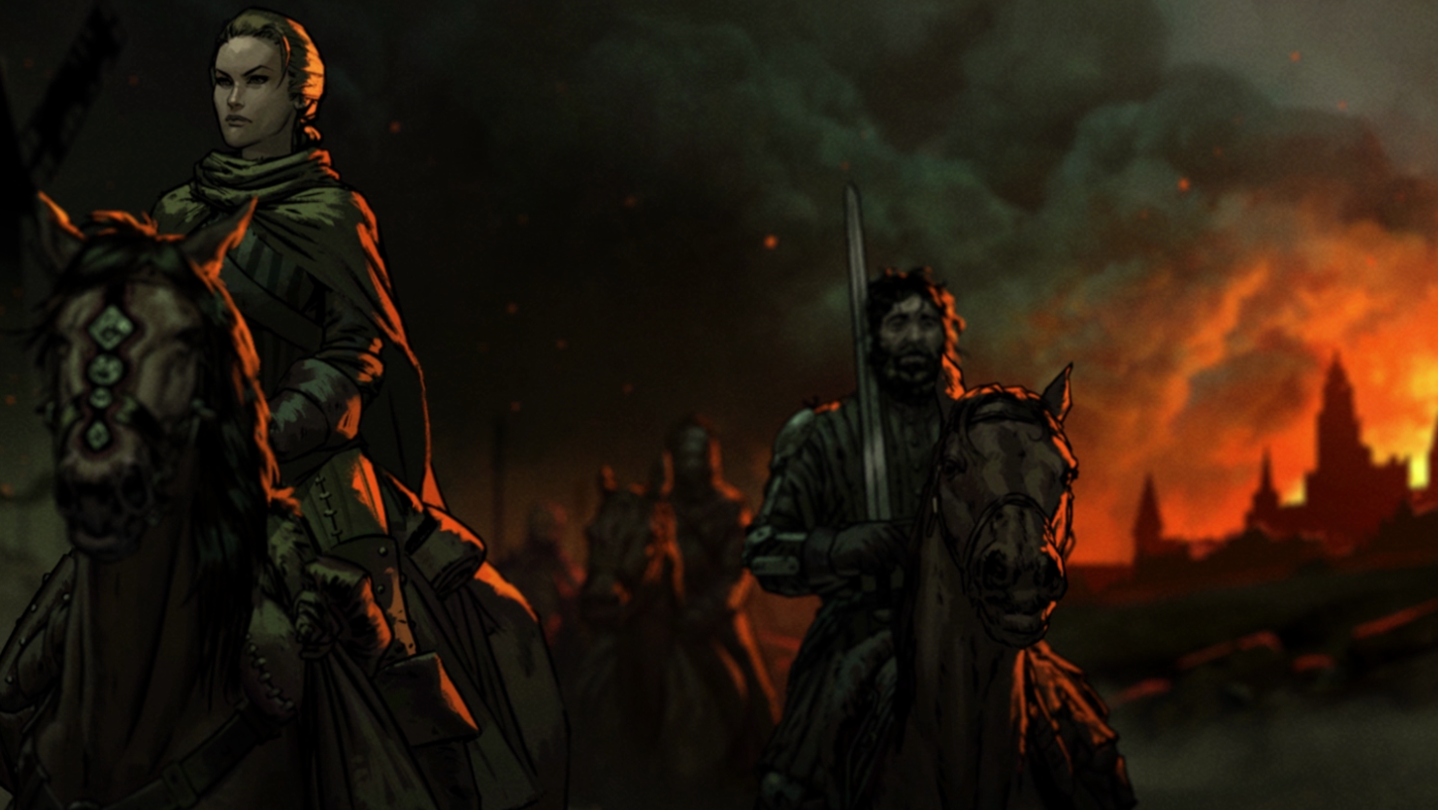
Thronebreaker is the rare spin-off that earns its place in a franchise. Built on the bones of Gwent, CD PROJEKT RED's collectible card game, it wraps those mechanics inside a full single-player RPG campaign following Meve, Queen of Lyria and Rivia. This is not a tutorial dressed up as a story. The writing is genuinely sharp, the world feels lived-in, and Meve herself is one of the better protagonists in recent Witcher media: a seasoned ruler who makes ugly decisions under impossible pressure, and who does not always make the right ones. The structure is part visual novel, part overworld exploration, part card-battle puzzler. You move Meve across a hand-painted map, gather resources, recruit units, and manage a travelling camp of soldiers, craftspeople, and morally complicated hangers-on. Every few minutes the map hands you a choice: burn the village, spare the nobleman, execute the deserter or let him go. These choices feed back into your Gwent-style deck and into the story beats that follow, which means they carry more weight than most RPG dialogue trees. Some decisions do not pay off until hours later, and a couple will quietly ruin your run if you ignore the context. The writing rewards attention. Combat runs on a heavily modified version of Gwent. Standard battles are straightforward, but the game's best moments are its puzzle encounters: fixed-card scenarios where you have to defeat a specific board state with limited tools. These range from clever to fiendish, and they are the clearest evidence that the developers understood the card system well enough to weaponize it for storytelling. One puzzle recreates a desperate siege; another forces you to sacrifice your strongest units to save civilians. The mechanical constraint does narrative work, which is exactly what a good RPG should attempt. The criticisms are real, though. The overworld pacing drags in the middle chapters, particularly in Angren, where resource collection starts to feel like padding before the story kicks back in. The standard battle difficulty rarely threatens a player who builds their deck with any intention. If you are coming for a Gwent ladder experience, this is not that game. And if you want the open-world sprawl of The Witcher 3, Thronebreaker is much smaller and more linear in scope. That linearity is largely a strength for narrative focus, but it means you cannot wander off and lose yourself in side content the way you can in its parent series. For Witcher lore enthusiasts, there is a lot here: Northern Kingdoms politics, familiar factions, and a timeline that slots neatly into events referenced in the main games. For players who have never touched the franchise, Meve's arc is self-contained enough to work on its own merits. The game is probably 20-25 hours on a first playthrough, which feels right for what it is. No filler quests, no padding for padding's sake outside of that Angren slump, and an ending that does not flinch. Thronebreaker knows what it wants to say and mostly says it well.

RPGs
Etiquetas
Requisitos del sistema
Mínimos
- Processor
- Intel Celeron G1820 | AMD A4-7300
- Memory
- 4 GB RAM
- Graphics
- NVIDIA GeForce GT 730 | Radeon R7 240
- Storage
- 8 GB available space
- Sound Card
- DirectX compatible sound card
Recomendados
- OS
- 7 / 8 / 8.1 /10 (64bit)
- Processor
- Intel Core i3 6100 | AMD FX-6300
- Memory
- 4 GB RAM
- Graphics
- NVIDIA GeForce GTX 660 | AMD Radeon R7 265
- Storage
- 8 GB available space
- Sound Card
- DirectX compatibl…
Sigue explorando
Community Discussion
Be the first to comment on Thronebreaker: The Witcher Tales.
Reseñas y valoraciones
Información del juego
- Desarrolladora
- CD PROJEKT RED
- Distribuidora
- CD PROJEKT RED
- Fecha de lanzamiento
- 9 nov 2018