
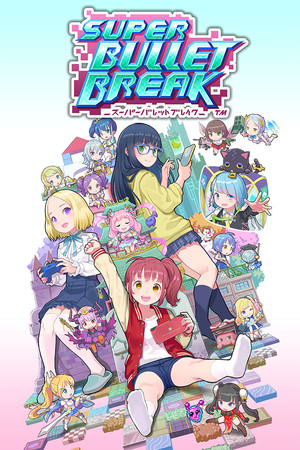
Super Bullet Break
A gacha-flavored roguelite deckbuilder that strips out the microtransactions and replaces them with genuine strategic depth - if you can survive the tutorial long enough to find it.
Veredicto de GamerScout
Worth it for patient deckbuilder fans who can tolerate heavy anime fanservice and a sink-or-swim tutorial.
Comparar precios(8 tiendas)
Todas las tiendas de esta tabla nos dan el precio en euros, así que la cifra en EUR es el precio que fijó el vendedor, no un cálculo nuestro, y por eso EUR es también la moneda en la que calculamos el ranking. Solo incluimos aquí una oferta cuando la tienda nos da su precio en euros, de modo que ninguna cifra de esta tabla es inventada por nosotros.
Elige USD, PLN, GBP, CAD o AUD en la cabecera y convertimos desde EUR con el tipo de cambio de referencia del Banco Central Europeo — los importes convertidos llevan el prefijo ~. Tu banco o la tienda pueden aplicar un tipo distinto al pagar. Nunca ocultamos ofertas según dónde estés: todo el mundo ve esta tabla completa.
We may earn a commission when you buy games through links on this page — at no extra cost to you. It never affects our rankings or verdicts.
Historial de precios
Capturas y multimedia
Acerca de Super Bullet Break
My first few hours with Super Bullet Break went like this: lose, read the in-game manual, lose again, read the manual more carefully, win a map by the skin of my teeth, then immediately get flattened by a boss who telegraphed exactly what he was about to do and I still played the wrong bullets. That loop is the whole game, and whether it clicks for you depends entirely on your appetite for that kind of punishing feedback cycle. The core system is a turn-based deckbuilder built around a roster of over 160 collectable units called Bullets, each one an anime girl with her own rarity, active skill, passive skill, and archetype tag. Your character choice at the start of a run (Akari for aggressive high-attack builds, Hikaru or Sumire for more technical or item-dependent styles) seeds your opening deck, and from there you draft, shop, and scavenge your way across seven maps themed after distinct game genres: a rhythm game world called The Aquarhythm Deep, a dating sim zone named Seasons of Love, a dungeon crawler, and so on. Each world has its own bullet archetype with a signature gimmick. Aquarhythm Deep bullets share the Combo Beam mechanic, stacking a power meter that unloads 30 damage on a random enemy at every tenth increment. The dating sim archetype runs a Heartsplosion charge that delays enemies and reduces bullet costs when filled. Phoenix Gunner bullets let you field persistent Drones that attack, defend, or heal every turn. Syncing your deck around one or two of these archetypes is where the genuine strategic ceiling opens up, and cross-archetype combos are where the game briefly feels like it belongs in the same conversation as Slay the Spire - even if it never quite reaches that bar. The mechanical problem, and it is a real one, is the tutorial situation. There is no tutorial in the traditional sense. You get thrown into the first map, Monochrome Tactics, which functions as an introductory zone but restricts access to the more powerful world-specific gimmicks precisely when you need them to learn how they work. The in-game manual sits buried in the pause menu, and critically the status-effect overlay only works on your own units, so you cannot check what enemy icons mean until the damage has already landed. Permadeath resets your entire deck, and health does not regenerate between battles within a run, so poor early routing on the checkerboard map (three forward branches, shops, rest stops, text events, and enemy encounters to path through) compounds fast. Battles are rated one to three stars for difficulty, with harder fights offering better bullet rewards, which creates a sensible risk-reward tension that experienced deckbuilders will recognise immediately. The fanservice angle is the other unavoidable conversation. Every single bullet is represented by an anime girl in varying degrees of revealing artwork, complete with an animated pose sequence when you first collect them. If that aesthetic sits fine with you, the art is genuinely distinctive and the character designs are individualized across a large roster. If it does not, there is nothing here to offset it - the story is thin set-dressing about Singulaladies corrupting game worlds, and the optional side dialogue is delivered via text message threads that most players reported skipping entirely. The gacha-without-real-money framing is legitimately a point in the game's favor, though: every pull uses in-run coin currency or scout tickets found on the map, no wallet required. Steam user reception sits at around 81% positive across several hundred reviews, which tracks with my read of it - a competent, replayable deckbuilder with a specific audience that rewards patience and deck-thinning discipline. The Cartridge system, where you can swap secondary passives onto individual bullets at rest stops to add Shield generation, status effect on-play, or turn-one attack buffs, adds a quiet layer of optimization that strategy players will appreciate long after the main seven worlds are cleared. It is not the most innovative game in its genre, and a newcomer-friendlier onboarding would make it significantly more accessible. But for someone willing to spend the first couple of runs failing forward, the depth is real.

Strategy & simulation
Etiquetas
Requisitos del sistema
Mínimos
- OS
- Windows 8.1/10 (64-bit)
- Memory
- 4 GB RAM
- DirectX
- Version 11
- Storage
- 8.5 GB available space
- Graphics
- GeForce GT 640 or Radeon HD 5770
- Processor
- Core i3-3225/AMD A8-7650K
Recomendados
Requires a 64-bit processor and operating system
Sigue explorando
Community Discussion
Be the first to comment on Super Bullet Break.
Reseñas y valoraciones
No hay valoraciones disponibles
Información del juego
- Desarrolladora
- BeXide Inc.
- Distribuidora
- PQube
- Fecha de lanzamiento
- 12 ago 2022