Rising Dusk
A hand-crafted solo-dev puzzle platformer that rewires your platformer instincts completely - avoid the coins, read the room, and lose yourself in a yokai twilight that looks like a Ghibli fever dream.
Veredicto de GamerScout
Best for patient platformer fans who want a genuinely fresh mechanic wrapped in handcrafted Ghibli-adjacent pixel art.
Comparar precios(4 tiendas)
Todas las tiendas de esta tabla nos dan el precio en euros, así que la cifra en EUR es el precio que fijó el vendedor, no un cálculo nuestro, y por eso EUR es también la moneda en la que calculamos el ranking. Solo incluimos aquí una oferta cuando la tienda nos da su precio en euros, de modo que ninguna cifra de esta tabla es inventada por nosotros.
Elige USD, PLN, GBP, CAD o AUD en la cabecera y convertimos desde EUR con el tipo de cambio de referencia del Banco Central Europeo — los importes convertidos llevan el prefijo ~. Tu banco o la tienda pueden aplicar un tipo distinto al pagar. Nunca ocultamos ofertas según dónde estés: todo el mundo ve esta tabla completa.
We may earn a commission when you buy games through links on this page — at no extra cost to you. It never affects our rankings or verdicts.
Historial de precios
Capturas y multimedia
Acerca de Rising Dusk
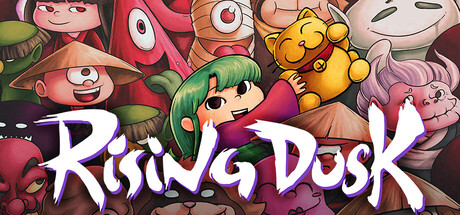
My first thought loading Rising Dusk was that someone had quietly dropped a lost SNES cartridge onto Steam and hoped nobody would notice. The pixel art carries that warm, slightly improbable density you only see when one person has stared at every sprite for years - backgrounds breathe with detail, yokai animations have genuine personality, and the whole thing sits in a permanent amber-dusk light that immediately settles over you like a mood. This is a solo game by Lukas Stobie, an Australian artist living in Tokyo, and that geographic and cultural confluence shows in every tile. The central mechanic is genuinely original and worth talking about plainly: coins are dangerous. Platforms throughout each of the 20-plus levels display numbers, and if your running coin total matches or exceeds that number, the platform vanishes the moment you step on it. Collect too many coins and the ground literally disappears beneath you. That single inversion - treating the standard Mario reflex as a liability - generates a surprisingly layered puzzle space. Some platforms only become reachable if you have collected a precise number of coins. Others dissolve if enemies cross them at the right threshold. A separate optional layer involves golden cat statues and cassette tapes hidden across levels, with ten increasingly demanding dojo challenges gating the completionist rewards. The loop is: read a level, plan your coin budget, execute. Planning is genuinely satisfying; execution can occasionally be less so. The honest criticism is that the controls carry some friction. Tamako's movement has a slight slipperiness, and jumping while holding a diagonal direction can kill momentum in ways that feel accidental rather than designed. A handful of auto-scrolling levels move slowly enough to test patience, and the boss encounters - visually lovely, each one rooted in specific yokai mythology - are soft enough that they resolve in seconds and leave you wanting resistance. The coin-trap placement occasionally leans on player error rather than player ingenuity, which is a different kind of difficulty. None of this is catastrophic, but players who prize tight platformer physics over atmosphere will feel it. What consistently overrides those complaints is the soundtrack. It crosses traditional Japanese instrumentation with lo-fi hip-hop textures in a way that sounds like it should not work and absolutely does. Multiple reviewers have flagged it as the kind of score that follows you out of the game and into your day. The world design - Rice Fields, Castle Towns, Hot Springs, a mountain on the horizon that gradually makes sense - is varied enough that the roughly three-hour runtime never feels padded. It knows when to end, and that restraint is worth something. For a completionist run chasing all collectibles and dojo challenges, expect closer to five or six hours. Rising Dusk is the kind of small game that rewards the kind of player who slows down for it. If you grew up with SNES platformers and have a soft spot for Japanese folklore aesthetics, the concept alone is worth the price of admission. Controller users should configure bindings manually before starting, as the default setup is partial at best. Mac users on Catalina or above should note there are known compatibility issues with the current build.

Indie & narrative
Etiquetas
Requisitos del sistema
Mínimos
- OS
- Windows 8
- Memory
- 4 GB RAM
- Storage
- 250 MB available space
- Processor
- 2GHz+
Sigue explorando
Community Discussion
Be the first to comment on Rising Dusk.
Reseñas y valoraciones
No hay valoraciones disponibles
Información del juego
- Desarrolladora
- Studio Stobie
- Distribuidora
- Studio Stobie
- Fecha de lanzamiento
- 26 jul 2018