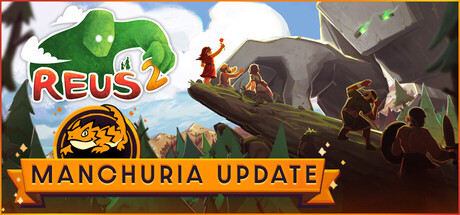
Reus
Control godlike giants to terraform a planet and grow human civilizations, but watch your own creations turn greedy. God-game meets resource puzzle.
Veredicto de GamerScout
Best for systems-minded players who enjoy constraint puzzles and can tolerate an underexplained synergy chain or two.
Comparar precios(5 tiendas)
Todas las tiendas de esta tabla nos dan el precio en euros, así que la cifra en EUR es el precio que fijó el vendedor, no un cálculo nuestro, y por eso EUR es también la moneda en la que calculamos el ranking. Solo incluimos aquí una oferta cuando la tienda nos da su precio en euros, de modo que ninguna cifra de esta tabla es inventada por nosotros.
Elige USD, PLN, GBP, CAD o AUD en la cabecera y convertimos desde EUR con el tipo de cambio de referencia del Banco Central Europeo — los importes convertidos llevan el prefijo ~. Tu banco o la tienda pueden aplicar un tipo distinto al pagar. Nunca ocultamos ofertas según dónde estés: todo el mundo ve esta tabla completa.
We may earn a commission when you buy games through links on this page — at no extra cost to you. It never affects our rankings or verdicts.
Historial de precios
Capturas y multimedia
Acerca de Reus
Reus is a god-game simulation from Abbey Games where you direct four elemental giants across a 2D planet, sculpting terrain, planting resources, and seeding the conditions for human settlements to flourish. There are no direct city-builder controls here. You shape the world and the humans react, building villages, expanding ambitions, and eventually declaring war if you let them get too prosperous too fast. That tension between nurturing and restraint is the core loop, and it holds up better than the Mixed Steam rating suggests. The decision-making layer is more interesting than the art style implies. Each giant controls a different biome and resource type: oceans, forests, swamps, mountains. Resources are not just plopped down. They interact through an adjacency synergy system that rewards deliberate placement. A berry bush next to a mineral deposit next to a specific animal can trigger bonus multipliers that compound across a settlement's output. Getting those chains right feels closer to solving a constraint puzzle than watching numbers grow, which is exactly where this kind of game earns its hours. The structure runs on timed eras, typically 30 or 60 minutes depending on your chosen setting, after which the planet resets and you start a new run with unlocked content from the previous one. This roguelite progression layer is what kept me coming back through the first dozen sessions. Early runs feel limited by what abilities your giants have unlocked. Later runs open up more synergy combinations and challenge missions. The mid-game plateau, around the point where you have a solid grasp of adjacency bonuses but before the full unlock tree is accessible, is where some players drift away, and the Mixed review distribution reflects that accurately. The AI governing human settlement behavior is functional rather than impressive. Villagers follow predictable escalation patterns that you learn to manage, which is fine because the game is ultimately about your planetary decisions, not theirs. The tutorial is short and does the minimum to explain synergies, so newer players almost certainly need to spend time with the community wiki or Abbey Games' own documentation to understand why a run went wrong. There is no in-game mod ecosystem to speak of, and the base game has not received substantial updates since its original release window, so what you see is what you get. For a certain type of player, specifically someone who enjoys optimizing interlocking systems on a fixed timer and iterating through unlock trees, Reus punches well above its age and price bracket. It is not a grand-strategy commitment. A single era runs under an hour, which makes it unusually approachable for a simulation title. Bring a willingness to read the wiki after your first confused run, and the synergy puzzle underneath clicks into something genuinely satisfying.

Strategy & simulation
Etiquetas
Requisitos del sistema
Mínimos
- Memory
- 2 GB RAM
- Graphics
- DirectX10(R) compatible card with 512MB of memory Hard Drive:500 MB HD space
Recomendados
- Processor
- Intel® Core i5 or AMD Phenom II
- Memory
- 4 GB RAM
- Graphics
- DirectX10(R) compatible card with 1024MB of memory Hard Drive:500 MB HD space
Sigue explorando
Community Discussion
Be the first to comment on Reus.
Reseñas y valoraciones
Información del juego
- Desarrolladora
- Abbey Games
- Distribuidora
- Abbey Games
- Fecha de lanzamiento
- 16 may 2013