Pillars of Eternity II: Deadfire - Explorer's Pack (DLC)
Complemento / DLC de Pillars of Eternity II: Deadfire — ver juego completoComparar precios(1 tiendas)
Todas las tiendas de esta tabla nos dan el precio en euros, así que la cifra en EUR es el precio que fijó el vendedor, no un cálculo nuestro, y por eso EUR es también la moneda en la que calculamos el ranking. Solo incluimos aquí una oferta cuando la tienda nos da su precio en euros, de modo que ninguna cifra de esta tabla es inventada por nosotros.
Elige USD, PLN, GBP, CAD o AUD en la cabecera y convertimos desde EUR con el tipo de cambio de referencia del Banco Central Europeo — los importes convertidos llevan el prefijo ~. Tu banco o la tienda pueden aplicar un tipo distinto al pagar. Nunca ocultamos ofertas según dónde estés: todo el mundo ve esta tabla completa.
We may earn a commission when you buy games through links on this page — at no extra cost to you. It never affects our rankings or verdicts.
Historial de precios
Capturas y multimedia
Acerca de Pillars of Eternity II: Deadfire - Explorer's Pack (DLC)
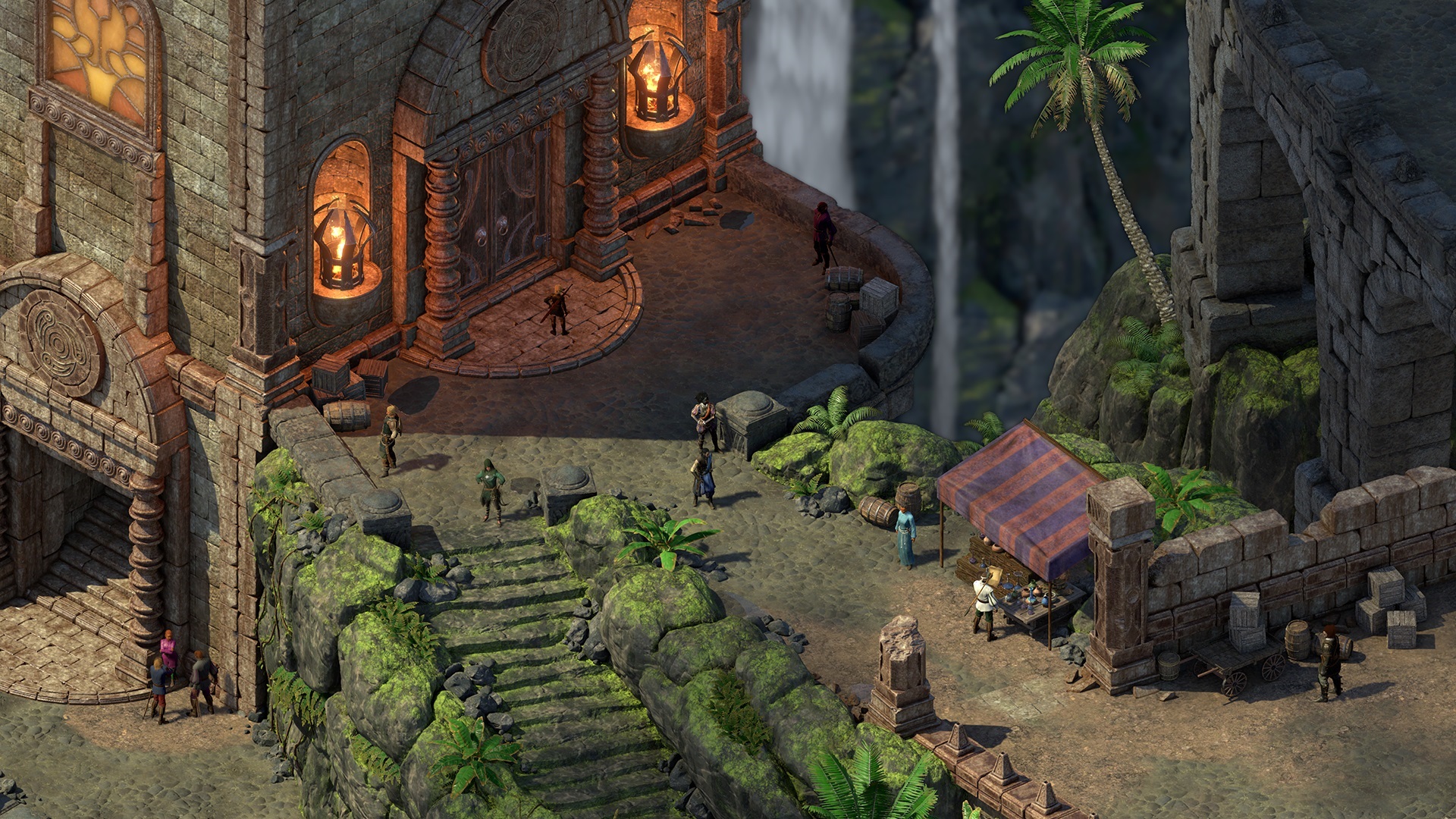
I've spent more hours than I'd sensibly recommend threading my way through the Deadfire Archipelago, and I'll say this upfront: Obsidian built something that rewards the patient and quietly punishes everyone else. You play the Watcher, dragged back from near-death after a god-possessed colossus flattens your home, and you spend the rest of the game chasing that god across a chain of sun-bleached islands on your ship, the Defiant. The premise sounds thin, and some critics have noted that following a divine entity lacks the gut-punch urgency of the Hollowborn crisis from the first game. That's fair. But the philosophical scaffolding underneath that chase, questions about self-determination, the legitimacy of gods, and who deserves sovereignty over a colonized archipelago, is dense enough to fuel three replays. The Deadfire is a CRPG built like a clock where every gear touches another. Character creation alone asks you to choose from six races with multiple subraces, then select one class or combine any two from the full roster. That multi-class system is the mechanical heart of the game and also its sharpest double-edged sword. A Fighter/Rogue hybrid becomes a terrifying frontline predator, but mixing Cipher with Priest means you can't reach the top-tier abilities of either, which matters enormously since those late-tier powers define those classes. New players who sleepwalk into a multi-class build without planning can quietly neuter themselves by mid-game, and the game won't always warn you. Veterans of the first Pillars or of Baldur's Gate-era CRPGs will find the active-pause combat familiar but more fluid, and the optional fully turn-based mode added post-launch gives a second entry point for players who want more tactical deliberation per fight. Ship combat deserves its own mention because it divides the playerbase cleanly. The naval encounters are turn-based affairs where crew stats, cannon positioning, and tactical maneuvering all factor in. Boarding an enemy and finishing the fight hand-to-hand is almost always the more profitable call, which makes the cannon duels feel like an early detour rather than a starring mechanic. The crew management layer, keeping sailors fed, paid, and loyal enough not to mutiny, adds texture to the sailing without ever becoming genuinely oppressive on normal settings. Exploration across the archipelago is genuinely freeing; the camera pulls back to a top-down sailing view that lends the whole thing a vintage RPG charm. The downside is that a handful of the smaller islands feel like placeholder encounters rather than crafted spaces, and the open structure means the main quest can recede into the background for long stretches while you sort out pirates, trading companies, and local gods. The writing, though, is where Deadfire earns its 88 Metacritic score and then some. The companion dialogue is better calibrated than in the original game, with returning characters like Eder having genuinely evolved between titles. The storybook-style prose interludes that narrate travel and certain scenes are distinctive and atmospheric, even if some players find them overwrought. The four rival factions, the Principi pirates, the Rauatai Royal Deadfire Company, the Vaillian Trading Company, and the Huana natives, are written with the kind of moral ambiguity I live for: nobody is simply evil, nobody is simply right, and siding with one has tangible costs with the others. For CRPG fans who measure a game by whether choices carry weight past the moment you make them, Deadfire is one of the more honest implementations of that promise in recent memory. The PC version is the one to get. The console ports accumulated significant complaints about technical performance, including long load times and combat responsiveness issues, that marred the experience for many players. On PC, the game runs well and has received meaningful patches since launch, including that turn-based mode and balance adjustments that tightened up difficulty at higher settings. If you haven't played the first Pillars, Deadfire provides a recap and lets you construct a simulated save history, so the barrier to entry is lower than you'd expect from a direct sequel. That said, having that first game's context deepens almost every character moment here. This is a game for people who read tooltips, who spend twenty minutes in character creation, and who will happily lose an evening to a side quest about a ghost and a lighthouse. If that's you, the Deadfire will hold you for sixty hours minimum.

RPGs
Etiquetas
Requisitos del sistema
Mínimos
- Processor
- Intel Core i3-2100T @ 2.50 GHz / AMD Phenom II X3 B73
- Memory
- 4 GB RAM
- Graphics
- DirectX 11 Compatible Storag…
Recomendados
- OS
- Windows 10 64-bit or newer
- Processor
- Intel Core i5-2400 @ 3.10 GHz / AMD Phenom II X6 1100T
- Memory
- 8 GB RAM
- Graphics
- NVIDIA GeForce GTX 960 Stora…
Sigue explorando
Community Discussion
Be the first to comment on Pillars of Eternity II: Deadfire - Explorer's Pack (DLC).
Reseñas y valoraciones
Información del juego
- Desarrolladora
- Obsidian Entertainment
- Distribuidora
- Versus Evil
- Fecha de lanzamiento
- 8 may 2018