Particle Fleet: Emergence
Physics-driven fleet combat where the enemy doesn't follow a script - it flows, bounces, and overwhelms. Worth every hour if you can handle asymmetric pressure.
Veredicto de GamerScout
Best for strategy players who want a physics-driven, asymmetric RTS with meaningful ship customisation and strong community content beyond the campaign.
Comparar precios(5 tiendas)
Todas las tiendas de esta tabla nos dan el precio en euros, así que la cifra en EUR es el precio que fijó el vendedor, no un cálculo nuestro, y por eso EUR es también la moneda en la que calculamos el ranking. Solo incluimos aquí una oferta cuando la tienda nos da su precio en euros, de modo que ninguna cifra de esta tabla es inventada por nosotros.
Elige USD, PLN, GBP, CAD o AUD en la cabecera y convertimos desde EUR con el tipo de cambio de referencia del Banco Central Europeo — los importes convertidos llevan el prefijo ~. Tu banco o la tienda pueden aplicar un tipo distinto al pagar. Nunca ocultamos ofertas según dónde estés: todo el mundo ve esta tabla completa.
We may earn a commission when you buy games through links on this page — at no extra cost to you. It never affects our rankings or verdicts.
Historial de precios
Capturas y multimedia
Acerca de Particle Fleet: Emergence
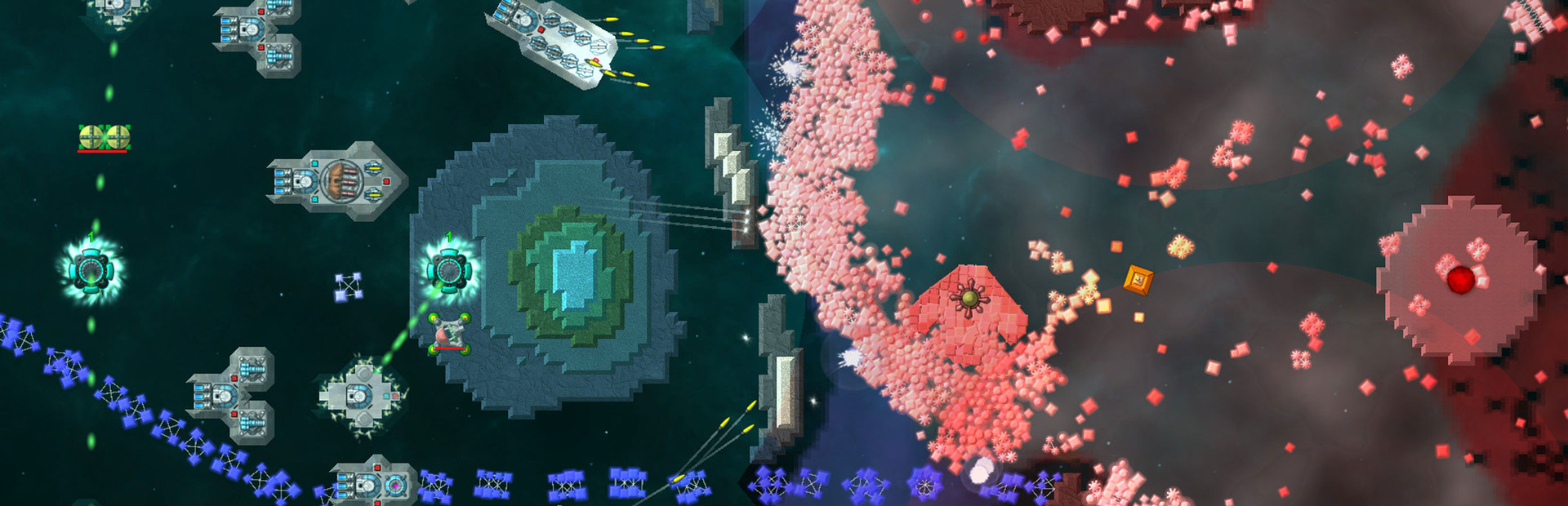
My spreadsheet instincts lit up the moment I realised the Particulate in this game isn't a scripted wave system pretending to be smart - it's a real-time physics simulation. Particle Fleet: Emergence sits at a genuinely unusual intersection: part RTS, part tower defense, part ship-design sandbox. You command a fleet of partially destructible, self-repairing ships against an enemy that moves more like fluid dynamics than an opponent following waypoints. That core premise alone separates it from nearly everything else on the strategy shelf, and for a certain kind of player - the kind who reads ability tooltips before touching a unit - it clicks immediately. The 16-mission story campaign does its job as a mechanical tutorial, introducing enemy variants gradually: standard Particulate swarms, Stunners, the static barrier called Struct, the terrain-driven Emergent, and the more aggressive Doppels. Each new enemy type typically arrives alongside a new ship plan you can collect and add to your roster, which keeps the pacing feeling deliberate rather than arbitrary. Energy sources are the strategic currency here - capturing them funds new ship construction and keeps your existing fleet self-repairing, so territorial control matters in a way that feels genuinely consequential. Where the campaign stumbles is in overall challenge; early and mid missions lean easy, and the story text won't win any awards. The difficulty ceiling only rises meaningfully in the final stretch, and the real test comes after you leave the campaign behind. That post-campaign space is where Particle Fleet earns its longevity. The Simulacrum mode generates procedural skirmish maps with a deep parameter set, and the built-in ship designer lets you build custom hulls and field them in any mission. There's a community map exchange where user-submitted levels push the mechanics much harder than the main campaign does, and the level editor supports a scripting language capable of genuinely complex scenario construction. The solo developer behind Knuckle Cracker has historically been responsive to bug reports and community suggestions, which means the game launched in a reasonably solid state and received targeted post-launch fixes. The graphics are strictly retro-2D pixel work - nobody is buying a KC game for visuals - but the simulation itself produces genuinely spectacular-looking particle collisions that carry their own visual appeal. The honest caveats: if your primary attachment to the Creeper World series was the base-building loop, Particle Fleet removes most of that. You build ships, not static installations, and the fleet management can feel fiddly when micromanaging several units at once. Sound design is thin, with a small pool of effects that wear out their welcome by mid-campaign. A minority of players find the strategic layer too streamlined once the initial novelty of the physics enemy fades. Those are real concerns, not nitpicks. But for a player who prioritises decision-making around resource denial, fleet composition, and managing an asymmetric threat, the depth is there - you just have to get past the campaign to find it. Steam's 92% positive rating across over a thousand reviews is a reliable signal that the audience who fits this game's frequency tends to stay loyal to it.

Strategy & simulation
Etiquetas
Requisitos del sistema
Mínimos
- OS
- Windows 7 or later
- Memory
- 3 GB RAM
- DirectX
- Version 9.0c
- Storage
- 2 GB available space
- Processor
- Dual Core 2Ghz
Recomendados
- OS
- Windows 7 or later
- Memory
- 4 GB RAM
- DirectX
- Version 9.0c
- Network
- Broadband Internet connection
- Storage
- 4 GB available space
- Processor
- Quad Core 2Ghz
Sigue explorando
Community Discussion
Be the first to comment on Particle Fleet: Emergence.
Reseñas y valoraciones
No hay valoraciones disponibles
Información del juego
- Desarrolladora
- Knuckle Cracker
- Distribuidora
- Knuckle Cracker
- Fecha de lanzamiento
- 29 sept 2016