Operation: Polygon Storm
Warpips with a coat of low-poly paint: a tug-of-war auto-battler that rewards unit synergy obsessives but punishes anyone who expects their troops to actually follow orders.
Veredicto de GamerScout
Worth a session for auto-battler fans who can tolerate AI quirks, but content-thin for anyone expecting a long campaign.
Comparar precios(7 tiendas)
Todas las tiendas de esta tabla nos dan el precio en euros, así que la cifra en EUR es el precio que fijó el vendedor, no un cálculo nuestro, y por eso EUR es también la moneda en la que calculamos el ranking. Solo incluimos aquí una oferta cuando la tienda nos da su precio en euros, de modo que ninguna cifra de esta tabla es inventada por nosotros.
Elige USD, PLN, GBP, CAD o AUD en la cabecera y convertimos desde EUR con el tipo de cambio de referencia del Banco Central Europeo — los importes convertidos llevan el prefijo ~. Tu banco o la tienda pueden aplicar un tipo distinto al pagar. Nunca ocultamos ofertas según dónde estés: todo el mundo ve esta tabla completa.
We may earn a commission when you buy games through links on this page — at no extra cost to you. It never affects our rankings or verdicts.
Historial de precios
Capturas y multimedia
Acerca de Operation: Polygon Storm
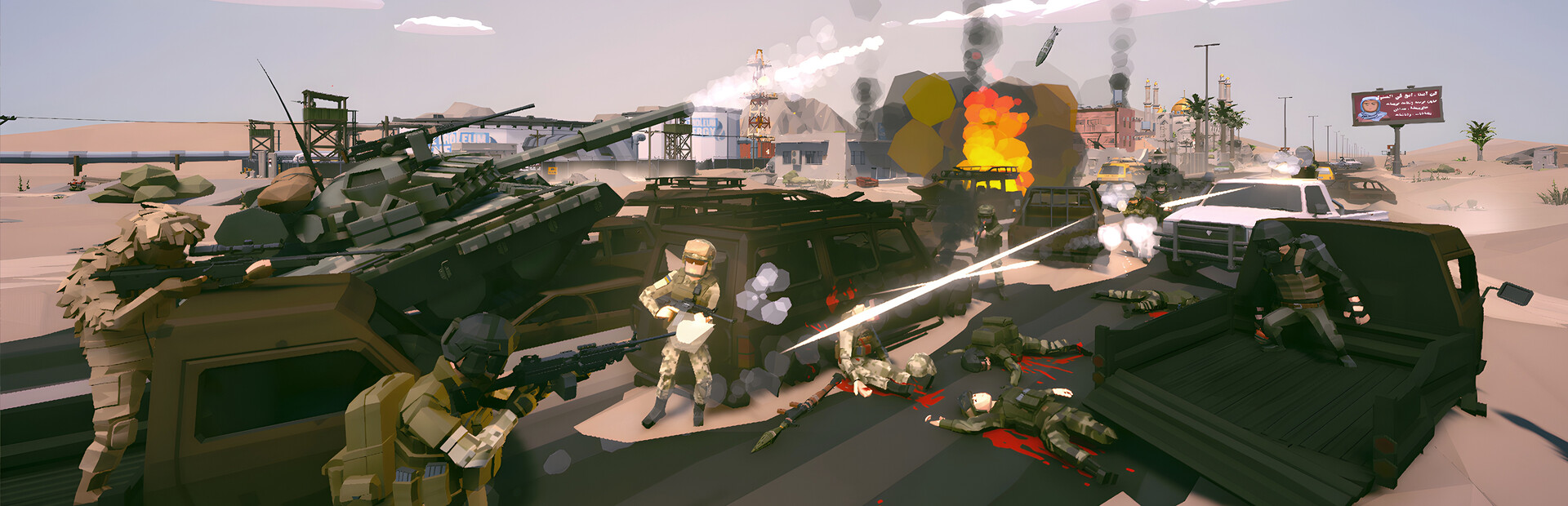
I've spent enough time in the tug-of-war auto-battler space to know the formula by heart: two bases, a stretch of contested ground, and a resource loop that rewards composition thinking over twitch skill. Operation: Polygon Storm slots squarely into that genre, sitting comfortably next to Warpips in the Steam community's own comparisons. The core ask is clear: pick your infantry, armor, artillery, and air support, deploy them into a shared battlefield, and let the lines shift while you manage upgrades and reinforcements. The minimal micromanagement is the whole pitch. Units advance, take cover, and attack largely on their own, with your direct input reserved for macro calls rather than babysitting individual soldiers. On paper, the depth is real. Each unit type carries its own upgrade tree, and the game expects you to invest earned income back into your forces as a match progresses. The mix of infantry squads, armored vehicles, artillery platforms, and air assets opens up genuine composition decisions: do you rush with cheap, fast units and pressure early, or bank currency for heavier platforms that hold ground better? Three difficulty settings and distinct scenario themes add a layer of replayability that the raw level count alone would not justify. The destructible environments are a smart wrinkle too. Terrain that shifts mid-fight means a choke point from minute one can become an open kill zone by minute five, and the best compositions adapt to that. The friction, though, is real and worth naming plainly. Unit AI behavior is the biggest sticking point in community feedback. Issuing a direct command can lock a unit out of its automatic behavior, meaning troops ordered to reposition sometimes just stop participating in the fight entirely. The difficulty curve also has a sharp spike, with the enemy appearing to have immediate access to resources the player has to earn, which makes the earliest scenarios feel uneven before the upgrade loop catches up. The level count stays limited, and some players hit a content ceiling faster than the upgrade system can compensate. The Spanish-language critical notices point to a thin mode variety beyond the core scenarios, which is fair. Here is where I would push back on the harshest takes, though. For newcomers to the auto-battler-adjacent strategy space, the low micromanagement ceiling is genuinely accessible. You do not need build orders or APM. You need to read your unit roster, respect the economy, and be willing to restart a scenario with a different composition mix when the first one collapses. That iteration loop, trying infantry-heavy pushes versus artillery-anchored defenses, is where the game earns its time. The controller support is solid and the gamepad experience is noticeably cleaner than keyboard-and-mouse for a game built around high-level decisions rather than precise clicks. Post-launch DLC packs, including additional maps like The Train and Chernobyl scenarios, extend the content library beyond the base release for those who exhaust the base game quickly. Bottom line: Operation: Polygon Storm is not a deep grand-strategy experience, and it does not pretend to be. It is a lean, session-friendly tug-of-war game with a functional upgrade system and a respectable composition puzzle at its core. The AI quirks and limited level count are genuine warts. But if you are comfortable with auto-battler logic and want something that runs well in a forty-minute sitting, the synergy-hunting across unit trees has enough pull to justify the price at this tier.

Strategy & simulation
Etiquetas
Requisitos del sistema
Mínimos
- OS
- Windows 7/8.1/10/11
- Memory
- 4 GB RAM
- DirectX
- Version 9.0
- Storage
- 5 GB available space
- Graphics
- 1GB Video RAM
- Processor
- Intel core i3
Recomendados
- OS
- Windows 7/8.1/10/11
- Memory
- 8 GB RAM
- DirectX
- Version 9.0
- Storage
- 5 GB available space
- Graphics
- 4GB Video RAM
- Processor
- Intel core i5
Sigue explorando
Community Discussion
Be the first to comment on Operation: Polygon Storm.
Reseñas y valoraciones
No hay valoraciones disponibles
Información del juego
- Desarrolladora
- Toxic Studio
- Distribuidora
- Toxic Studio
- Fecha de lanzamiento
- 12 ago 2024