NieR:Automata™
Yoko Taro and PlatinumGames made something that has no right to work this well: a hack-and-slash about androids that will quietly dismantle your assumptions about what games can say.
Veredicto de GamerScout
8.4/10Essential for anyone who wants action-RPG combat with a story that genuinely uses the medium - just commit to all three routes.
Comparar precios(3 tiendas)
Todas las tiendas de esta tabla nos dan el precio en euros, así que la cifra en EUR es el precio que fijó el vendedor, no un cálculo nuestro, y por eso EUR es también la moneda en la que calculamos el ranking. Solo incluimos aquí una oferta cuando la tienda nos da su precio en euros, de modo que ninguna cifra de esta tabla es inventada por nosotros.
Elige USD, PLN, GBP, CAD o AUD en la cabecera y convertimos desde EUR con el tipo de cambio de referencia del Banco Central Europeo — los importes convertidos llevan el prefijo ~. Tu banco o la tienda pueden aplicar un tipo distinto al pagar. Nunca ocultamos ofertas según dónde estés: todo el mundo ve esta tabla completa.
We may earn a commission when you buy games through links on this page — at no extra cost to you. It never affects our rankings or verdicts.
Historial de precios
Capturas y multimedia
Acerca de NieR:Automata™
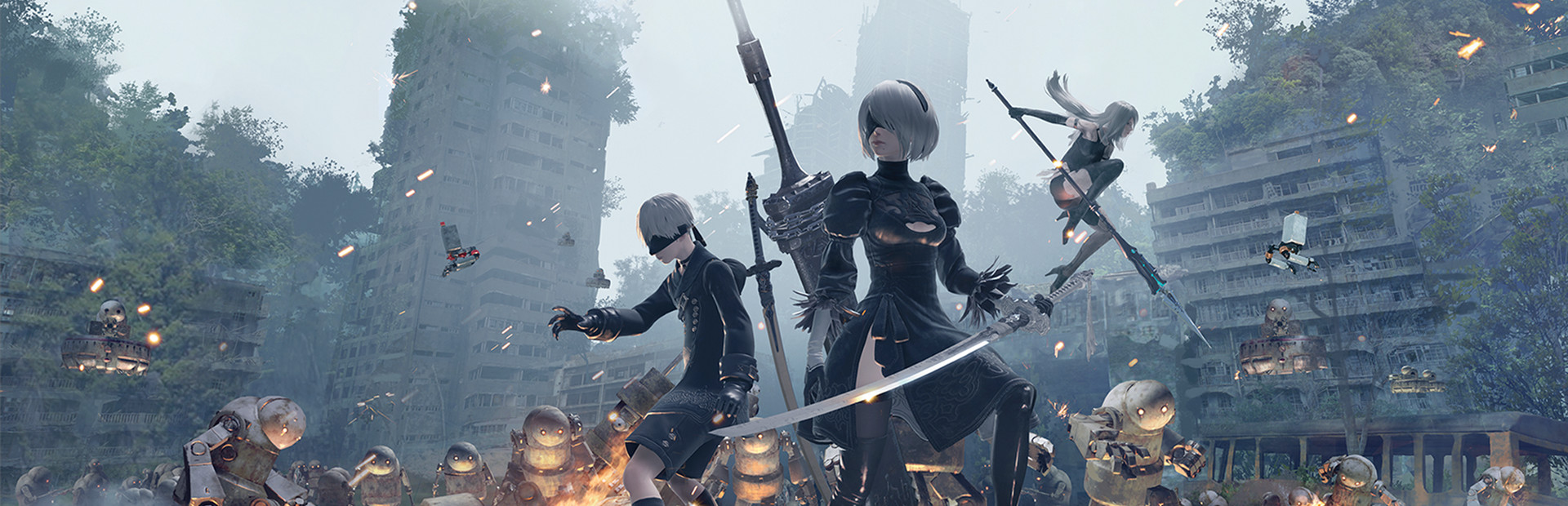
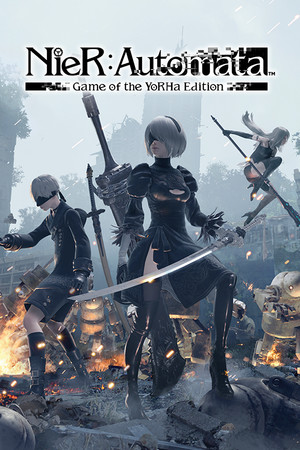
I went into NieR:Automata expecting a stylish action game with some philosophy sprinkled on top, the kind of thing that wears its Nietzsche references as costume jewelry. What I got instead was a game that restructures itself around you three times over, each restructuring hitting harder than the last. That alone earns it serious consideration from anyone who cares about narrative design. The moment-to-moment combat is the work of PlatinumGames, and it shows. Playing as 2B, you juggle short swords, long swords, spears, and combat bracers, pairing a primary weapon for light attacks and a secondary for heavy ones, while your Pod drone fires autonomously or on command. The combo system has genuine depth: small input variations change entire combo strings, and ranged attacks can be layered over melee without interrupting your rhythm. The game does not fully pressure you into using all of that depth on lower difficulties, which some players find frustrating, but if you push into hard mode the whole toolkit becomes necessary. Bullet-hell segments appear without warning as the camera pulls to a side-scrolling or top-down view, turning a chase sequence or a boss encounter into something that feels lifted from a different game entirely. It works far more often than it has any right to. The plug-in chip system is where the RPG bones show. Chips are slotted into a storage grid on your android's OS, each one consuming memory capacity, letting you build toward offensive burst, defensive sustain, auto-healing, or more exotic combinations like infinite Berserk Mode on A2. The storage grid has a hard cap and every slot counts, so you are always making trade-offs. Crucially, even HUD elements like the minimap and health bar are chip slots, meaning you can strip your UI entirely for extra combat power. It is a genuinely clever piece of design that rewards the kind of player who reads every tooltip. Chip farming in specific zones can become a repetitive loop by the third route, which is the one legitimate grind complaint the community raises, but the variety of viable builds keeps it from feeling pointless. The structure is the thing most likely to either hook or alienate you. Route A follows combat android 2B through the first ten chapters of the war against machine lifeforms. Route B replays much of the same map from the perspective of scanner android 9S, with new side quests tied to his hacking ability and a perspective shift that recontextualises events you thought you understood. Route C, covering chapters eleven through seventeen, is where the game stops being polite about what it actually wants to say. All items, chips, and weapons carry across every route, so the mechanical progress is never erased. The side quests are the weakest link: some feel like padding, and the absence of recommended level indicators means stumbling into an overlevelled zone and fighting enemies that take forever to kill without being meaningfully harder. The map is also, famously, not great. These are real friction points in an otherwise exceptional experience. The writing is the reason people replay this game years after finishing it. The machine lifeforms replicating human societies and rituals, the pacifist machine Pascal and his village, the relationship between 2B and 9S that reveals itself across all three routes: this is the material that rewards re-reads and rewards players who do not skip the terminal logs. Yoko Taro uses the medium in ways that feel specific to games, and that is rarer than it should be. The soundtrack by Keiichi Okabe is extraordinary at every difficulty. If you have any tolerance at all for action RPGs that take narrative seriously, NieR:Automata is one of the most complete arguments for games as a storytelling form that the medium has produced.

RPGs
Etiquetas
Requisitos del sistema
Mínimos
- Processor
- Intel Core i3 2100 or AMD A8-6500
- Memory
- 4 GB RAM
- Graphics
- NVIDIA GeForce GTX 770 VRAM 2GB or AMD Radeon R9 270X VRAM 2GB
- DirectX
- Version 11
- Network
- Broadband…
Recomendados
- Processor
- Intel Core i5 4670 or AMD A10-7850K
- Memory
- 8 GB RAM
- Graphics
- NVIDIA GeForce GTX 980 VRAM 4GB or AMD Radeon R9 380X VRAM 4GB
- DirectX
- Version 11
- Network
- Broadba…
DLC y complementos de NieR:Automata™3
Expansiones, packs de DLC y contenido adicional de este juego. Haz clic en cualquier elemento para ver las ofertas de las tiendas.
Sigue explorando
Community Discussion
Be the first to comment on NieR:Automata™.
Reseñas y valoraciones
Información del juego
- Desarrolladora
- Square Enix
- Distribuidora
- Square Enix
- Fecha de lanzamiento
- 17 mar 2017
- Clasificación por edad
- PEGI 18