NEXT JUMP: Shmup Tactics
Bullet hell slowed to a tactical crawl, then made punishing all over again. If FTL's sector map and a grid-based shmup had a coffee-break offspring, this is it.
Veredicto de GamerScout
Solid pick for strategy players who love shmups on paper but lack the reflexes to survive them in real time.
Comparar precios(8 tiendas)
Todas las tiendas de esta tabla nos dan el precio en euros, así que la cifra en EUR es el precio que fijó el vendedor, no un cálculo nuestro, y por eso EUR es también la moneda en la que calculamos el ranking. Solo incluimos aquí una oferta cuando la tienda nos da su precio en euros, de modo que ninguna cifra de esta tabla es inventada por nosotros.
Elige USD, PLN, GBP, CAD o AUD en la cabecera y convertimos desde EUR con el tipo de cambio de referencia del Banco Central Europeo — los importes convertidos llevan el prefijo ~. Tu banco o la tienda pueden aplicar un tipo distinto al pagar. Nunca ocultamos ofertas según dónde estés: todo el mundo ve esta tabla completa.
We may earn a commission when you buy games through links on this page — at no extra cost to you. It never affects our rankings or verdicts.
Historial de precios
Capturas y multimedia
Acerca de NEXT JUMP: Shmup Tactics
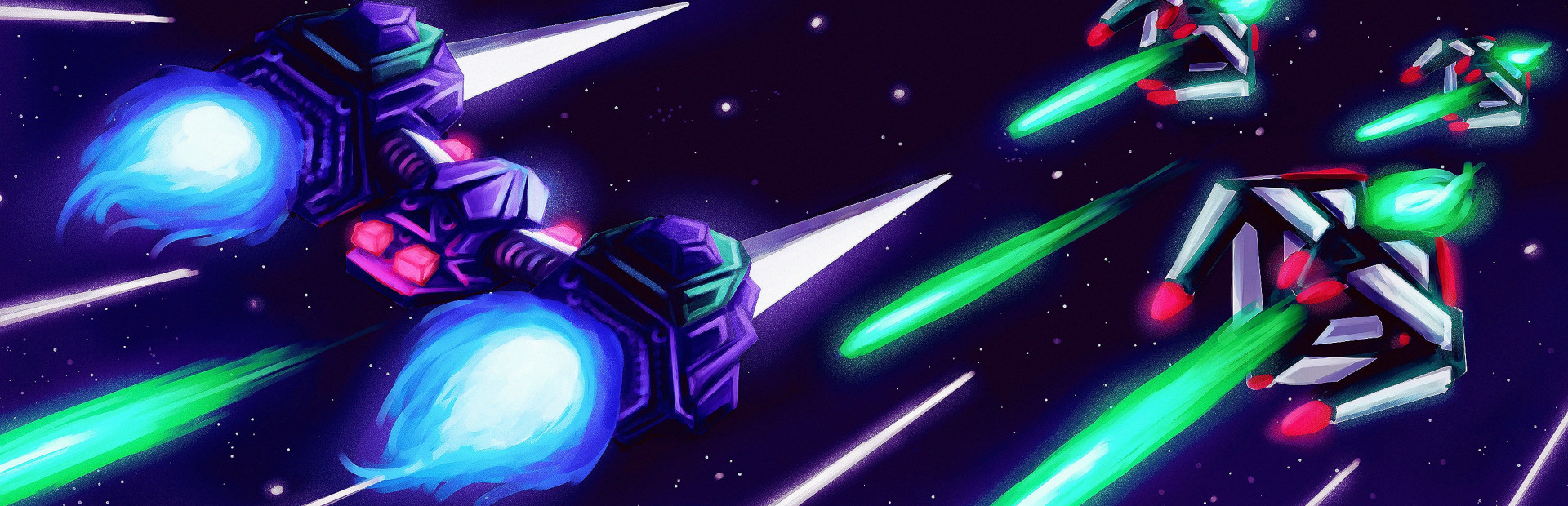
I spend a lot of time with games that front-load complexity and pay it back slowly, so when a sub-five-dollar indie rearranges my spatial reasoning inside the first twenty minutes, I sit up and take notes. NEXT JUMP: Shmup Tactics is that kind of small punch. Post Mortem Pixels had a genuinely clever premise: freeze the bullet-hell screen, hand you a pool of action points, and turn the whole thing into a grid puzzle. Each "jump" drops your ship at the bottom of a procedurally generated combat board, enemy drones arranged above you with their laser trajectories already visible. You spend your energy budget moving, shooting, and picking up dropped energy balls to extend your turn, then time resumes and everything that was lined up comes crashing in. That frozen-bullet read is the core loop, and it holds up. The seven ships, named after weapons like the Ballista, Dagger, Hammer, and Staff, are where the mechanical identity actually lives. The Ballista fires and physically shunts your craft backward, so every attack is also an involuntary reposition. That recoil wrinkle forces you to think about firing order and grid placement simultaneously, which is a genuinely smart abstraction of shmup movement discipline. Between jumps, you spend scrap at outpost sectors to upgrade your energy capacity, engine range, hull, and weapon damage, and you can slot in accessories like missiles, scanners, or ramming shields that meaningfully change how a run feels. The upgrade curve is short but legible: energy-per-turn first, weapon range second, hull somewhere in between depending on how aggressive you are. The Reputation system, essentially the classic shmup score reimagined as an in-universe standing with your federation, rewards kill streaks and scrap collection with a combo multiplier. Staying unhit grows the multiplier. It feeds back into shop discounts, which means playing clean actually compounds into a mechanical advantage rather than just a cosmetic high score. That is a tidy design. The star map navigation, where you pick one of three sector paths per jump, gives you light route-planning decisions around shop access, environmental hazards like nebulae that block sightlines, and meteor fields that complicate positioning. Where the game creaks is at its edges. The three-turn combat cap is the right call thematically and keeps sessions brisk, but it does mean you rarely build into a long strategic read. Weapon range information can be awkward to access mid-battle, which is a serious oversight in a game where two squares of firing distance is the difference between a clean kill and eating a shot. The translated text has grammar issues that crop up in the manual and upgrade descriptions, nothing that blocks comprehension but enough to knock the polish rating down a tier. Community critics have pointed out the lack of unique mid-run events and the final boss's unadvertised move set as the rougher spots, and those criticisms are fair. The run variety leans on procedural boards rather than scripted encounters, so players who burned out on FTL's event density may find this thinner. For strategy players who have never managed to finish a real-time shmup because their reflexes clock in at "tactical," this is the on-ramp you were looking for. The in-game manual is comprehensive, the tutorial introduces mechanics in a logical order, and runs are short enough that a loss teaches rather than punishes catastrophically. The pixel art is clean and the soundtrack earns the praise it gets from community reviewers. It is a focused, single-developer concept that commits to one idea and mostly nails it. Do not expect Crypt of the NecroDancer's rhythmic depth or FTL's narrative variety, but do expect something that will make you think carefully about a three-tile repositioning.

Strategy & simulation
Etiquetas
Requisitos del sistema
Mínimos
- OS
- Windows 7
- Memory
- 3 GB RAM
- Storage
- 300 MB available space
- Graphics
- OpenGL 2.0 Support and 256 MB of RAM
- Processor
- Core i3 2.5ghz or equivalent
Recomendados
- OS
- Windows 7 64bits
- Memory
- 4 GB RAM
- Storage
- 300 MB available space
- Graphics
- OpenGL 2.0 Support and 256 MB of RAM
- Processor
- Core i5 2.2ghz or better
Sigue explorando
Community Discussion
Be the first to comment on NEXT JUMP: Shmup Tactics.
Reseñas y valoraciones
No hay valoraciones disponibles
Información del juego
- Desarrolladora
- Post Mortem Pixels
- Distribuidora
- GrabTheGames
- Fecha de lanzamiento
- 28 abr 2017