Compara los precios de Konung 2 en tiendas de claves de confianza y encuentra la mejor oferta. Desarrollado por Fulqrum Publishing. Publicado por Fulqrum Publishing. Lanzado el 23/4/2014. Disponible en PC. Géneros: RPG. Puntuación Metacritic: 35/100.

A deeply obscure Russian isometric RPG that critics dismissed but patient genre hunters kept alive for two decades. If you survived early Baldur's Gate by fleeing every fight, this might actually click.

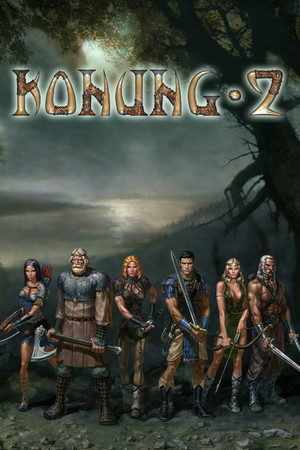
My first few hours with Konung 2 felt less like playing an RPG and more like failing a pop quiz written in a language I almost speak. The combat will punish you immediately and without apology: incoming hits interrupt your own attacks, meaning a single enemy can lock you into a stun loop before you've figured out which button does what. There is no combat pause. Potions burn fast if you lean on auto-use. The game's early difficulty isn't designed around skill expression so much as around a quiet expectation that you will run away, regroup, and come back better-equipped. That design philosophy is either charming or infuriating, and there is genuinely no middle ground. What makes Konung 2 harder to dismiss than its Metacritic score suggests is the hybrid structure underneath all that friction. You pick one of six playable characters, each a descendant of the Titans, and your choice meaningfully shapes which quests open up, what dialogue options appear, and how towns respond to you. The world is carved up between three cultures, Slavic hunters, Byzantine traders, and Viking warriors, and the sense that these factions exist independently of your choices gives the open map a lived-in texture that bigger-budget contemporaries sometimes fumble. Settlement management sits alongside the RPG systems: you can conquer villages, appoint a voevode to slowly level up your garrison, spend tribute on blacksmith upgrades, and arm your townsfolk. None of this is mandatory, which is the right call, but ignoring it entirely means cutting off a useful income stream and a genuine secondary loop that scratches the light-strategy itch. The combat system is real-time with no pause option, built around party management, Charisma-gated mercenary recruitment, and gear requirements tied to Vitality and Strength thresholds. Magic here is not fireball-and-staff fantasy. Spell effects come through item properties and alchemy rather than castable skills, which will disappoint anyone expecting arcane builds. Crossbows outperform bows on damage output at lower stat requirements, and weapon durability actually matters since axes and clubs degrade faster than swords despite the in-game manual claiming otherwise. The game rewards reading supplemental guides not because it is badly designed but because it was built for an audience comfortable with old-school information opacity. The production side is rough by any standard. Pre-rendered sprites, stilted voice acting, and translation bumps that occasionally flatten what might have been decent writing in the original Russian. The interface is clunky and slow, with no quick-scroll or teleport options, so extended leveling sessions can drag. Certain character campaigns carry crash bugs on modern Windows setups that require compatibility workarounds and toggling off Steam overlay. This is a game that asks for patience as a prerequisite, not a reward. I respect Konung 2 more than I enjoyed it unconditionally, which feels like an honest place to land. It is not a narrative RPG in the Disco Elysium sense, choices do not cascade into complex moral fallout, and the writing will not reward re-reads. What it offers instead is a slow-burn sandbox with real mechanical texture, an unusual Slavic-Norse-Byzantine mythology that Western RPGs rarely touch, and six starting characters that actually change the experience in meaningful ways. If you approach it expecting a rough gem from an era when Russian developers were making atmospheric mid-budget RPGs for an audience that read the manual, you will find something genuinely worth your time. Approach it cold expecting a polished isometric CRPG and you will bounce off the first zone inside thirty minutes. Monika, Scout Team

Konung 2

Konung 2

23 abr 2014Fulqrum Publishing
GamerScout opina

A deeply obscure Russian isometric RPG that critics dismissed but patient genre hunters kept alive for two decades. If you survived early Baldur's Gate by fleeing every fight, this might actually click.

PC
ProtonDB Bronze
Mejor precio disponible
0,37 €
en Kinguin
Mínimo registrado: 0,37 €
Sigue este precio

Veredicto de GamerScout

Best for patient genre archaeologists who can tolerate old-school opacity and read a FAQ before they play.

Comparar precios(8 tiendas)

KinguinMejor precio
StandardGlobalSteam KeyClave
0,37 €
La tienda fija el precio en EUR
Comprar
StandardGlobalSteam KeyClave
0,51 €-83%
La tienda fija el precio en EUR
Comprar
StandardGlobalSteam KeyClave
0,52 €-83%
La tienda fija el precio en EUR
Comprar
StandardGlobalSteam KeyClave
0,62 €
La tienda fija el precio en EUR
Comprar
StandardGlobalSteam KeyClave
0,68 €-77%
La tienda fija el precio en EUR
Comprar
StandardGlobalSteam KeyClave
0,85 €-21%
La tienda fija el precio en EUR
Comprar
StandardEuropa (UE)Steam KeyClave
2,15 €-28%
La tienda fija el precio en EUR
Comprar
StandardGlobalSteam KeyClave
2,81 €-6%
La tienda fija el precio en EUR
Comprar

Todas las tiendas de esta tabla nos dan el precio en euros, así que la cifra en EUR es el precio que fijó el vendedor, no un cálculo nuestro, y por eso EUR es también la moneda en la que calculamos el ranking. Solo incluimos aquí una oferta cuando la tienda nos da su precio en euros, de modo que ninguna cifra de esta tabla es inventada por nosotros.

Elige USD, PLN, GBP, CAD o AUD en la cabecera y convertimos desde EUR con el tipo de cambio de referencia del Banco Central Europeo — los importes convertidos llevan el prefijo ~. Tu banco o la tienda pueden aplicar un tipo distinto al pagar. Nunca ocultamos ofertas según dónde estés: todo el mundo ve esta tabla completa.

We may earn a commission when you buy games through links on this page — at no extra cost to you. It never affects our rankings or verdicts.

Historial de precios

Mínimo registrado
0,37 €20 jul 2026
Mejor precio actual
0,37 €
El más bajo desde que lo seguimos
Tiendas de claves
0,36 €0,38 €0,41 €0,43 €5 Jun23 Jun11 Jul28 Jul15 Aug
5 jun — 15 ago
Crear alerta

Capturas y multimedia

Acerca de Konung 2

My first few hours with Konung 2 felt less like playing an RPG and more like failing a pop quiz written in a language I almost speak. The combat will punish you immediately and without apology: incoming hits interrupt your own attacks, meaning a single enemy can lock you into a stun loop before you've figured out which button does what. There is no combat pause. Potions burn fast if you lean on auto-use. The game's early difficulty isn't designed around skill expression so much as around a quiet expectation that you will run away, regroup, and come back better-equipped. That design philosophy is either charming or infuriating, and there is genuinely no middle ground. What makes Konung 2 harder to dismiss than its Metacritic score suggests is the hybrid structure underneath all that friction. You pick one of six playable characters, each a descendant of the Titans, and your choice meaningfully shapes which quests open up, what dialogue options appear, and how towns respond to you. The world is carved up between three cultures, Slavic hunters, Byzantine traders, and Viking warriors, and the sense that these factions exist independently of your choices gives the open map a lived-in texture that bigger-budget contemporaries sometimes fumble. Settlement management sits alongside the RPG systems: you can conquer villages, appoint a voevode to slowly level up your garrison, spend tribute on blacksmith upgrades, and arm your townsfolk. None of this is mandatory, which is the right call, but ignoring it entirely means cutting off a useful income stream and a genuine secondary loop that scratches the light-strategy itch. The combat system is real-time with no pause option, built around party management, Charisma-gated mercenary recruitment, and gear requirements tied to Vitality and Strength thresholds. Magic here is not fireball-and-staff fantasy. Spell effects come through item properties and alchemy rather than castable skills, which will disappoint anyone expecting arcane builds. Crossbows outperform bows on damage output at lower stat requirements, and weapon durability actually matters since axes and clubs degrade faster than swords despite the in-game manual claiming otherwise. The game rewards reading supplemental guides not because it is badly designed but because it was built for an audience comfortable with old-school information opacity. The production side is rough by any standard. Pre-rendered sprites, stilted voice acting, and translation bumps that occasionally flatten what might have been decent writing in the original Russian. The interface is clunky and slow, with no quick-scroll or teleport options, so extended leveling sessions can drag. Certain character campaigns carry crash bugs on modern Windows setups that require compatibility workarounds and toggling off Steam overlay. This is a game that asks for patience as a prerequisite, not a reward. I respect Konung 2 more than I enjoyed it unconditionally, which feels like an honest place to land. It is not a narrative RPG in the Disco Elysium sense, choices do not cascade into complex moral fallout, and the writing will not reward re-reads. What it offers instead is a slow-burn sandbox with real mechanical texture, an unusual Slavic-Norse-Byzantine mythology that Western RPGs rarely touch, and six starting characters that actually change the experience in meaningful ways. If you approach it expecting a rough gem from an era when Russian developers were making atmospheric mid-budget RPGs for an audience that read the manual, you will find something genuinely worth your time. Approach it cold expecting a polished isometric CRPG and you will bounce off the first zone inside thirty minutes.

Monika
Monika · Scout Team

RPGs

Etiquetas

singleplayercloud-savestier:sub-5Slavic MythologySettlement ManagementParty ManagementReal-Time CombatSix Playable HeroesIsometric CRPGAlchemy CraftingRussian RPGOpen World Sandbox

Requisitos del sistema

Mínimos

OS
Windows XP/7/8
Memory
64 MB RAM
Storage
500 MB available space
Processor
Pentium II 400 MHz

Recomendados

500 MB available space

Sigue explorando

Community Discussion

Be the first to comment on Konung 2.

Reseñas y valoraciones

Metacritic
35

Información del juego

Desarrolladora
Fulqrum Publishing
Distribuidora
Fulqrum Publishing
Fecha de lanzamiento
23 abr 2014

Alerta de precio

¡Recibe un aviso cuando el precio baje de tu objetivo!

Crear alerta
Mejor precio0,37 €
Ver oferta

En los 21.266 juegos que seguimos, una clave verificada fue más barata que la tienda oficial el 92% de las veces. Consulta el método y las cifras completas en nuestro informe de precios de juegos.

¿Sin tarjeta? Paga de otra forma

Recarga tu saldo de Steam o compra crypto con cualquier tarjeta — entrega instantánea, sin cuenta bancaria.

Más de Fulqrum Publishing

Compra mejor: guías útiles

¿Buscas más? Mira juegos como Konung 2 →

Preguntas frecuentes sobre Konung 2

¿Cuánto cuesta Konung 2?

A 15 de agosto de 2026, la oferta más barata disponible de Konung 2 es €0.37 en Kinguin, de entre 9 ofertas activas que seguimos en tiendas de claves verificadas. Los precios cambian a diario — la tabla de esta página se actualiza continuamente.

¿Dónde puedo comprar Konung 2 más barato?

El precio más bajo disponible que seguimos para Konung 2 es €0.37 en Kinguin (15 de agosto de 2026). Comparamos 9 ofertas activas de tiendas de claves verificadas — la tabla completa con cada tienda y su puntuación de confianza está en esta página.

¿En qué plataformas está disponible Konung 2?

Konung 2 está disponible en PC.

¿Cuándo se lanzó Konung 2?

Konung 2 se lanzó el 23 de abril de 2014.

¿Quién desarrolló Konung 2?

Konung 2 fue desarrollado por Fulqrum Publishing.

¿Merece la pena comprar Konung 2?

Konung 2 tiene una puntuación Metacritic de 35/100, lo que lo convierte en uno de los títulos destacados de RPG. Mira las reseñas completas, las valoraciones y los tiempos de duración en esta página para decidir.