
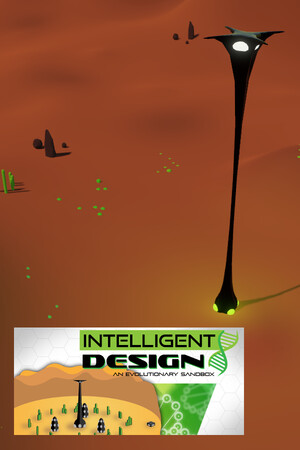
Intelligent Design: An Evolutionary Sandbox
Worth it only if watching herbivore run-speed genes drift across generations sounds like a Saturday well spent. Anyone expecting a deep god-game with clear feedback loops may bounce off fast.
Veredicto de GamerScout
Best for patient, curiosity-driven players who want to watch evolution tick, not control it with any precision.
Comparar precios(4 tiendas)
Todas las tiendas de esta tabla nos dan el precio en euros, así que la cifra en EUR es el precio que fijó el vendedor, no un cálculo nuestro, y por eso EUR es también la moneda en la que calculamos el ranking. Solo incluimos aquí una oferta cuando la tienda nos da su precio en euros, de modo que ninguna cifra de esta tabla es inventada por nosotros.
Elige USD, PLN, GBP, CAD o AUD en la cabecera y convertimos desde EUR con el tipo de cambio de referencia del Banco Central Europeo — los importes convertidos llevan el prefijo ~. Tu banco o la tienda pueden aplicar un tipo distinto al pagar. Nunca ocultamos ofertas según dónde estés: todo el mundo ve esta tabla completa.
We may earn a commission when you buy games through links on this page — at no extra cost to you. It never affects our rankings or verdicts.
Historial de precios
Capturas y multimedia
Acerca de Intelligent Design: An Evolutionary Sandbox
My spreadsheet instincts told me this one would either be a hidden gem or a half-finished science project with a Steam page, and after spending time with it the honest answer lands somewhere in the uncomfortable middle. Intelligent Design is a real-time god game built around a fully simulated genetics engine. You seed a barren world with plants, herbivores, and carnivores, then watch natural selection do its thing generation by generation. Every trait, from how tall a plant grows to how frequently a carnivore hunts, is encoded in actual per-organism genetics that get passed down and mutated by radiation over time. There are no statistical shortcuts behind the curtain. That foundation is genuinely interesting. The core loop splits into two distinct play styles. Passive observers can set up a food chain and just watch populations rise, collapse, and rebalance. Active tinkerers can open the genetics panel, which received a meaningful post-launch overhaul, and now shows every unlocked gene on a single screen with slider-based edits. Drop a modified organism into the ecosystem and see whether your changes propagate or get outcompeted in a few dozen generations. In theory that second mode is where the depth lives. In practice, the feedback on your interventions is thin. You edit a gene, release the creature, and three generations later something went extinct and you are not entirely sure whether your tweak caused it or whether it was a coincidence. The simulation is honest, but the observability is not. The corporate target structure gives the sandbox a loose progression spine. Complete performance targets and you unlock additional gene slots and organism types. It is a reasonable carrot for players who need direction, though the targets themselves can feel arbitrary when the ecosystem refuses to cooperate. Performance also becomes a real concern as populations grow and the simulation ticks on hundreds of individual creatures simultaneously, something the developer addressed in post-launch patches with notable improvements. Controls were similarly reworked after launch, dropping controller support in favor of WASD camera movement and cursor-based placement, which now sits closer to how Factorio or Two Point Hospital feel to operate. For strategy players used to legible systems, the main frustration is the opacity. The developer themselves acknowledged, in a genetics guide announcement, that gene interactions in complex ecosystems are not fully predictable even from the inside. That is philosophically charming and practically annoying. The game is not difficult in the traditional sense but it can feel unresponsive, like whispering at a simulation that cannot hear you. Community reception on Steam sits at mixed, hovering just above the halfway mark across roughly a hundred reviews, which tracks with my read: the players who connect with the ambient, observational pace tend to love it, while anyone expecting tighter cause-and-effect control tends to bounce. If you have ever burned an hour watching a Krebs cycle animation and called it fun, this game has something real to offer. It draws loose comparisons to Spore and Viva Pinata in concept but is far more austere and hands-off than either. There are no mods to speak of, no multiplayer, and no late-game escalation curve that rewards optimization the way a Paradox title does. What it does offer is a low-cost, meditative simulation with a legitimate genetic engine underneath, best appreciated in short sessions with low expectations for control and high tolerance for emergent chaos.

Strategy & simulation
Etiquetas
Requisitos del sistema
Mínimos
- OS
- Windows Vista or 7
- Memory
- 4 GB RAM
- DirectX
- Version 11
- Storage
- 500 MB available space
- Graphics
- Intel(R) HD Graphics 520
- Processor
- Quad Core @ 2.3GHz
Recomendados
- OS
- Windows 8 or 10 64 bit
- Memory
- 8 GB RAM
- DirectX
- Version 11
- Storage
- 500 MB available space
- Graphics
- NVIDIA GeForce GTX 780 or equivalent
- Processor
- Quad Core @ 3GHz
Sigue explorando
Community Discussion
Be the first to comment on Intelligent Design: An Evolutionary Sandbox.
Reseñas y valoraciones
No hay valoraciones disponibles
Información del juego
- Desarrolladora
- Pill Bug Interactive
- Distribuidora
- Pill Bug Interactive
- Fecha de lanzamiento
- 12 may 2017