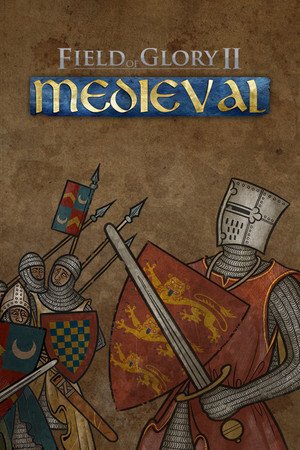
Field of Glory II: Medieval - Rise of the Swiss
If you have exhausted everything the base game and earlier DLC packs threw at you, Rise of the Swiss reloads the magazine with pike squares, Hussite war wagons, and a late-medieval tactical shift that genuinely changes how you think about unit positioning.
Veredicto de GamerScout
Committed Field of Glory II veterans get a genuinely fresh tactical layer; anyone not yet fluent in the base game should start there first.
Comparar precios(3 tiendas)
Todas las tiendas de esta tabla nos dan el precio en euros, así que la cifra en EUR es el precio que fijó el vendedor, no un cálculo nuestro, y por eso EUR es también la moneda en la que calculamos el ranking. Solo incluimos aquí una oferta cuando la tienda nos da su precio en euros, de modo que ninguna cifra de esta tabla es inventada por nosotros.
Elige USD, PLN, GBP, CAD o AUD en la cabecera y convertimos desde EUR con el tipo de cambio de referencia del Banco Central Europeo — los importes convertidos llevan el prefijo ~. Tu banco o la tienda pueden aplicar un tipo distinto al pagar. Nunca ocultamos ofertas según dónde estés: todo el mundo ve esta tabla completa.
We may earn a commission when you buy games through links on this page — at no extra cost to you. It never affects our rankings or verdicts.
Historial de precios
Capturas y multimedia
Acerca de Field of Glory II: Medieval - Rise of the Swiss
I have spent more hours than I should admit staring at formation angles and cohesion ratings in Field of Glory II: Medieval, so when Rise of the Swiss landed I was watching closely for whether it was a content dump or a genuine tactical expansion. It is mostly the latter, and that matters. The DLC extends the timeline from the late 1300s up to 1500 AD and the shift is not cosmetic. Pike-heavy Swiss formations play by meaningfully different rules from the cavalry-and-archer matchups that dominate the earlier game. The Swiss pike blocks move fast for heavy infantry, ignore enemy zones of control in ways most other units cannot, and carry no usable flanks in the conventional sense. Learning to break them, or learning to use them without overextending, is a legitimate new puzzle on top of the one you already learned. The scope beyond the Swiss themselves is what makes this worthwhile if you are already deep in the series. The Hussites bring wagon-fort defensive lines that function nothing like any other unit type in the game, forcing opponents to approach engagement geometry completely differently. The English factions split into Lancastrian, Yorkist, and Tudor army lists, each with period-appropriate compositions for the War of the Roses scenarios. Castilians mix pike with lighter skirmishing infantry. The German Imperial, Feudal, and City variants each field different force profiles. In total, 60 new army lists land here, pushing the overall Medieval roster past 300 and the sandbox permutation count into territory you will not exhaust in any reasonable timeframe. The eight historical scenarios anchor everything in real engagements: Towton, Bosworth, Grandson, Dornach, Kutna Hora, Brunkeberg, Loja, and Fornovo. These are not padding. Towton in 1461 is one of the bloodiest single-day battles in English history and the scenario reflects the numerical scale and brutal attrition involved. Grandson in 1476 lets you replay Charles the Bold's catastrophic collision with the Swiss confederation. The four accompanying campaigns cover the Swiss federation itself, the Hussite Wars, and then the perspectives of Charles the Bold and Louis XI, which gives you adversarial angles on the same period rather than just one viewpoint. That structural choice is smart and the campaigns hold up better than a single linear playthrough would. What the DLC does not fix is anything that was already a friction point in the base game. The AI handles static defensive formations reasonably well but struggles when the player uses aggressive pike advances to dictate tempo. Experienced players will find the historical scenarios challenging mostly on the harder difficulty settings, while the sandbox mode remains where the longevity actually lives. The 22 new unit models are detailed enough to read clearly at battlefield zoom, which matters when you are tracking six simultaneous engagements. The soundtrack does not get meaningfully extended, and after several sessions the audio loop becomes familiar. For newcomers asking whether to start here: do not. Rise of the Swiss is the fourth DLC in the series and the tactical vocabulary it introduces assumes you already understand cohesion thresholds, support bonuses, and how named generals affect morale across a line. The base game has enough content and a sufficient difficulty curve to build that literacy before you arrive at pike warfare and wagon forts. But for players who are already comfortable with the system and want the late-medieval period done with the same rigour the earlier content applied to the High Middle Ages, this is where Field of Glory II: Medieval finally closes the historical loop it opened.

Strategy & simulation
Etiquetas
Requisitos del sistema
Mínimos
- Processor
- 2.0GHz i5/A8 or better
- Memory
- 6 GB RAM
- Graphics
- 1GB DirectX 9 Compatible Graphics Card
- DirectX
- Version 9.0c
- Storage
- 5 GB available space
- Sound Card
- DirectX compatible…
Recomendados
- Processor
- 2.0GHz i5/A8 or better
- Memory
- 8 GB RAM
- Graphics
- Discrete 2GB DirectX 9 Compatible Graphics Card
- DirectX
- Version 9.0c
- Storage
- 6 GB available space
- Sound Card
- Direct…
Sigue explorando
Community Discussion
Be the first to comment on Field of Glory II: Medieval - Rise of the Swiss.
Reseñas y valoraciones
Información del juego
- Desarrolladora
- Byzantine Games
- Distribuidora
- Slitherine Ltd.
- Fecha de lanzamiento
- 4 feb 2021
