Compara los precios de Dorfromantik en tiendas de claves de confianza y encuentra la mejor oferta. Desarrollado por Toukana Interactive. Publicado por Toukana Interactive. Lanzado el 28/4/2022. Disponible en PC, Xbox. Géneros: Casual, Indie, Simulation, Strategy.

Hex-tile puzzling that hides genuine score-chasing depth behind the calmest exterior in PC gaming - strategy players who dismiss it as 'just relaxing' will be surprised how hard Classic mode bites back.

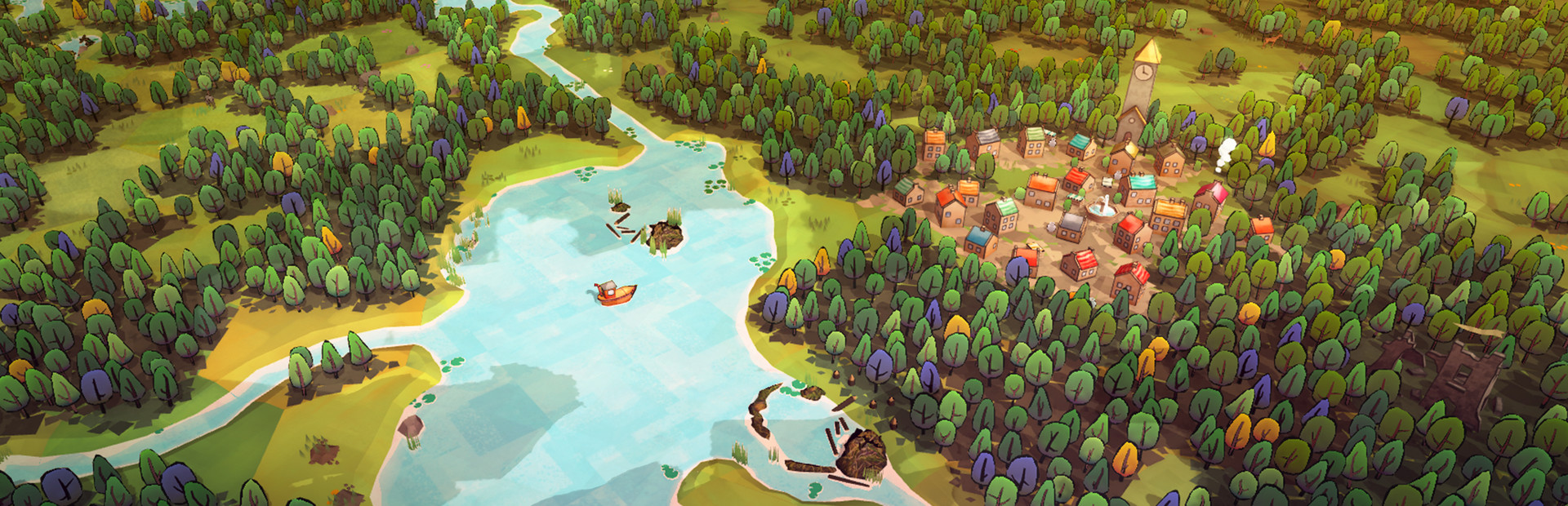
I went into Dorfromantik expecting a screen-saver with a points counter. Forty hours later I was charting optimal quest-chain routes on a notepad, which tells you everything you need to know about how well this thing conceals its strategic skeleton. The core loop is deceptively simple: draw a hexagonal tile, rotate it, place it. Points accumulate when matching terrain types align across edges - forests meeting forests, rivers flowing into rivers, railway tracks connecting. The real decision-making kicks in the moment a quest tile appears on the board. A windmill demanding six adjacent grain-field edges or a locomotive requiring ten connected track segments forces you to hold open terrain chains without accidentally closing them off too early. Managing those open ends while the tile stack drains is where the genuine tension lives, and Hard Mode - with its sparser quest distribution and more complex multi-biome tiles - makes that tension sharp. The mode selection is wider than the minimalist presentation suggests. Classic is the beating heart: a starting stack of 40 tiles that can only be extended by completing quests, with the run ending when you exhaust your supply. Quick Mode cuts that down for a tight session. Hard Mode strips out quest density and throws complex tiles at you. Monthly Mode seeds an identical tile sequence for everyone and runs a leaderboard, which adds a surprisingly competitive dimension. Creative Mode is the sandbox escape hatch - infinite tiles, the ability to discard any draw, even control over biome frequency - and it is genuinely useful not just for relaxation but for learning how biomes visually interact before committing to scoring runs. Custom Mode lets you build and share your own rulesets using an 18-character seed string, which the community has quietly turned into a lightweight challenge-sharing ecosystem. When a Classic run ends, the game even offers to convert your map into a Creative session so the landscape you built does not just disappear. The unlock progression deserves credit for not being annoying. Hidden quest tiles placed at a distance from your starting position trigger achievements when completed; finishing those achievements grants new tile designs - a wandering deer in a forest, a clock-tower village tile - and new biomes that restyle the entire visual palette. The pace of unlocks scales loosely with how well you play, meaning a newcomer is not locked behind score walls that feel insurmountable. That is the kind of tutorial-adjacent onboarding philosophy I wish more strategy games would absorb. The tutorial itself is short, hands-off, and rewards completion with the Windmill tile - a small but meaningful gesture that says the game respects your time. The honest weaknesses are two. First, the RNG can be punishing in ways that feel outside your control: when your only open quest needs railway tiles and the stack decides to flood you with grassland-only hexes, there is nothing strategic to be done. This happens rarely in Classic, more often in Hard, and is the main reason experienced players chase the Monthly leaderboard where everyone shares the same bad luck equally. Second, there is no multiplayer. The board game version of Dorfromantik runs cooperative sessions for up to six players, and the absence of even a local pass-and-play option on PC is a real gap. Sitting alongside someone and sharing tile decisions is how a lot of people actually play it anyway - unofficially, one mouse between two people - so an official mode would have been welcome. The recently released Medieval Biome Pack adds a cosmetic layer - summer, autumn, and winter medieval skins with castles replacing forest ruins and water fortresses replacing train stations - but it is purely visual and does not touch mechanics, which is the right call for a DLC of that scope. For strategy players conditioned to think that anything without a tech tree is beneath them: this one earns a session. The scoring ceiling in Classic is high enough that chasing it becomes a legitimate optimization puzzle, the modes give you a structured ladder from total beginner to score-chasing obsessive, and the presentation - dynamic day-night cycles, animated boats on completed waterways, little animals moving through finished forests - makes even a failed run feel like something you built rather than something you lost. Diego, Scout Team

Dorfromantik

Dorfromantik

28 abr 2022Toukana Interactive
GamerScout opina

Hex-tile puzzling that hides genuine score-chasing depth behind the calmest exterior in PC gaming - strategy players who dismiss it as 'just relaxing' will be surprised how hard Classic mode bites back.

PCXbox
Steam Deck VerifiedProtonDB Platinum
Mejor precio disponible
13,05 €
en Gamivo
Mínimo registrado: 3,89 €
Sigue este precio

Veredicto de GamerScout

Essential for puzzle fans who want a genuine scoring challenge wrapped in the most low-pressure presentation on PC.

Comparar precios(3 tiendas)

GamivoMejor precio
StandardEuropa (UE)Steam KeyClave
13,05 €
La tienda fija el precio en EUR
Comprar
StandardGlobalSteam KeyClave
18,32 €
La tienda fija el precio en EUR
Comprar
StandardGlobalSteam KeyClave
20,98 €
La tienda fija el precio en EUR
Comprar
StandardGlobalSteam KeyClave
22,41 €
La tienda fija el precio en EUR
Comprar
StandardEuropa (UE)Steam KeyClave
23,97 €
La tienda fija el precio en EUR
Comprar
StandardEuropa (UE)Steam KeyClave
199,00 €
La tienda fija el precio en EUR
Comprar

Todas las tiendas de esta tabla nos dan el precio en euros, así que la cifra en EUR es el precio que fijó el vendedor, no un cálculo nuestro, y por eso EUR es también la moneda en la que calculamos el ranking. Solo incluimos aquí una oferta cuando la tienda nos da su precio en euros, de modo que ninguna cifra de esta tabla es inventada por nosotros.

Elige USD, PLN, GBP, CAD o AUD en la cabecera y convertimos desde EUR con el tipo de cambio de referencia del Banco Central Europeo — los importes convertidos llevan el prefijo ~. Tu banco o la tienda pueden aplicar un tipo distinto al pagar. Nunca ocultamos ofertas según dónde estés: todo el mundo ve esta tabla completa.

We may earn a commission when you buy games through links on this page — at no extra cost to you. It never affects our rankings or verdicts.

Historial de precios

Mínimo registrado
3,89 €26 jun 2026
Mejor precio actual
13,05 €
Tiendas de claves
0,00 €30,52 €61,05 €91,57 €8 Jun25 Jun12 Jul29 Jul15 Aug
8 jun — 15 ago
Crear alerta

Capturas y multimedia

Acerca de Dorfromantik

I went into Dorfromantik expecting a screen-saver with a points counter. Forty hours later I was charting optimal quest-chain routes on a notepad, which tells you everything you need to know about how well this thing conceals its strategic skeleton. The core loop is deceptively simple: draw a hexagonal tile, rotate it, place it. Points accumulate when matching terrain types align across edges - forests meeting forests, rivers flowing into rivers, railway tracks connecting. The real decision-making kicks in the moment a quest tile appears on the board. A windmill demanding six adjacent grain-field edges or a locomotive requiring ten connected track segments forces you to hold open terrain chains without accidentally closing them off too early. Managing those open ends while the tile stack drains is where the genuine tension lives, and Hard Mode - with its sparser quest distribution and more complex multi-biome tiles - makes that tension sharp. The mode selection is wider than the minimalist presentation suggests. Classic is the beating heart: a starting stack of 40 tiles that can only be extended by completing quests, with the run ending when you exhaust your supply. Quick Mode cuts that down for a tight session. Hard Mode strips out quest density and throws complex tiles at you. Monthly Mode seeds an identical tile sequence for everyone and runs a leaderboard, which adds a surprisingly competitive dimension. Creative Mode is the sandbox escape hatch - infinite tiles, the ability to discard any draw, even control over biome frequency - and it is genuinely useful not just for relaxation but for learning how biomes visually interact before committing to scoring runs. Custom Mode lets you build and share your own rulesets using an 18-character seed string, which the community has quietly turned into a lightweight challenge-sharing ecosystem. When a Classic run ends, the game even offers to convert your map into a Creative session so the landscape you built does not just disappear. The unlock progression deserves credit for not being annoying. Hidden quest tiles placed at a distance from your starting position trigger achievements when completed; finishing those achievements grants new tile designs - a wandering deer in a forest, a clock-tower village tile - and new biomes that restyle the entire visual palette. The pace of unlocks scales loosely with how well you play, meaning a newcomer is not locked behind score walls that feel insurmountable. That is the kind of tutorial-adjacent onboarding philosophy I wish more strategy games would absorb. The tutorial itself is short, hands-off, and rewards completion with the Windmill tile - a small but meaningful gesture that says the game respects your time. The honest weaknesses are two. First, the RNG can be punishing in ways that feel outside your control: when your only open quest needs railway tiles and the stack decides to flood you with grassland-only hexes, there is nothing strategic to be done. This happens rarely in Classic, more often in Hard, and is the main reason experienced players chase the Monthly leaderboard where everyone shares the same bad luck equally. Second, there is no multiplayer. The board game version of Dorfromantik runs cooperative sessions for up to six players, and the absence of even a local pass-and-play option on PC is a real gap. Sitting alongside someone and sharing tile decisions is how a lot of people actually play it anyway - unofficially, one mouse between two people - so an official mode would have been welcome. The recently released Medieval Biome Pack adds a cosmetic layer - summer, autumn, and winter medieval skins with castles replacing forest ruins and water fortresses replacing train stations - but it is purely visual and does not touch mechanics, which is the right call for a DLC of that scope. For strategy players conditioned to think that anything without a tech tree is beneath them: this one earns a session. The scoring ceiling in Classic is high enough that chasing it becomes a legitimate optimization puzzle, the modes give you a structured ladder from total beginner to score-chasing obsessive, and the presentation - dynamic day-night cycles, animated boats on completed waterways, little animals moving through finished forests - makes even a failed run feel like something you built rather than something you lost.

Diego
Diego · Scout Team

Strategy & simulation

Etiquetas

singleplayerachievementscontroller-supporttrading-cardscloud-savestier:aaaHex Tile PlacementScore ChasingCozy PuzzleProcedural RunsUnlockable BiomesMonthly LeaderboardCreative SandboxQuest Chaining

Requisitos del sistema

Mínimos

OS
Windows 7
Memory
3 GB RAM
Storage
650 MB available space
Graphics
Nvidia GT550M | AMD Radeon R7/HD 5650 | Intel HD 520
Processor
2 GHz Dual Core (Intel / AMD)
Sound Card
use your imagination to make your own sounds :)

Recomendados

OS
Windows 10
Memory
4 GB RAM
Storage
650 MB available space
Graphics
Nvidia GT740M | AMD Radeon R8 | Intel HD 630
Processor
2.5 GHz Dual Core (Intel / AMD)
Sound Card
have one :)

Sigue explorando

Community Discussion

Be the first to comment on Dorfromantik.

Reseñas y valoraciones

No hay valoraciones disponibles

Información del juego

Desarrolladora
Toukana Interactive
Distribuidora
Toukana Interactive
Fecha de lanzamiento
28 abr 2022

Alerta de precio

¡Recibe un aviso cuando el precio baje de tu objetivo!

Crear alerta
Mejor precio13,05 €
Ver oferta

En los 21.266 juegos que seguimos, una clave verificada fue más barata que la tienda oficial el 92% de las veces. Consulta el método y las cifras completas en nuestro informe de precios de juegos.

¿Sin tarjeta? Paga de otra forma

Recarga tu saldo de Steam o compra crypto con cualquier tarjeta — entrega instantánea, sin cuenta bancaria.

Compra mejor: guías útiles

¿Buscas más? Mira juegos como Dorfromantik →

Preguntas frecuentes sobre Dorfromantik

¿Cuánto cuesta Dorfromantik?

A 15 de agosto de 2026, la oferta más barata disponible de Dorfromantik es €13.05 en Gamivo, de entre 6 ofertas activas que seguimos en tiendas de claves verificadas. Los precios cambian a diario — la tabla de esta página se actualiza continuamente.

¿Dónde puedo comprar Dorfromantik más barato?

El precio más bajo disponible que seguimos para Dorfromantik es €13.05 en Gamivo (15 de agosto de 2026). Comparamos 6 ofertas activas de tiendas de claves verificadas — la tabla completa con cada tienda y su puntuación de confianza está en esta página.

¿En qué plataformas está disponible Dorfromantik?

Dorfromantik está disponible en PC, Xbox.

¿Cuándo se lanzó Dorfromantik?

Dorfromantik se lanzó el 28 de abril de 2022.

¿Quién desarrolló Dorfromantik?

Dorfromantik fue desarrollado por Toukana Interactive.