Compara los precios de Die After Sunset en tiendas de claves de confianza y encuentra la mejor oferta. Desarrollado por Playstark. Publicado por PQube. Lanzado el 17/8/2023. Disponible en PC, Nintendo Switch, Xbox. Géneros: Action, Adventure, Indie.

A cartoony third-person roguelite that has one genuinely clever trick up its sleeve - but whether that trick carries five levels in a single sitting is the real question.

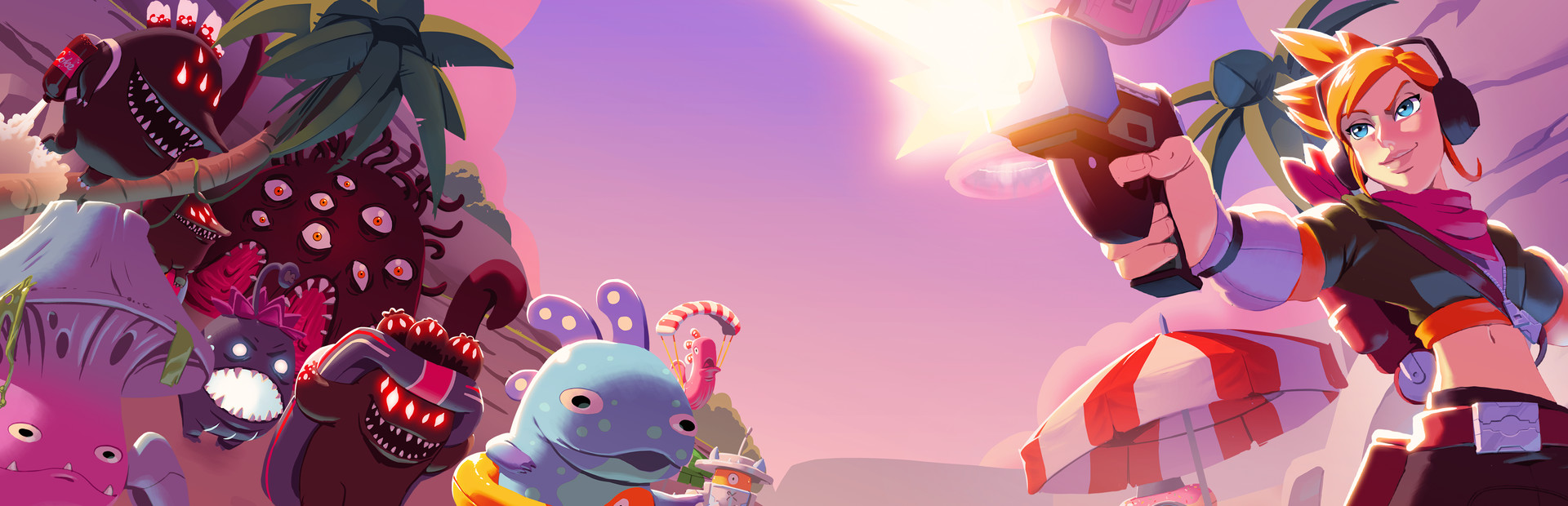
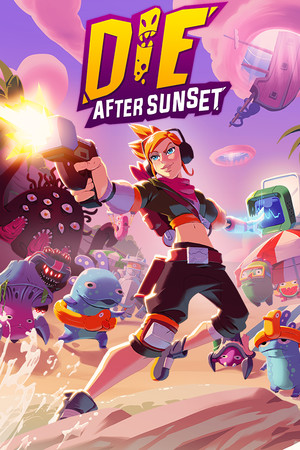
My honest first reaction to Die After Sunset was one of cautious curiosity. Barcelona-based studio Playstark built something around a central mechanic that is quietly inspired: the alien Murkors are goofy, pool-noodle-waving cartoon creatures in direct sunlight, but the moment they step into shadow they darken, bulk up, and become genuinely threatening. That light-and-dark tension shapes how you move through each level, keeps your eyes on the environment rather than just the minimap, and gives the whole thing a sense of personality that the rest of the game sometimes struggles to match. The loop itself is tightly timed. You drop into one of five stages - the opening is set on Waikiki Beach, which tells you exactly what kind of tone to expect - and a countdown clock governs how long you have before a colossal boss materializes. Spend that window wisely: complete randomized mini-quests (stopping Murkors from stealing swimwear, rotating mirrors to direct a beam onto an idol, defending a generator from incoming waves), earn star ratings on each one, and crack open reward chests that offer a mix of health, shield, damage, or light stat upgrades alongside drones, turrets, grenades with varying effects, and oddball gadgets. Between runs, the Mukus currency you farm - literally named after a bodily secretion, which is very much a design choice - feeds a meta-progression tree with permanent unlocks like faster dodges, double jumps, and item vending machines. The three playable characters each carry distinct loadouts: April brings a pistol and charge shot, Rido packs a machine gun with a cyborg kick, and Hune is a Murkor experiment gone wrong with his own quirks to discover. Here is where the warmth I want to extend runs up against some genuine friction. The control feel is the most consistent complaint across virtually every review the game received at launch - aiming is floaty, aiming while rolling is awkward, and at launch April famously held machine guns sideways. Movement is fast but described by multiple outlets as lacking weight. The quest objectives are often under-explained: you arrive at an event marker and the title of the quest is roughly all the guidance you get, which means early runs are partially a tutorial in reading the game's own shorthand. The requirement to complete all five stages in a single run before any progress locks in is a significant commitment for a roguelite that, honestly, does not yet generate the kind of escalating power-fantasy momentum that makes a Hades or a Risk of Rain 2 feel compulsive. Critics who spent time with it noted that the power-up stacking never quite tips into the delirious overpowered feeling that the best games in this genre chase. Steam users have landed the game at a mixed rating (roughly 62% positive from a modest sample), and that split feels about right. What does work: the visual palette is vibrant without being exhausting, the stage geography rewards exploration with height variation and hidden chests tucked into dark caves, and the sound design escalates meaningfully when a boss arrives - the audio gets louder and more intense at exactly the right moment, which is a small but smart choice. For players who already love the roguelite rhythm and want something lighter in tone and shorter in individual session length than the genre heavyweights, Die After Sunset occupies a real niche. It is not a game trying to reinvent anything. It is a modestly-budgeted indie with one strong central idea that asked for more polish time than it received. Kai, Scout Team

Die After Sunset

Die After Sunset

17 ago 2023PlaystarkPQube
GamerScout opina

A cartoony third-person roguelite that has one genuinely clever trick up its sleeve - but whether that trick carries five levels in a single sitting is the real question.

PCNintendo SwitchXbox
Steam Deck Verified
Mejor precio disponible
3,99 €
en Kinguin
Mínimo registrado: 3,99 €
Sigue este precio

Veredicto de GamerScout

Worth a discounted pick-up for roguelite completionists, but don't expect the power-curve rush that defines the genre's best.

Comparar precios(6 tiendas)

KinguinMejor precio
StandardEuropa (UE)Steam KeyClave
3,99 €
La tienda fija el precio en EUR
Comprar
StandardEuropa (UE)PS5Clave
4,30 €
La tienda fija el precio en EUR
Comprar
StandardEuropa (UE)Steam KeyClave
6,07 €
La tienda fija el precio en EUR
Comprar
StandardEuropa (UE)Nintendo SwitchClave
7,61 €-62%
La tienda fija el precio en EUR
Comprar

Todas las tiendas de esta tabla nos dan el precio en euros, así que la cifra en EUR es el precio que fijó el vendedor, no un cálculo nuestro, y por eso EUR es también la moneda en la que calculamos el ranking. Solo incluimos aquí una oferta cuando la tienda nos da su precio en euros, de modo que ninguna cifra de esta tabla es inventada por nosotros.

Elige USD, PLN, GBP, CAD o AUD en la cabecera y convertimos desde EUR con el tipo de cambio de referencia del Banco Central Europeo — los importes convertidos llevan el prefijo ~. Tu banco o la tienda pueden aplicar un tipo distinto al pagar. Nunca ocultamos ofertas según dónde estés: todo el mundo ve esta tabla completa.

We may earn a commission when you buy games through links on this page — at no extra cost to you. It never affects our rankings or verdicts.

Historial de precios

Mínimo registrado
3,99 €7 jun 2026
Mejor precio actual
3,99 €
El más bajo desde que lo seguimos
Tiendas de claves
3,67 €3,88 €4,10 €4,31 €7 Jun24 Jun12 Jul29 Jul15 Aug
7 jun — 15 ago
Crear alerta

Capturas y multimedia

Acerca de Die After Sunset

My honest first reaction to Die After Sunset was one of cautious curiosity. Barcelona-based studio Playstark built something around a central mechanic that is quietly inspired: the alien Murkors are goofy, pool-noodle-waving cartoon creatures in direct sunlight, but the moment they step into shadow they darken, bulk up, and become genuinely threatening. That light-and-dark tension shapes how you move through each level, keeps your eyes on the environment rather than just the minimap, and gives the whole thing a sense of personality that the rest of the game sometimes struggles to match. The loop itself is tightly timed. You drop into one of five stages - the opening is set on Waikiki Beach, which tells you exactly what kind of tone to expect - and a countdown clock governs how long you have before a colossal boss materializes. Spend that window wisely: complete randomized mini-quests (stopping Murkors from stealing swimwear, rotating mirrors to direct a beam onto an idol, defending a generator from incoming waves), earn star ratings on each one, and crack open reward chests that offer a mix of health, shield, damage, or light stat upgrades alongside drones, turrets, grenades with varying effects, and oddball gadgets. Between runs, the Mukus currency you farm - literally named after a bodily secretion, which is very much a design choice - feeds a meta-progression tree with permanent unlocks like faster dodges, double jumps, and item vending machines. The three playable characters each carry distinct loadouts: April brings a pistol and charge shot, Rido packs a machine gun with a cyborg kick, and Hune is a Murkor experiment gone wrong with his own quirks to discover. Here is where the warmth I want to extend runs up against some genuine friction. The control feel is the most consistent complaint across virtually every review the game received at launch - aiming is floaty, aiming while rolling is awkward, and at launch April famously held machine guns sideways. Movement is fast but described by multiple outlets as lacking weight. The quest objectives are often under-explained: you arrive at an event marker and the title of the quest is roughly all the guidance you get, which means early runs are partially a tutorial in reading the game's own shorthand. The requirement to complete all five stages in a single run before any progress locks in is a significant commitment for a roguelite that, honestly, does not yet generate the kind of escalating power-fantasy momentum that makes a Hades or a Risk of Rain 2 feel compulsive. Critics who spent time with it noted that the power-up stacking never quite tips into the delirious overpowered feeling that the best games in this genre chase. Steam users have landed the game at a mixed rating (roughly 62% positive from a modest sample), and that split feels about right. What does work: the visual palette is vibrant without being exhausting, the stage geography rewards exploration with height variation and hidden chests tucked into dark caves, and the sound design escalates meaningfully when a boss arrives - the audio gets louder and more intense at exactly the right moment, which is a small but smart choice. For players who already love the roguelite rhythm and want something lighter in tone and shorter in individual session length than the genre heavyweights, Die After Sunset occupies a real niche. It is not a game trying to reinvent anything. It is a modestly-budgeted indie with one strong central idea that asked for more polish time than it received.

Kai
Kai · Scout Team

Indie & narrative

Etiquetas

singleplayerachievementscontroller-supportcloud-savestier:indieLight-Dark MechanicTimed RunsMeta-ProgressionThird-Person ShooterCartoon AestheticSingle-Run GauntletMukus CurrencyMulti-Character RosterBoss Rush

Requisitos del sistema

Mínimos

OS
Windows 7 SP1+, Windows 8 and Windows 10
Memory
8 GB RAM
Storage
3 GB available space
Graphics
Nvidia GTX 650-Ti / AMD Radeon HD 7790
Processor
Intel® Core™ i5-4460, 3.20GHz / AMD FX™-6300
Sound Card
DirectX compatible sound card

Recomendados

OS
Windows 7 SP1+, Windows 8 and Windows 10
Memory
8 GB RAM
Storage
3 GB available space
Graphics
GeForce GTX 1060 6GB / AMD RX 480 4GB
Processor
Intel(R) Core(TM) i5-6400 CPU @ 2.70GHz / AMD FX-8350
Sound Card
DirectX compatible sound card

Sigue explorando

Community Discussion

Be the first to comment on Die After Sunset.

Reseñas y valoraciones

No hay valoraciones disponibles

Información del juego

Desarrolladora
Playstark
Distribuidora
PQube
Fecha de lanzamiento
17 ago 2023

Alerta de precio

¡Recibe un aviso cuando el precio baje de tu objetivo!

Crear alerta
Mejor precio3,99 €
Ver oferta

En los 21.266 juegos que seguimos, una clave verificada fue más barata que la tienda oficial el 92% de las veces. Consulta el método y las cifras completas en nuestro informe de precios de juegos.

¿Sin tarjeta? Paga de otra forma

Recarga tu saldo de Steam o compra crypto con cualquier tarjeta — entrega instantánea, sin cuenta bancaria.

Compra mejor: guías útiles

¿Buscas más? Mira juegos como Die After Sunset →

Preguntas frecuentes sobre Die After Sunset

¿Cuánto cuesta Die After Sunset?

A 15 de agosto de 2026, la oferta más barata disponible de Die After Sunset es €3.99 en Kinguin, de entre 10 ofertas activas que seguimos en tiendas de claves verificadas. Los precios cambian a diario — la tabla de esta página se actualiza continuamente.

¿Dónde puedo comprar Die After Sunset más barato?

El precio más bajo disponible que seguimos para Die After Sunset es €3.99 en Kinguin (15 de agosto de 2026). Comparamos 10 ofertas activas de tiendas de claves verificadas — la tabla completa con cada tienda y su puntuación de confianza está en esta página.

¿En qué plataformas está disponible Die After Sunset?

Die After Sunset está disponible en PC, Nintendo Switch, Xbox.

¿Cuándo se lanzó Die After Sunset?

Die After Sunset se lanzó el 17 de agosto de 2023.

¿Quién desarrolló Die After Sunset?

Die After Sunset fue desarrollado por Playstark y publicado por PQube.