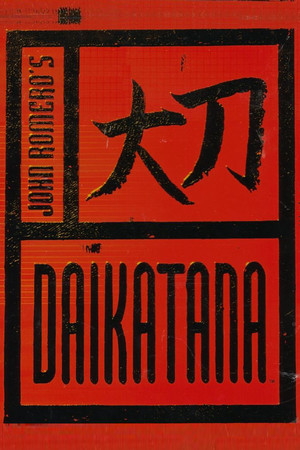
Compara los precios de Daikatana en tiendas de claves de confianza y encuentra la mejor oferta. Desarrollado por Ion Storm. Publicado por Square Enix. Lanzado el 1/10/2013. Disponible en PC. Géneros: Action.

Gaming history's most infamous misfire is now on Steam, and curiosity is basically the only valid reason to load it up. Approach as an artifact, not an adventure.

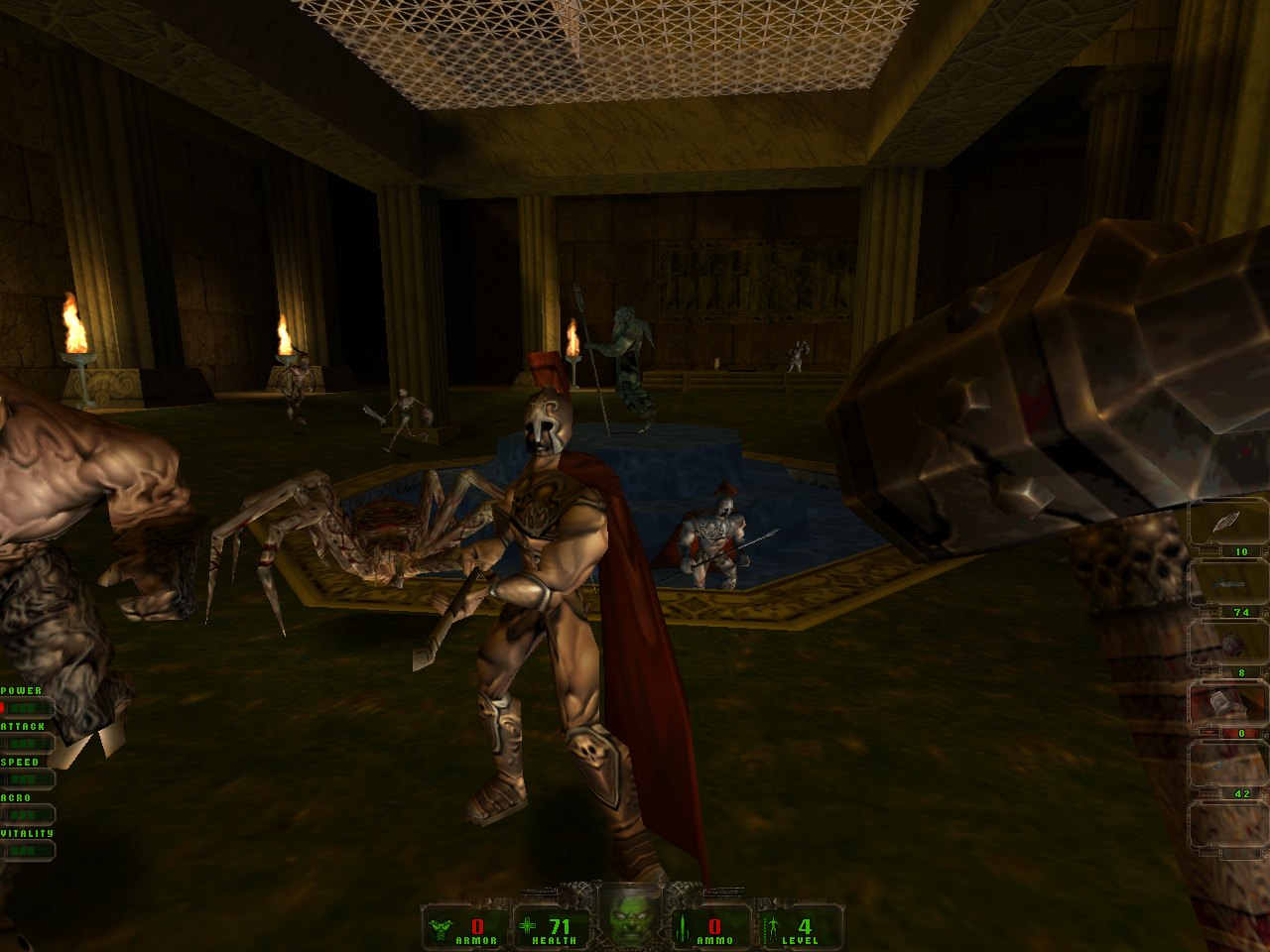
My first thought loading Daikatana was that I was essentially booting up a time capsule sealed in 2000 and buried under twenty years of internet infamy. The reputation precedes it so completely that reviewing the actual game almost feels beside the point, but here we are. This is a first-person shooter built on the Quake II engine, spread across 24 levels divided into four distinct episodes, each set in a different time period: futuristic Japan in 2455 AD, ancient Greece, Dark Ages Norway, and near-future San Francisco. On paper, that variety sounds appealing. In practice, the execution is the story of a game that never recovered from its own troubled development. The core loop is old-school arena shooting, with no cover mechanics and fast movement that fans of classic id Software titles will recognize immediately. Each episode swaps out the weapon roster, so you trade the Ion Blaster, a pistol whose ricocheting shots will cheerfully hurt you in water, for period-appropriate alternatives as you progress. There is also an experience point system that lets you level up attributes like speed, jump height, rate of fire, and vitality. The Daikatana sword itself can be leveled up by landing kills with it, growing more powerful but also more visually intrusive, eventually bisecting a chunk of your screen with glowing energy effects. The RPG layer sounds interesting in concept, but the attribute increases have so little tangible impact on play that you could largely ignore the entire system and notice almost no difference. The game's most notorious design decision is the AI sidekick system. Companions Mikiko Ebihara and Superfly Johnson follow you through most of the campaign, and losing either one means failing the level outright. Their pathfinding is genuinely bad. They get stuck on terrain, lag behind through doors, miss firefights entirely, and require active babysitting through areas that are already trying to kill you with cheap hitscan turrets and swarms of robotic insects. The save system compounds the friction further: rather than quicksaving freely, the original design tied saves to consumable Save Gems scattered around each level, which means running out carries real consequences. Community patches have addressed some of these technical issues and added widescreen support, so if you do play it, find patch 1.3 before you do anything else. What works, and it is a short list, is the soundtrack. The music is a confident mix of electro rock and heavier influences that fits the game's pulpy sci-fi tone better than anything else about it. The four-episode structure at least attempts genuine variety in setting and enemy roster, and there are moments, mostly in the Greece episode, where the level design approaches something competent. But these are islands in a wider sea of rough geometry, incoherent enemy placement, and a story delivered through cutscenes so poorly paced they read as a parody of late-90s FPS storytelling. Computer Gaming World named it the worst game of 2000 at the time, and replaying it today offers little reason to dispute that verdict. Who is Daikatana actually for right now? Retro FPS collectors who want every piece of the era on their shelf, and people drawn to gaming history's bigger cautionary tales. If you genuinely want to understand what made the Romero hype machine collapse so loudly, playing it is more illuminating than reading about it. For everyone else, the curiosity is satisfied faster by a YouTube playthrough than by personally navigating the swamp frogs in episode one. Alex, Scout Team

Daikatana

Daikatana

1 oct 2013Ion StormSquare Enix
GamerScout opina

Gaming history's most infamous misfire is now on Steam, and curiosity is basically the only valid reason to load it up. Approach as an artifact, not an adventure.

PC
ProtonDB Gold
Mejor precio disponible
1,17 €
en Kinguin
Mínimo registrado: 1,17 €
Sigue este precio

Veredicto de GamerScout

Buy only if you want to experience gaming history firsthand; everyone else should watch a playthrough and save the frustration.

Comparar precios(5 tiendas)

KinguinMejor precio
StandardGlobalSteam KeyClave
1,17 €
La tienda fija el precio en EUR
Comprar
StandardEuropa (UE)Steam KeyClave
1,19 €
La tienda fija el precio en EUR
Comprar
StandardGlobalSteam KeyClave
1,26 €-79%
La tienda fija el precio en EUR
Comprar
StandardGlobalSteam KeyClave
1,38 €
La tienda fija el precio en EUR
Comprar
StandardGlobalSteam KeyClave
1,40 €-77%
La tienda fija el precio en EUR
Comprar
StandardEuropa (UE)Steam KeyClave
1,95 €
La tienda fija el precio en EUR
Comprar
StandardGlobalSteam KeyCopia de regalo
7,56 €
La tienda fija el precio en EUR
Comprar

Todas las tiendas de esta tabla nos dan el precio en euros, así que la cifra en EUR es el precio que fijó el vendedor, no un cálculo nuestro, y por eso EUR es también la moneda en la que calculamos el ranking. Solo incluimos aquí una oferta cuando la tienda nos da su precio en euros, de modo que ninguna cifra de esta tabla es inventada por nosotros.

Elige USD, PLN, GBP, CAD o AUD en la cabecera y convertimos desde EUR con el tipo de cambio de referencia del Banco Central Europeo — los importes convertidos llevan el prefijo ~. Tu banco o la tienda pueden aplicar un tipo distinto al pagar. Nunca ocultamos ofertas según dónde estés: todo el mundo ve esta tabla completa.

We may earn a commission when you buy games through links on this page — at no extra cost to you. It never affects our rankings or verdicts.

Historial de precios

Mínimo registrado
1,17 €3 ago 2026
Mejor precio actual
1,17 €
El más bajo desde que lo seguimos
Tiendas de claves
1,09 €1,15 €1,22 €1,28 €6 Jul16 Jul26 Jul5 Aug15 Aug
6 jul — 15 ago
Crear alerta

Capturas y multimedia

Captura

Acerca de Daikatana

My first thought loading Daikatana was that I was essentially booting up a time capsule sealed in 2000 and buried under twenty years of internet infamy. The reputation precedes it so completely that reviewing the actual game almost feels beside the point, but here we are. This is a first-person shooter built on the Quake II engine, spread across 24 levels divided into four distinct episodes, each set in a different time period: futuristic Japan in 2455 AD, ancient Greece, Dark Ages Norway, and near-future San Francisco. On paper, that variety sounds appealing. In practice, the execution is the story of a game that never recovered from its own troubled development. The core loop is old-school arena shooting, with no cover mechanics and fast movement that fans of classic id Software titles will recognize immediately. Each episode swaps out the weapon roster, so you trade the Ion Blaster, a pistol whose ricocheting shots will cheerfully hurt you in water, for period-appropriate alternatives as you progress. There is also an experience point system that lets you level up attributes like speed, jump height, rate of fire, and vitality. The Daikatana sword itself can be leveled up by landing kills with it, growing more powerful but also more visually intrusive, eventually bisecting a chunk of your screen with glowing energy effects. The RPG layer sounds interesting in concept, but the attribute increases have so little tangible impact on play that you could largely ignore the entire system and notice almost no difference. The game's most notorious design decision is the AI sidekick system. Companions Mikiko Ebihara and Superfly Johnson follow you through most of the campaign, and losing either one means failing the level outright. Their pathfinding is genuinely bad. They get stuck on terrain, lag behind through doors, miss firefights entirely, and require active babysitting through areas that are already trying to kill you with cheap hitscan turrets and swarms of robotic insects. The save system compounds the friction further: rather than quicksaving freely, the original design tied saves to consumable Save Gems scattered around each level, which means running out carries real consequences. Community patches have addressed some of these technical issues and added widescreen support, so if you do play it, find patch 1.3 before you do anything else. What works, and it is a short list, is the soundtrack. The music is a confident mix of electro rock and heavier influences that fits the game's pulpy sci-fi tone better than anything else about it. The four-episode structure at least attempts genuine variety in setting and enemy roster, and there are moments, mostly in the Greece episode, where the level design approaches something competent. But these are islands in a wider sea of rough geometry, incoherent enemy placement, and a story delivered through cutscenes so poorly paced they read as a parody of late-90s FPS storytelling. Computer Gaming World named it the worst game of 2000 at the time, and replaying it today offers little reason to dispute that verdict. Who is Daikatana actually for right now? Retro FPS collectors who want every piece of the era on their shelf, and people drawn to gaming history's bigger cautionary tales. If you genuinely want to understand what made the Romero hype machine collapse so loudly, playing it is more illuminating than reading about it. For everyone else, the curiosity is satisfied faster by a YouTube playthrough than by personally navigating the swamp frogs in episode one.

Alex
Alex · Scout Team

Catch-all

Etiquetas

singleplayercloud-savestier:sub-5Boomer ShooterTroubled DevelopmentAI CompanionsTime Travel SettingRPG-LiteConsumable Save SystemHistorical CuriosityQuake II Engine

Requisitos del sistema

Mínimos

OS
Windows XP / Vista / 7 / 8
Memory
512 MB RAM
DirectX
Version 9.0c
Storage
1 GB available space
Graphics
3D graphics card compatible with DirectX 9.0
Processor
Pentium 4 1.8 GHz

Sigue explorando

Community Discussion

Be the first to comment on Daikatana.

Reseñas y valoraciones

No hay valoraciones disponibles

Información del juego

Desarrolladora
Ion Storm
Distribuidora
Square Enix
Fecha de lanzamiento
1 oct 2013

Alerta de precio

¡Recibe un aviso cuando el precio baje de tu objetivo!

Crear alerta
Mejor precio1,17 €
Ver oferta

En los 21.266 juegos que seguimos, una clave verificada fue más barata que la tienda oficial el 92% de las veces. Consulta el método y las cifras completas en nuestro informe de precios de juegos.

¿Sin tarjeta? Paga de otra forma

Recarga tu saldo de Steam o compra crypto con cualquier tarjeta — entrega instantánea, sin cuenta bancaria.

Más de Ion Storm

Compra mejor: guías útiles

¿Buscas más? Mira juegos como Daikatana →

Preguntas frecuentes sobre Daikatana

¿Cuánto cuesta Daikatana?

A 15 de agosto de 2026, la oferta más barata disponible de Daikatana es €1.17 en Kinguin, de entre 7 ofertas activas que seguimos en tiendas de claves verificadas. Los precios cambian a diario — la tabla de esta página se actualiza continuamente.

¿Dónde puedo comprar Daikatana más barato?

El precio más bajo disponible que seguimos para Daikatana es €1.17 en Kinguin (15 de agosto de 2026). Comparamos 7 ofertas activas de tiendas de claves verificadas — la tabla completa con cada tienda y su puntuación de confianza está en esta página.

¿En qué plataformas está disponible Daikatana?

Daikatana está disponible en PC.

¿Cuándo se lanzó Daikatana?

Daikatana se lanzó el 1 de octubre de 2013.

¿Quién desarrolló Daikatana?

Daikatana fue desarrollado por Ion Storm y publicado por Square Enix.