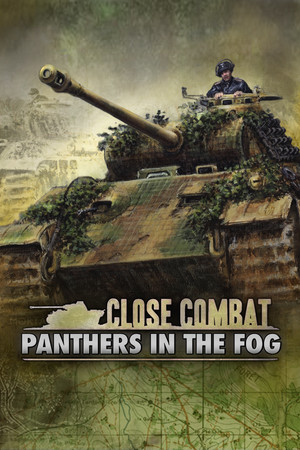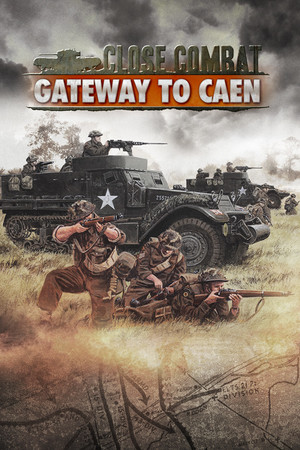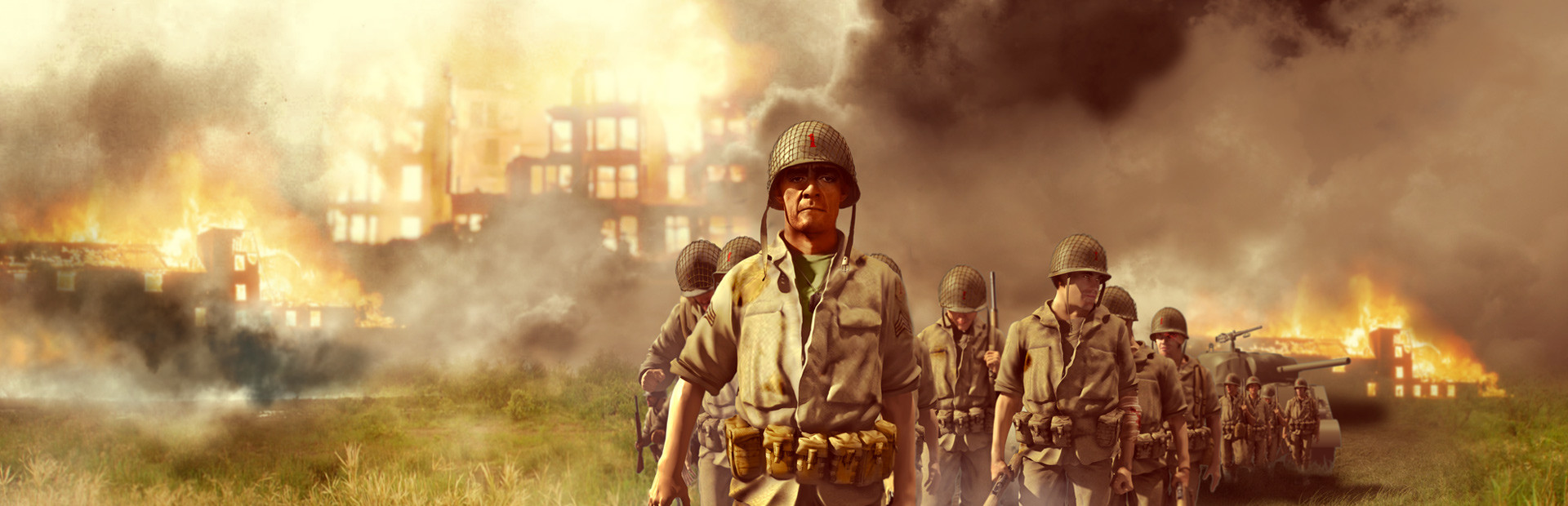
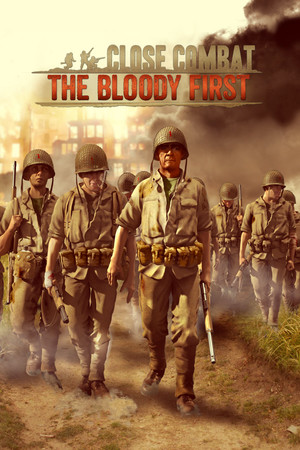
Close Combat: The Bloody First
A long-awaited series revival that gets the core infantry psychology right but stumbles badly out of the gate on AI, pathfinding, and visual fidelity. Buy the dip, not the launch hype.
Veredicto de GamerScout
Best for Close Combat veterans and WW2 tactics diehards willing to tolerate rough edges in exchange for unmatched infantry morale depth.
Comparar precios(6 tiendas)
Todas las tiendas de esta tabla nos dan el precio en euros, así que la cifra en EUR es el precio que fijó el vendedor, no un cálculo nuestro, y por eso EUR es también la moneda en la que calculamos el ranking. Solo incluimos aquí una oferta cuando la tienda nos da su precio en euros, de modo que ninguna cifra de esta tabla es inventada por nosotros.
Elige USD, PLN, GBP, CAD o AUD en la cabecera y convertimos desde EUR con el tipo de cambio de referencia del Banco Central Europeo — los importes convertidos llevan el prefijo ~. Tu banco o la tienda pueden aplicar un tipo distinto al pagar. Nunca ocultamos ofertas según dónde estés: todo el mundo ve esta tabla completa.
We may earn a commission when you buy games through links on this page — at no extra cost to you. It never affects our rankings or verdicts.
Historial de precios
Capturas y multimedia
Acerca de Close Combat: The Bloody First
I have a soft spot for squad-level real-time tactics games that treat morale as a first-class mechanic, and that is exactly why Close Combat: The Bloody First is both interesting and frustrating to evaluate. The series has been doing individual soldier psychology since 1996, and this entry keeps that tradition alive. Every man in your company is tracked by name, kill count, and mental state. A tank crew member can panic after an armour-penetrating round bounces harmlessly off the hull; a rifleman who has watched his squad get cut apart by an MG team may simply refuse your next move order. That granularity still feels fresh against the broader RTS landscape, and it remains the single strongest reason to give this game a look. The move to the 3D Archon engine, the first full engine overhaul the series has ever seen, produces genuinely useful results in one area: line-of-sight. Pressing CTRL now activates a viewshed function that shades unseen terrain, which is a significant step up from the old fire-line radar-sweep approach. Elevation also reads much better in 3D, which matters enormously when you are deciding whether to push infantry up a craggy Tunisian ridgeline or hold a bocage-flanked road in Normandy. The three-theatre grand campaign, covering Tunisia, Sicily, and Normandy with 32 battlefield maps and over 36 discrete battles, gives the game genuine scale. Pre-battle options let you choose attack timing, from a hasty assault with no resupply to a dawn attack that may refill off-map support like airstrikes, and you can reorganise squads into specialist roles including scouts, anti-tank teams, and close-combat detachments. Here is where the ledger turns ugly. The AI is weak, and community criticism at launch was sharp and sustained. Pathfinding misfires constantly: soldiers take bizarre detours, mortars refuse to fire because the engine cannot correctly calculate indirect-fire trajectories, and vehicles with a larger footprint make pathfinding failures a near-certainty in anything resembling tight terrain. The visual output of the Archon engine reads well at the tactical overview level but falls apart under zoom, with character models that reviewers charitably called rough. Steam community sentiment sits at Mixed, with roughly half of nearly 400 reviews positive, and most of the negative weight traces back to these technical issues rather than to the underlying design. Post-launch patching did address some of the worst bugs, and a free camera mode was added within weeks of release. A map editor and modding tools followed in 2020, with at least one community-built overhaul mod available afterward, which is good news because the mod pipeline is where this engine may eventually realise its potential. For a newcomer to the Close Combat lineage, the learning curve is real but manageable. The order system itself is straightforward: click a squad, give a destination or a fire order, watch morale deteriorate as contact intensifies. What takes time is reading the opaque morale readouts and understanding which terrain genuinely provides cover versus which merely looks protective. That opacity has always been a series trait, but it hits harder when the new 3D presentation implies a visual clarity that the underlying feedback systems do not yet deliver. If you want a cleaner introduction to WW2 real-time tactics, Combat Mission or Steel Division 2 will hold your hand more firmly. If the specific combination of named-soldier persistence, three-theatre historical scope, and pausable real-time infantry management sounds like your kind of problem set, this game has a ceiling worth working toward, particularly at a discounted price several years on from a rough launch.

Strategy & simulation
Etiquetas
Requisitos del sistema
Mínimos
- OS
- Windows 7/8/10
- Memory
- 4 GB RAM
- DirectX
- Version 9.0c
- Storage
- 4 GB available space
- Graphics
- 1 GB DirectX 9 Compatible Graphics Card (2GB recommended)
- Processor
- 2GHz processor
- Sound Card
- DirectX Compatible Sound Card
Sigue explorando
Community Discussion
Be the first to comment on Close Combat: The Bloody First.
Reseñas y valoraciones
No hay valoraciones disponibles
Información del juego
- Desarrolladora
- Matrix Games
- Distribuidora
- Matrix Games
- Fecha de lanzamiento
- 3 oct 2019