
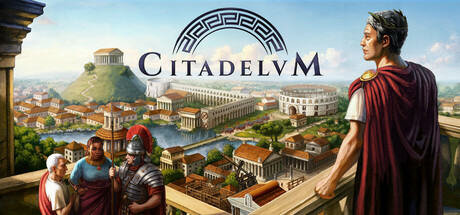
Citadelum
Roman city management with genuine teeth once the gods get involved - Citadelum sits at 83% positive on Steam for good reason, even if genre veterans will clock its limits fast.
Veredicto de GamerScout
Best for Caesar III nostalgists and city-builder newcomers; genre veterans should expect familiar systems with modest god-layer novelty on top.
Comparar precios(4 tiendas)
Todas las tiendas de esta tabla nos dan el precio en euros, así que la cifra en EUR es el precio que fijó el vendedor, no un cálculo nuestro, y por eso EUR es también la moneda en la que calculamos el ranking. Solo incluimos aquí una oferta cuando la tienda nos da su precio en euros, de modo que ninguna cifra de esta tabla es inventada por nosotros.
Elige USD, PLN, GBP, CAD o AUD en la cabecera y convertimos desde EUR con el tipo de cambio de referencia del Banco Central Europeo — los importes convertidos llevan el prefijo ~. Tu banco o la tienda pueden aplicar un tipo distinto al pagar. Nunca ocultamos ofertas según dónde estés: todo el mundo ve esta tabla completa.
We may earn a commission when you buy games through links on this page — at no extra cost to you. It never affects our rankings or verdicts.
Historial de precios
Capturas y multimedia
Acerca de Citadelum
I have a colour-coded spreadsheet tracking every Caesar III mission I've ever played, so when a new Roman city builder lands with a three-layer design promise, I'm going to poke at every seam until it tears or holds. Citadelum mostly holds, with a few honest cracks worth flagging before you commit. The city-building core is the strongest layer, and it earns that position. You are managing a two-tier social contract between Plebeians and Patricians: Plebeians staff every production building, farm, fishery, winery, and workshop in your city, and they demand wages from your treasury. Patricians contribute nothing in labour but pay taxes, provided their housing is maintained and within reach of a Tax Office. That tension - keeping wages funded while coaxing the upper class to stay and pay - is where the interesting early decisions live. Building radii govern everything from fire station coverage to granary reach, which means layout planning matters rather than just zoning. The 2.0 'Julius' update added new production chains including salt, olives, clay, and clay bricks alongside eight new processing structures, and reworked the public health system to include morgues and medical center coverage. That is a meaningful post-launch expansion, and it addresses one of the original criticisms that the production chain felt too narrow. The god system is the most distinctive pitch on the box, and it lands somewhere between 'interesting friction' and 'missed opportunity', depending on your expectations. You build temples, run festivals, and offer relics to court Jupiter, Mars, Minerva, and the rest of the Pantheon. Appease one deity and you risk the irritation of another; ignore all of them and expect divine punishment landing in your city. The 2.0 update even introduced festival automation with priority settings so you can set a preferred deity order and stop micromanaging sacrifices. The spectacle is real - gods descend into your city to bless or punish - but multiple reviewers noted that the mechanical weight of religion does not always match its visual theatre. I could complete missions without ever constructing a temple, which tells you the system is additive flavour rather than structural necessity for most scenarios. The combat is the weakest layer, and the game essentially admits this by making it auto-battle. You train legions, move them on the world map, and the outcome resolves with limited direct input. Explorers scout territory, trade routes connect settlements, and Senate missions give you external objectives. For a strategy-and-sim audience expecting operational depth in the field, auto-battles will register as background noise rather than a genuine third pillar. That said, the campaign itself - which spans historical scenarios from the deserts of Egypt to the tundra of Britannia - does a respectable job of varying the geography and objectives even if the underlying build order eventually starts to feel like muscle memory across maps. For newcomers, Citadelum is honestly one of the better entry points into this Caesar III lineage. The tutorial respects your time, the interface is clean, and the campaign missions step up complexity at a pace that does not punish players who have never managed a food supply chain before. Steam Workshop support and a map editor are present, and the community has started producing content, though how far that ecosystem grows depends on whether Abylight keeps the post-launch momentum. The post-2.0 version of this game is noticeably more complete than what launched in October 2024, so if you were watching from the sideline, now is the right time to re-evaluate. Genre veterans wanting a branching tech tree or deep diplomatic systems should temper expectations - those components are either thin or absent - but anyone who has been waiting for a modern Caesar-like that respects the template while adding its own flavour will find real hours of value here.

Strategy & simulation
Etiquetas
Requisitos del sistema
Mínimos
- OS
- Windows 7 64-bit
- Memory
- 16 GB RAM
- DirectX
- Version 11
- Storage
- 8 GB available space
- Graphics
- NVIDIA GeForce GTX 1050 or equivalent
- Processor
- Intel i5-2300/AMD FX-4300
Recomendados
- OS
- Windows 10 64-bit
- Memory
- 16 GB RAM
- DirectX
- Version 12
- Storage
- 8 GB available space
- Graphics
- NVIDIA GeForce GTX 1660 6GB or equivalent
- Processor
- Intel i7-4770/AMD FX-8350
Sigue explorando
Community Discussion
Be the first to comment on Citadelum.
Reseñas y valoraciones
No hay valoraciones disponibles
Información del juego
- Desarrolladora
- Abylight Barcelona
- Distribuidora
- Abylight Studios
- Fecha de lanzamiento
- 17 oct 2024