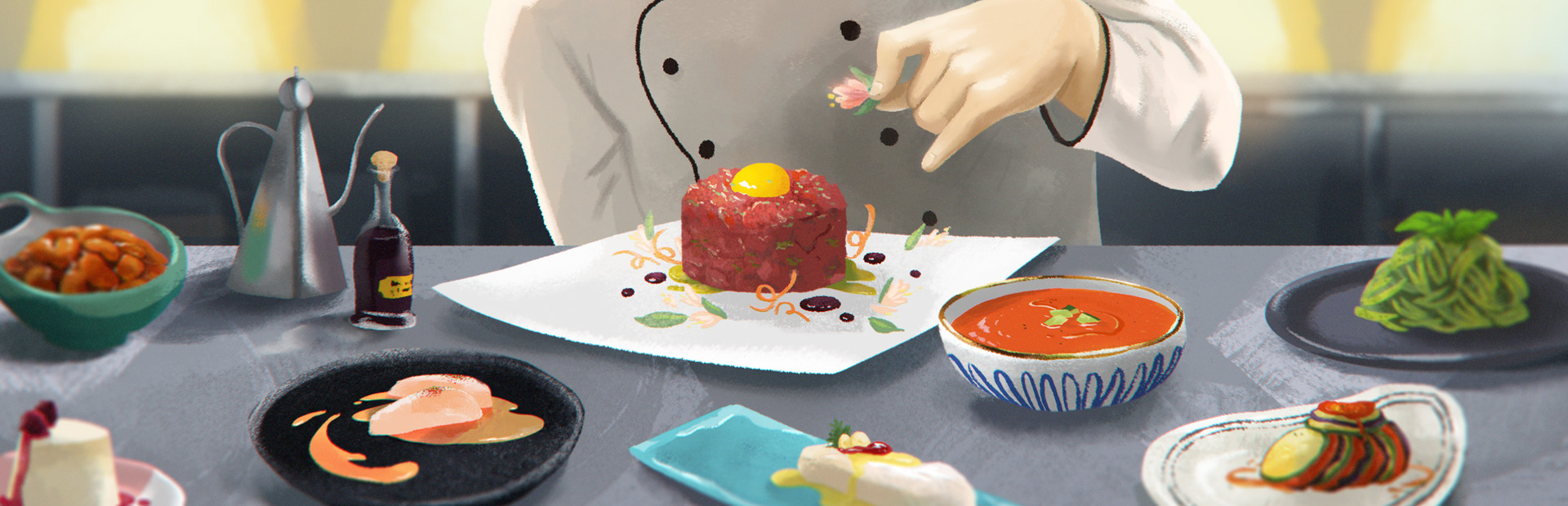

Compara los precios de Chef: A Restaurant Tycoon Game en tiendas de claves de confianza y encuentra la mejor oferta. Desarrollado por Innervoid Interactive. Publicado por Digital Tribe. Lanzado el 20/8/2020. Disponible en PC. Géneros: Simulation.

More restaurant sim than tycoon, this one rewards players who treat staff specialization and menu composition like an optimization puzzle rather than a casual toy.

My first instinct when loading this up was to treat it like a classic tycoon game and go wide fast, multiple venues, maxed headcount, aggressive expansion. That instinct will get you bankrupt inside five hours. Chef operates more like a focused management sim where every early-game decision compounds, and players who read the systems before they spend will find a surprisingly layered experience hiding behind a modest indie presentation. The mechanical core that actually holds up is the recipe editor. Rather than pulling pre-built dishes off a list, you construct your menu from over 30 dish templates, balancing five basic taste and aroma axes per recipe so that the final product rates well when customer palates are simulated. Get the balance wrong and your food quality score tanks, and since customers grade your venue on Service, Food Quality, Price, and Atmosphere independently before averaging the result, one weak pillar quietly kills your reputation star-by-star. It is a tighter feedback loop than it first appears, and the players who lean into ingredient theory rather than just unlocking the prettiest wallpaper tend to stick around longest. The staff system is the other place where genuine depth lives. Every employee accumulates experience on the job, and you can assign them to narrow specializations, so a chef leveled into main dishes works faster and produces higher quality output than a generalist covering everything. The problem is that once you scale to multiple concurrent staff across a second venue, tracking individual skill loadouts becomes genuinely fiddly, as the relevant stats only surface in a character screen that is not accessible during the simulation. Players who want a clean, automation-friendly mid-game may find this maddening. That friction is real, and it is the largest single complaint in community feedback. There is also a pathing and collision issue that has existed since early access: staff will occasionally clip into furniture and freeze, requiring either a save-reload cycle or firing and rehiring the affected worker. These are rough edges that should have been polished before 1.0, and the fact they persist is worth knowing going in. On the expansion side, the game shipped with three paid DLC cuisine packs covering Eastern Asian dishes, pizza and baked goods, and cocktails, so the base ingredient pool is narrower than the recipe editor makes it look until you factor in add-on content. No Steam Workshop support means modders cannot extend that pool themselves, which is a missed opportunity for a game whose whole identity is ingredient creativity. The tutorial, to its credit, is staged and readable, walking new players through the district-targeting system where your decor, pricing, and menu composition need to align with the specific social class that frequents your restaurant's neighborhood. Cheapskate districts want cheap proteins and carb-heavy dishes; premium districts punish you for the same menu. That audience-alignment mechanic is the strategic hook that keeps repeat runs interesting. For sim players willing to treat the recipe editor as the main event and accept the staff micro-management tax, there is a genuinely satisfying loop here. Go in expecting a polished tycoon sandbox and you will bounce off it. Go in expecting a number-crunching management sim with a cooking-science twist, and the hours will disappear. Diego, Scout Team

Chef: A Restaurant Tycoon Game

Chef: A Restaurant Tycoon Game

20 ago 2020Innervoid InteractiveDigital Tribe
GamerScout opina

More restaurant sim than tycoon, this one rewards players who treat staff specialization and menu composition like an optimization puzzle rather than a casual toy.

PC
Steam Deck UnsupportedProtonDB Platinum
Mejor precio disponible
0,93 €
en Kinguin
Mínimo registrado: 0,93 €
Sigue este precio

Veredicto de GamerScout

Worth it for sim players who treat ingredient balancing as an optimization puzzle, not for those expecting a polished tycoon sandbox.

Comparar precios(4 tiendas)

KinguinMejor precio
StandardGlobalSteam KeyClave
0,93 €
La tienda fija el precio en EUR
Comprar
StandardGlobalSteam KeyClave
1,29 €
La tienda fija el precio en EUR
Comprar
StandardEuropa (UE)Steam KeyClave
1,41 €
La tienda fija el precio en EUR
Comprar
StandardGlobalSteam KeyClave
1,56 €
La tienda fija el precio en EUR
Comprar
StandardGlobalSteam KeyClave
3,57 €-18%
La tienda fija el precio en EUR
Comprar
StandardEuropa (UE)Steam KeyCopia de regalo
20,99 €
La tienda fija el precio en EUR
Comprar

Todas las tiendas de esta tabla nos dan el precio en euros, así que la cifra en EUR es el precio que fijó el vendedor, no un cálculo nuestro, y por eso EUR es también la moneda en la que calculamos el ranking. Solo incluimos aquí una oferta cuando la tienda nos da su precio en euros, de modo que ninguna cifra de esta tabla es inventada por nosotros.

Elige USD, PLN, GBP, CAD o AUD en la cabecera y convertimos desde EUR con el tipo de cambio de referencia del Banco Central Europeo — los importes convertidos llevan el prefijo ~. Tu banco o la tienda pueden aplicar un tipo distinto al pagar. Nunca ocultamos ofertas según dónde estés: todo el mundo ve esta tabla completa.

We may earn a commission when you buy games through links on this page — at no extra cost to you. It never affects our rankings or verdicts.

Historial de precios

Mínimo registrado
0,93 €3 ago 2026
Mejor precio actual
0,93 €
El más bajo desde que lo seguimos
Tiendas de claves
0,92 €0,96 €1,00 €1,04 €9 Jun26 Jun13 Jul29 Jul15 Aug
9 jun — 15 ago
Crear alerta

Capturas y multimedia

Acerca de Chef: A Restaurant Tycoon Game

My first instinct when loading this up was to treat it like a classic tycoon game and go wide fast, multiple venues, maxed headcount, aggressive expansion. That instinct will get you bankrupt inside five hours. Chef operates more like a focused management sim where every early-game decision compounds, and players who read the systems before they spend will find a surprisingly layered experience hiding behind a modest indie presentation. The mechanical core that actually holds up is the recipe editor. Rather than pulling pre-built dishes off a list, you construct your menu from over 30 dish templates, balancing five basic taste and aroma axes per recipe so that the final product rates well when customer palates are simulated. Get the balance wrong and your food quality score tanks, and since customers grade your venue on Service, Food Quality, Price, and Atmosphere independently before averaging the result, one weak pillar quietly kills your reputation star-by-star. It is a tighter feedback loop than it first appears, and the players who lean into ingredient theory rather than just unlocking the prettiest wallpaper tend to stick around longest. The staff system is the other place where genuine depth lives. Every employee accumulates experience on the job, and you can assign them to narrow specializations, so a chef leveled into main dishes works faster and produces higher quality output than a generalist covering everything. The problem is that once you scale to multiple concurrent staff across a second venue, tracking individual skill loadouts becomes genuinely fiddly, as the relevant stats only surface in a character screen that is not accessible during the simulation. Players who want a clean, automation-friendly mid-game may find this maddening. That friction is real, and it is the largest single complaint in community feedback. There is also a pathing and collision issue that has existed since early access: staff will occasionally clip into furniture and freeze, requiring either a save-reload cycle or firing and rehiring the affected worker. These are rough edges that should have been polished before 1.0, and the fact they persist is worth knowing going in. On the expansion side, the game shipped with three paid DLC cuisine packs covering Eastern Asian dishes, pizza and baked goods, and cocktails, so the base ingredient pool is narrower than the recipe editor makes it look until you factor in add-on content. No Steam Workshop support means modders cannot extend that pool themselves, which is a missed opportunity for a game whose whole identity is ingredient creativity. The tutorial, to its credit, is staged and readable, walking new players through the district-targeting system where your decor, pricing, and menu composition need to align with the specific social class that frequents your restaurant's neighborhood. Cheapskate districts want cheap proteins and carb-heavy dishes; premium districts punish you for the same menu. That audience-alignment mechanic is the strategic hook that keeps repeat runs interesting. For sim players willing to treat the recipe editor as the main event and accept the staff micro-management tax, there is a genuinely satisfying loop here. Go in expecting a polished tycoon sandbox and you will bounce off it. Go in expecting a number-crunching management sim with a cooking-science twist, and the hours will disappear.

Diego
Diego · Scout Team

Strategy & simulation

Etiquetas

singleplayerachievementstrading-cardscloud-savestier:sub-5Recipe CraftingStaff SpecializationAudience TargetingMulti-Venue ManagementTaste-Balance MechanicsDistrict StrategyProgression Gating

Requisitos del sistema

Mínimos

OS
Windows Vista SP1+ (64 bit)
Memory
3000 MB RAM
DirectX
Version 9.0c
Storage
6500 MB available space
Graphics
NVIDIA GT 630, AMD Radeon HD6570, or equivalent
Processor
Intel Core 2 Duo @ 3.0GHz or AMD Athlon 64 X2 6400+ @ 3.2GHz

Recomendados

OS
Windows 7/8/10 (64 bit)
Memory
6000 MB RAM
DirectX
Version 12
Storage
6500 MB available space
Graphics
NVIDIA GTX 960, AMD Radeon R9 295, or equivalent
Processor
Intel i7 920 @ 2.7 GHz, AMD Phenom II 945 @ 3.0 GHz

Sigue explorando

Community Discussion

Be the first to comment on Chef: A Restaurant Tycoon Game.

Reseñas y valoraciones

No hay valoraciones disponibles

Información del juego

Desarrolladora
Innervoid Interactive
Distribuidora
Digital Tribe
Fecha de lanzamiento
20 ago 2020

Alerta de precio

¡Recibe un aviso cuando el precio baje de tu objetivo!

Crear alerta
Mejor precio0,93 €
Ver oferta

En los 21.266 juegos que seguimos, una clave verificada fue más barata que la tienda oficial el 92% de las veces. Consulta el método y las cifras completas en nuestro informe de precios de juegos.

¿Sin tarjeta? Paga de otra forma

Recarga tu saldo de Steam o compra crypto con cualquier tarjeta — entrega instantánea, sin cuenta bancaria.

Más de Innervoid Interactive

Compra mejor: guías útiles

¿Buscas más? Mira juegos como Chef: A Restaurant Tycoon Game →

Preguntas frecuentes sobre Chef: A Restaurant Tycoon Game

¿Cuánto cuesta Chef: A Restaurant Tycoon Game?

A 15 de agosto de 2026, la oferta más barata disponible de Chef: A Restaurant Tycoon Game es €0.93 en Kinguin, de entre 6 ofertas activas que seguimos en tiendas de claves verificadas. Los precios cambian a diario — la tabla de esta página se actualiza continuamente.

¿Dónde puedo comprar Chef: A Restaurant Tycoon Game más barato?

El precio más bajo disponible que seguimos para Chef: A Restaurant Tycoon Game es €0.93 en Kinguin (15 de agosto de 2026). Comparamos 6 ofertas activas de tiendas de claves verificadas — la tabla completa con cada tienda y su puntuación de confianza está en esta página.

¿En qué plataformas está disponible Chef: A Restaurant Tycoon Game?

Chef: A Restaurant Tycoon Game está disponible en PC.

¿Cuándo se lanzó Chef: A Restaurant Tycoon Game?

Chef: A Restaurant Tycoon Game se lanzó el 20 de agosto de 2020.

¿Quién desarrolló Chef: A Restaurant Tycoon Game?

Chef: A Restaurant Tycoon Game fue desarrollado por Innervoid Interactive y publicado por Digital Tribe.