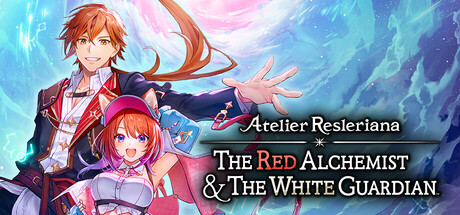
Atelier Resleriana: The Red Alchemist & the White Guardian
A cozy-RPG loop wrapped in a surprisingly tactical combat engine - Gust's apology letter to Atelier fans after the gacha debacle, and mostly a convincing one.
Veredicto de GamerScout
Best for Atelier veterans craving a proper offline return to form and newcomers who prioritize crafting systems over narrative depth.
Comparar precios(6 tiendas)
Todas las tiendas de esta tabla nos dan el precio en euros, así que la cifra en EUR es el precio que fijó el vendedor, no un cálculo nuestro, y por eso EUR es también la moneda en la que calculamos el ranking. Solo incluimos aquí una oferta cuando la tienda nos da su precio en euros, de modo que ninguna cifra de esta tabla es inventada por nosotros.
Elige USD, PLN, GBP, CAD o AUD en la cabecera y convertimos desde EUR con el tipo de cambio de referencia del Banco Central Europeo — los importes convertidos llevan el prefijo ~. Tu banco o la tienda pueden aplicar un tipo distinto al pagar. Nunca ocultamos ofertas según dónde estés: todo el mundo ve esta tabla completa.
We may earn a commission when you buy games through links on this page — at no extra cost to you. It never affects our rankings or verdicts.
Historial de precios
Capturas y multimedia
Acerca de Atelier Resleriana: The Red Alchemist & the White Guardian
I went into this one half-expecting a glorified mobile port wearing a console disguise, and the first hour or so did little to shake that suspicion. The world of Hallfein is small, the opening beats are slow, and the dual-protagonist framing - you pick either Rias, a cat-eared alchemist reclaiming her grandfather's shop, or Slade, a brooding investigator piecing together his father's last wishes - takes a while to breathe. But stick with it past that sluggish onboarding, and Atelier Resleriana: The Red Alchemist & the White Guardian reveals something more layered than its origins suggest. The combat is where the game earns its keep. Gust has stitched together a turn-based panel system where the timeline itself is the battlefield. You manipulate turn order through Multi-Actions - chaining back-row characters into front-row attacks - and an Interrupt mechanic borrowed and improved from Atelier Lulua, so that buff and debuff panels on the timeline become something you actively fight over rather than passively receive. A six-member party (three active, three in reserve) feeds into Unite attacks that snowball satisfyingly once you understand the rhythm. It starts slow; RPGFan put it well when they said the battle system begins as a freight train that eventually picks up serious momentum. Harder difficulty settings exist for players who find Normal a pushover, and the later boss encounters do escalate their nastiness if you ignore the tactical toolkit. The alchemy side - officially Gift Color Synthesis - lands somewhere between the PS3-era Arland games and Atelier Ayesha in terms of depth. You match elemental color properties between ingredients to transfer traits as you add them, not at the end in a checkbox menu. Trait fusions return. Recipe Morphs let certain catalyst materials unlock entirely new item types. It is not as complex as Atelier Yumia's radius-based resonance system, but it is more demanding than Ryza, and the quality-of-life polish makes it accessible without feeling dumbed down. Every synthesized item feeds back into three systems simultaneously: combat consumables, shop stock, and town restoration progress. That interconnection is the design's real trick. Dimensional Paths, the game's randomized dungeons with adjustable difficulty tiers, exist specifically to chase rarer ingredient grades, and chasing those grades makes the synthesis loop genuinely compelling rather than rote. The shop management wraps around all of this in a way that surprised me. You stock Rias's Mistletoe Miscellaneous Shop with synthesized goods, matching color attributes on a shelf for bonuses, assign recruited fairies to automate tasks, and watch Hallfein slowly revive as profits fund restoration. It is a light sim layer, not a deep one - more satisfying as ambient progression than as a standalone system - but it gives alchemy a third reason to exist beyond gear and quests, and the fairy recruitment loop that runs through special dungeons is a nice side thread. Where the game stumbles is exactly where you would predict. The story is the weakest pillar. Rias and Slade share a genuinely touching central arc about grief, hometown identity, and rediscovery, but the worldbuilding around them is thin - partly because so much lore lives in the now-defunct global gacha, which most players simply cannot access. The parade of franchise cameos (Sophie, Totori, Wilbell, Raze, Ayesha and others swing through Hallfein as wandering travelers) is fun for series veterans and pleasant filler for newcomers, but it crowds narrative space that should have gone to building out the new setting. The playable party caps at six characters, which feels stingy for a crossover title where dozens of recognizable faces appear but cannot be controlled. Progression can also stall when a needed recipe is locked behind a chest tucked in a corner of the map - less a puzzle, more an unmarked tax on your time. For Atelier veterans, this is a genuine and mostly well-executed course correction after the gacha misfire, pulling combat ideas from Sophie, Sophie 2, Shallie, and Lulua into something coherent. For newcomers, the mechanics are approachable and the existing-lore requirement is low - you will miss some nostalgia but nothing plot-critical. Just do not come expecting the narrative payoff of a Ryza 3 or the world-scope of Yumia.

RPGs
Etiquetas
Requisitos del sistema
Mínimos
- OS
- Windows 10 / 11 (64bit)
- Memory
- 8 GB RAM
- DirectX
- Version 11
- Network
- Broadband Internet connection
- Storage
- 15 GB available space
- Graphics
- NVIDIA GeForce GTX 1050 Ti 4GB or better, AMD Radeon R9 380X 4GB or better
- Processor
- Intel Core i3-8100 or better, AMD Ryzen 3 3200G or better
- Sound Card
- 16 bit stereo, 48kHz WAVE file can be played
Recomendados
- OS
- Windows 10 / 11 (64bit)
- Memory
- 16 GB RAM
- DirectX
- Version 11
- Network
- Broadband Internet connection
- Storage
- 15 GB available space
- Graphics
- NVIDIA GeForce GTX 1070 8GB or better, AMD Radeon RX 5600 XT (Rev2) 6GB or better
- Processor
- Intel Core i7-8700 or better, AMD Ryzen 3 3100 or better
- Sound Card
- 16 bit stereo, 48kHz WAVE file can be played
Sigue explorando
Community Discussion
Be the first to comment on Atelier Resleriana: The Red Alchemist & the White Guardian.
Reseñas y valoraciones
Información del juego
- Desarrolladora
- KOEI TECMO GAMES CO., LTD.
- Distribuidora
- KOEI TECMO GAMES CO., LTD.
- Fecha de lanzamiento
- 25 sept 2025