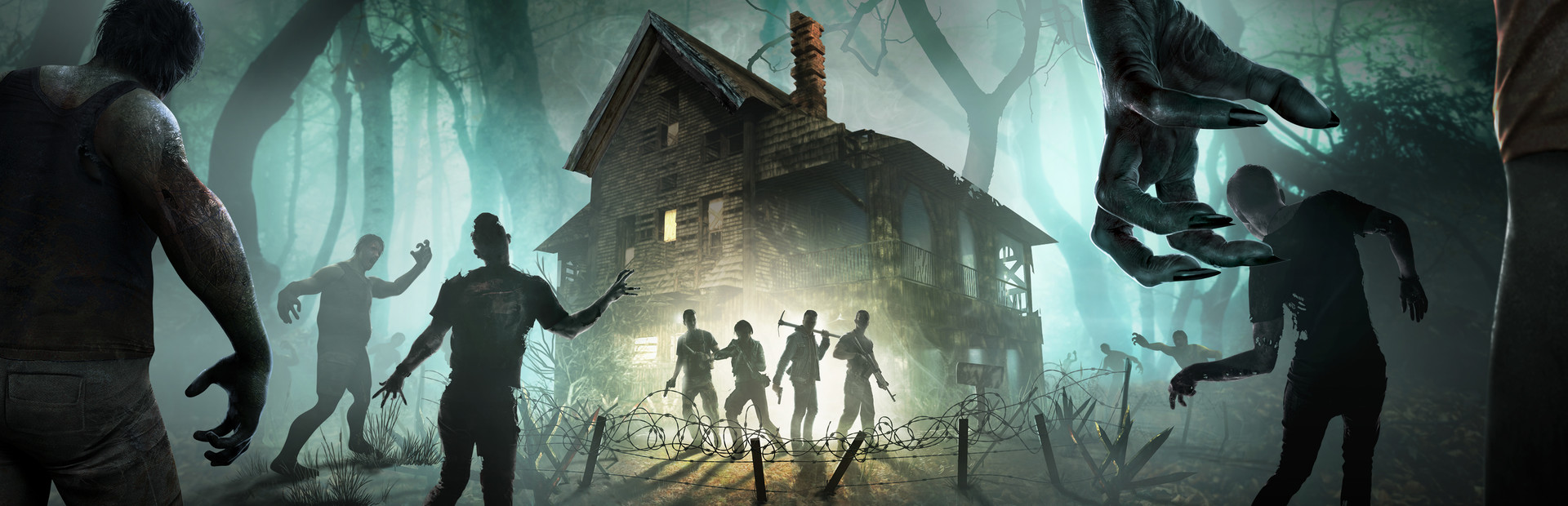
7 Days to Die
Eleven years in early access, one Blood Moon at a time - 7 Days to Die 1.0 finally delivers a survival sandbox with genuine strategic depth, though its rough edges are still part of the package.
Veredicto de GamerScout
7/10Best for survival-strategy players who want a hard scheduling problem wrapped in zombie horde defense, and can tolerate persistent jank.
Comparar precios(6 tiendas)
Todas las tiendas de esta tabla nos dan el precio en euros, así que la cifra en EUR es el precio que fijó el vendedor, no un cálculo nuestro, y por eso EUR es también la moneda en la que calculamos el ranking. Solo incluimos aquí una oferta cuando la tienda nos da su precio en euros, de modo que ninguna cifra de esta tabla es inventada por nosotros.
Elige USD, PLN, GBP, CAD o AUD en la cabecera y convertimos desde EUR con el tipo de cambio de referencia del Banco Central Europeo — los importes convertidos llevan el prefijo ~. Tu banco o la tienda pueden aplicar un tipo distinto al pagar. Nunca ocultamos ofertas según dónde estés: todo el mundo ve esta tabla completa.
We may earn a commission when you buy games through links on this page — at no extra cost to you. It never affects our rankings or verdicts.
Historial de precios
Capturas y multimedia
Acerca de 7 Days to Die
I'll be honest: I approached 7 Days to Die 1.0 the way a strategy player approaches any long-in-development sandbox - with a colour-coded checklist of things that needed to work before I could call it a real game. After eleven years of early access, The Fun Pimps finally shipped version 1.0 in July 2024, and what surprised me most was how the core loop rewards the kind of forward-planning mindset that usually only grand strategy scratches. The whole rhythm of the game is a countdown. You have seven in-game days to scavenge points of interest for resources, craft gear, stockpile food and water, level your character across five main attribute trees, and build or reinforce a defensible base. Then the Blood Moon hits. Every seventh night a horde closes in from all directions and it does not stop until dawn. That hard deadline is brilliant design, because it forces prioritisation under uncertainty in a way that genuinely separates efficient players from chaotic ones. The RPG layer underneath the survival loop is denser than it first appears. Skill progression runs through five attributes - with perks gating crafting tiers, weapon proficiency, and physical stats - and version 1.0 reworked trader quest progression so that tier advancement feels earned rather than exploitable. Legendary item crafting was added at the top end, meaning long-term goals now exist for players who make it past day 70. The armor system was rebuilt from nine scattered slots down to four set-based pieces, each full set granting set bonuses, which is a flat improvement for build planning. Over 100 skill books still populate loot containers, rewarding thorough scavenging runs. The world generator now produces cities, biomes including a returned Burnt Forest biome, caves, and over 700 unique points of interest, so a procedurally generated map gives the scavenging loop genuine replayability. Where the game stumbles is equally worth naming. Early combat feels unsatisfying - the opening days are mostly spent in melee range against slow zombies with weapons that lack feedback. It improves substantially once ranged options open up, with nearly 60 zombie archetypes including special infected that behave distinctly, but that early friction will push off players expecting tight shooter mechanics from day one. Technical stability has always been 7 Days to Die's reputation problem, and while version 1.0 is meaningfully more polished than anything in early access, expect occasional physics oddities and the kind of voxel jank that comes with destructible terrain. The game needs capable hardware for a smooth experience, and public multiplayer servers carry the usual open-world survival problems - looted-out maps, cheaters, and restrictive server rules. Private co-op with a small group, or solo, is where the experience actually holds together. For the strategy-adjacent player who wants a survival game with real decision architecture, the value is here. The seven-day horde cycle is a hard scheduling problem with meaningful build trade-offs: do you reinforce the trader town house, dig a pit trap network, or prioritise forging steel before day 14? The mod ecosystem on PC is extensive and well-documented, which matters for long-term engagement. Version 1.2 in December 2024 added full crossplay between PC and consoles, and Version 2.0 - which adds a weather system and biome progression overhaul - was announced for a mid-2025 release, so the development pipeline is still active. This is not a game that respects your time in the way a tight 20-hour action title does, but for players who want to optimise a base layout against a horde timer, it offers hundreds of hours of that specific problem.

Strategy & simulation
Etiquetas
Requisitos del sistema
Mínimos
- Processor
- 2.4 Ghz Dual Core CPU
- Memory
- 6 GB RAM
- Graphics
- 1 GB Dedicated Memory
- DirectX
- Version 10
- Network
- Broadband Internet connection
- Storage
- 4 GB available space
- Sound Card
- Sound Car…
Recomendados
- OS
- Windows 10 or higher (64-bit)
- Processor
- 3.2 Ghz Quad Core CPU or faster
- Memory
- 12 GB RAM
- Graphics
- 4 GB Dedicated Memory
- DirectX
- Version 11 Netw…
DLC y complementos de 7 Days to Die1
Expansiones, packs de DLC y contenido adicional de este juego. Haz clic en cualquier elemento para ver las ofertas de las tiendas.
Sigue explorando
Community Discussion
Be the first to comment on 7 Days to Die.
Reseñas y valoraciones
Información del juego
- Desarrolladora
- The Fun Pimps
- Distribuidora
- The Fun Pimps Entertainment LLC
- Fecha de lanzamiento
- 25 jul 2024

![[ARG] NOCHE DE CLUBES: PELEAMOS EL ASCENSO, RANKED EN STRIKERS CLUB Y 7 DAYS TO DIE | Jugando con Seguidores | META DE SUBS: 3/5. !dc](https://static-cdn.jtvnw.net/previews-ttv/live_user_therealnaju-440x248.jpg)
