
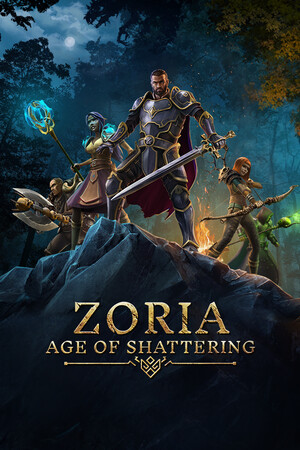
Zoria: Age of Shattering
A scrappy indie CRPG that punishes you for ignoring its outpost and rewards anyone patient enough to rotate all fifty-plus companions through its surprisingly snappy gridless combat.
GamerScout Verdict
Best for tactics fans who prioritize combat pacing and roster depth over polished writing or a slick UI.
Compare Prices(6 stores)
Every store in this table quotes us in euros, so the EUR figure is the price the seller actually set, not our arithmetic — which is why EUR is also the currency we rank in. We only list an offer here when the store gives us its price in euros, so nothing in this table is a number we invented.
Pick USD, PLN, GBP, CAD or AUD in the header and we convert from EUR at the European Central Bank reference rate — converted amounts are prefixed with ~. Your bank or the store may apply a different rate at checkout. We never hide offers based on where you are: everyone sees this whole table.
We may earn a commission when you buy games through links on this page — at no extra cost to you. It never affects our rankings or verdicts.
Price History
Screenshots & Media
About Zoria: Age of Shattering
My first instinct when loading up Zoria: Age of Shattering was to compare it directly to the genre heavyweights sitting nearby in my library. That instinct is wrong, and correcting it early will save you a lot of frustration. This is a three-person team out of Bucharest who spent seven years building something that sits deliberately between XCOM-style tactics and Diablo-flavored loot slinging, and the result is messier than either but more interesting than the sum of its rough edges suggests. The combat loop is where the game earns its keep. Battles run on a gridless map with a two-action economy, which keeps individual encounters short and punchy rather than the marathon slogs you might expect from the genre. Positioning still matters, status effects like stun, immobilize, and damage-over-time are genuinely meaningful, and the class roster gives you real decisions to make at party assembly. At launch you pick from nine classes including tanky Sentinels, mobile Rangers, sword-and-crossbow Nightwardens, and support-focused Clerics, with Bard and Necromancer added post-launch via update. Crucially, each class also carries exploration utility outside combat: Rogues disarm traps and remove poisons during rest, Lancers clear debris, Battle Clerics unlock shrine buffs on the overworld map. That means your party composition is a strategic choice before the first initiative roll, not just a combat optimization question. Respeccing is free, which is exactly the right call for a game asking you to rotate through more than fifty recruitable companions. The outpost management layer is the second pillar and the one most players underestimate. Your base upgrades unlock new building wings, open follower slots, and gate access to crafting recipes across cooking, alchemy, and forging. Benched companions can be sent on autonomous missions to gain experience and return with materials, which means you are never truly wasting roster depth. The decision loop of whether to invest resources into a new outpost wing, queue a weapon-craft run, or keep gold liquid for gear purchases is the kind of low-stakes but constant strategic friction that keeps sessions running long. Where it stumbles is the inventory side: loot volume is enormous from the very first map area, every item is uniquely named and rarity-coded, and the storage and sorting interface is not built for the volume it generates. Players who find inventory tetris meditative will be fine. Everyone else will start ignoring full categories of drops by mid-game, which the crafting system cannot really survive. The honest problems are real but specific. Enemy AI at launch was criticized for charging head-first without tactical nuance, though post-launch patches addressed action-point flow and movement rules in meaningful ways, and the development team has shown clear willingness to iterate on community feedback. The writing is generic military-fantasy fare: Izirian invaders using necromancy, a fallen commander rebuilding from a last outpost, wolves and bandits as early fodder. If you need a Baldur's Gate-caliber narrative with party members who carry emotional weight, look elsewhere. The game's own visual presentation is functional but dated in spots, and some environmental effects read as flat when you rotate the camera. OpenCritic aggregates critic scores around the mid-70s, and Steam user sentiment lands in the mostly-positive range, which feels about right for an ambitious indie that shipped a little undercooked but keeps improving. For the systems-first player who wants tight tactical turns, meaningful class synergy decisions, and a base to gradually grow without the game threatening a hard fail state if you build in the wrong order, Zoria earns its place. Go in calibrated to an indie budget and you will find more genuine decision-making per hour than most of the genre's better-marketed releases.

Strategy & simulation
Tags
System Requirements
Minimum
- OS
- Windows 7/8/8.1/10 (64 bit)
- Memory
- 8 GB RAM
- DirectX
- Version 11
- Storage
- 30 GB available space
- Graphics
- Nvidia GTX 1050 / AMD RX 560 (4GB+ of VRAM)
- Processor
- Intel Core i5 / AMD Ryzen 3 or better
Recommended
- OS
- Windows 10 (64-bit) or newer
- Memory
- 16 GB RAM
- DirectX
- Version 11
- Storage
- 30 GB available space
- Graphics
- Nvidia 2060 / RX 5700 XT (6GB+ of VRAM)
- Processor
- Intel Core i7 8700K / AMD Ryzen 5 3600 or better
Keep exploring
Community Discussion
Be the first to comment on Zoria: Age of Shattering.
Reviews & Ratings
No ratings available
Game Info
- Developer
- Tiny Trinket Games
- Publisher
- Anshar Publishing
- Release Date
- Mar 7, 2024