
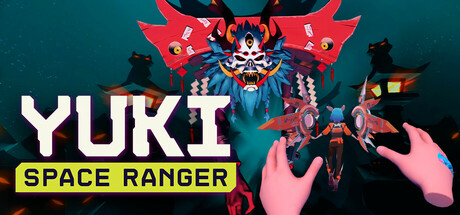
YUKI Space Ranger
Holding a tiny action figure in your VR hand and weaving her through walls of lasers is a genuinely clever physical idea that bullet-hell fans have not experienced before. Six chapters, permadeath, and a persistent upgrade loop make each death feel like prep work rather than punishment.
GamerScout Verdict
Best for VR owners who want a bullet-hell loop with actual run-economy decisions and do not mind a thin narrative.
Compare Prices(3 stores)
Every store in this table quotes us in euros, so the EUR figure is the price the seller actually set, not our arithmetic — which is why EUR is also the currency we rank in. We only list an offer here when the store gives us its price in euros, so nothing in this table is a number we invented.
Pick USD, PLN, GBP, CAD or AUD in the header and we convert from EUR at the European Central Bank reference rate — converted amounts are prefixed with ~. Your bank or the store may apply a different rate at checkout. We never hide offers based on where you are: everyone sees this whole table.
We may earn a commission when you buy games through links on this page — at no extra cost to you. It never affects our rankings or verdicts.
Price History
Screenshots & Media
About YUKI Space Ranger
My spreadsheet instincts kick in the moment I pick up YUKI Space Ranger, because this game is fundamentally about optimizing a run-by-run resource loop inside a genre that usually offers none. The setup: you physically grip the Yuki action figure with your dominant VR controller, auto-scroll through six anime-styled chapters on rails, and maneuver her through an escalating barrage of laser patterns and environmental debris. It is a behind-the-back bullet-hell in the vein of Space Harrier and Star Fox, but translated entirely into physical space, which means leaning, ducking, and stretching across your play area is the core skill expression, not a joystick flick. The progression system is where strategy-minded players will find the most to chew on. Dying sends you back to chapter one, but the Creative Drive you collected during that run carries over permanently to a between-run workshop where you bank permanent upgrades, things like extended health pools, improved auto-targeting, and better in-run power-up quality. Each chapter also drops temporary boosts mid-run, such as auxiliary turrets or damage reduction pods, so you are constantly making small decisions about risk versus positioning to grab them. On top of that, Bladewing weapons, unlocked by reaching certain chapter milestones, each carry distinct projectile behaviors. Some hit harder with tighter spread, others auto-home at the cost of raw damage output. Choosing which Bladewing to run is a genuine pre-session decision with real downstream effects on survivability. The Endless Mode adds global leaderboards per Bladewing and intensity setting for players who have cleared the campaign and want a measurable competitive target. The VR implementation earns its place. Because only the action figure is vulnerable and movement is 1:1, there is no artificial turning or teleportation to break immersion, and the on-rails scrolling is paced gently enough that reviewers have noted it is one of the few VR shooters where motion sensitivity is rarely an issue. The Japan-inspired art direction is vibrant, pastel city districts give way to asteroid fields and darker spooky stages, and the enemy barrages are color-coded clearly enough that the genre's traditional frustration of unfair deaths is kept low. Boss encounters, sitting at the end of every other chapter, are the visual and mechanical highlight: intricate animations, distinct attack phases, and the most satisfying read-and-dodge sequences in the game. The companion Pod mechanic, controlled by your off-hand, adds a freeze-shot tool that lets you briefly stop enemies in place, which introduces a dual-controller rhythm that rewards coordination without demanding it constantly. The weaknesses are real and worth budgeting for. The standard Yokalien enemies are essentially floating masks with bullet patterns, and even reviewers who loved the game noted their visual repetitiveness relative to the far more detailed boss designs. Run-to-run variety is limited: level layouts are fixed, so once you have internalized the obstacle sequences the roguelike label starts to feel thin. The persistent upgrade system compensates by making each failed run feel constructive, but players who want a Hades-level narrative drip or procedural room variety will find the loop thin by the later runs. Some large debris chunks can also fully obscure the screen, leading to unavoidable hits that feel more like a design oversight than a difficulty spike. It required a minimum 2x2 meter room-scale setup, so apartment players should measure before buying. For the strategy-and-systems player who normally skips VR shooters as shallow arcade fare, YUKI is worth a serious look. The Bladewing choice-per-run, the workshop economy, and the dual-controller timing layer give it enough decision-making texture to stay interesting well past the credit roll. It is not a deep campaign, but the loop is polished, the Steam community sentiment sits at 91 percent positive, and it took home Best Immersive Game at Raindance Immersive 2021. Commit to the upgrade grind and the final boss becomes a satisfying systems payoff, not just a reflexes test.

Strategy & simulation
Tags
System Requirements
Minimum
- OS
- Windows 7 or newer
- Memory
- 8 GB RAM
- Storage
- 4 GB available space
- Graphics
- Nvidia GeForce GTX 970, AMD Radeon R9 280 equivalent or better
- Processor
- Intel i5-4590 equivalent or better
- VR Support
- SteamVR. Room Scale 2m by 2m area required
Recommended
- OS
- Windows 10
- Memory
- 16 GB RAM
- Storage
- 4 GB available space
- Graphics
- Nvidia GeForce GTX 1060, AMD Radeon RX 580 equivalent or better
- Processor
- Intel i7-3770 equivalent or better
Keep exploring
Community Discussion
Be the first to comment on YUKI Space Ranger.
Reviews & Ratings
No ratings available
Game Info
- Developer
- ARVORE
- Publisher
- ARVORE Immersive Games Inc.
- Release Date
- Jul 22, 2021