You Must Build A Boat
Somewhere between Bejeweled and a proper RPG grind lives a game that will quietly eat your evening without apology. Worth it for anyone who tolerates zero narrative padding but demands satisfying build decisions.
GamerScout Verdict
Best for players who want a tight, no-nonsense match-3 RPG loop with genuine build decisions and zero monetization friction.
Compare Prices(5 stores)
Every store in this table quotes us in euros, so the EUR figure is the price the seller actually set, not our arithmetic — which is why EUR is also the currency we rank in. We only list an offer here when the store gives us its price in euros, so nothing in this table is a number we invented.
Pick USD, PLN, GBP, CAD or AUD in the header and we convert from EUR at the European Central Bank reference rate — converted amounts are prefixed with ~. Your bank or the store may apply a different rate at checkout. We never hide offers based on where you are: everyone sees this whole table.
We may earn a commission when you buy games through links on this page — at no extra cost to you. It never affects our rankings or verdicts.
Price History
Screenshots & Media
About You Must Build A Boat
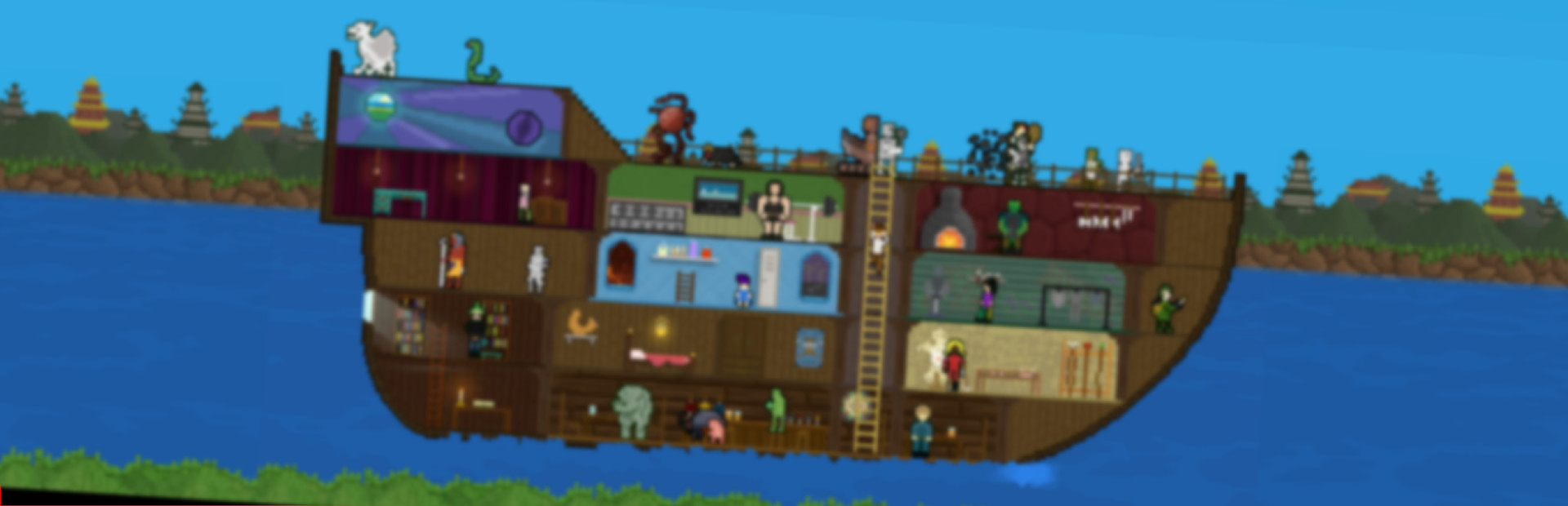
I spent a few hours with You Must Build A Boat expecting a casual distraction and walked out the other side with a full crew roster, a half-memorized monster weakness chart, and a genuinely embarrassing disregard for my actual schedule. The hook is deceptively mechanical: every dungeon run is a simultaneous endless runner and match-3 board where you slide full rows or columns to match sword tiles for physical attacks, staff tiles for magic, keys to pop chests, and shield tiles to soak incoming hits. The left edge of the screen is always chasing you, and matching the wrong tiles at the wrong moment lets it catch up. Fail a run and the game flashes "You Win" at you. That is not accidental charm. The progression engine is where the real decision-making sits. Between runs, you return to your boat, which functions as a persistent upgrade hub that literally grows as you complete quests and recruit crew. Each new crew member adds a functional room: Stan's Smithy lets you upgrade sword tile power, Silver runs the Staffery for magic tiles, Crittan's Armory handles shield capacity and armor durability, and the Arcanery wizard upgrades spells like the Electroshock and the Tile Bomb. Captured monsters spend Thought and Power resources to recruit as permanent companions, each providing passive stat buffs. The resource economy across gold, dust, Thought, and Power is the closest this game gets to a genuine strategy layer, and it matters more than it looks. Which tiles you prioritize upgrading shapes how every subsequent run plays out. That is a real build decision, not set dressing. The world structure across ten distinct areas, including the Sewers, Clockwork Ruins, a Pagoda, and an actual trip through Hell, keeps the visual and mechanical variety high enough to prevent the repetition from fully setting in over the main campaign's ten-or-so-hour runtime. Each zone brings new monster types with specific physical or magic immunities, new traps that drift toward your runner and force you to waste match sets, and new crew to unlock. Hidden secret monsters add a layer of organic discovery: recruit the Wraith by casting a lot of spells, unlock the Skeleton King through heavy selling at the broker. These are the kinds of systemic interactions that reward paying attention to the rules rather than brute-forcing through them. The criticisms are real and worth flagging. The PC interface carries over mobile-first design assumptions, meaning navigating your boat between runs involves more mouse clicks than it should. The quest system can produce runs that feel like dead weight if RNG does not cooperate with your current objective. Some players find the post-campaign loop, which escalates difficulty through increasing Ace ratings and daily challenges, does not add enough fresh content to justify the extended grind for the harder achievements. Three full clears are required to unlock everything, and under four percent of owners have completed that third pass. The endgame asks more of your patience than of your decision-making. For anyone put off by that, the honest framing is this: the main campaign is a tight, no-microtransaction, no-timer, no-ads experience that respects your time in ways that most games with mobile roots do not. The tutorial is genuinely smooth, the skill floor is low enough that matching tiles is intuitive within minutes, and the ceiling is high enough that optimizing your tile upgrades and monster formations against specific dungeon modifiers feels meaningful rather than arbitrary. If you have never played 10000000, you do not need to. If you have, the sequel improves nearly every system. Seventy-one on Metacritic undersells how polished this specific niche of game actually is.

Strategy & simulation
Tags
System Requirements
Minimum
- OS
- Windows XP
- Memory
- 1 GB RAM
- DirectX
- Version 9.0c
- Storage
- 150 MB available space
- Graphics
- OpenGL 2.0 compatible video card with 256 MB shared or dedicated RAM (ATI or NVIDIA)
- Processor
- Core2Duo
Recommended
- OS
- Windows 7
- Memory
- 2 GB RAM
- DirectX
- Version 9.0c
- Storage
- 2 GB available space
- Graphics
- OpenGL 2.0 compatible video card with 256 MB shared or dedicated RAM (ATI or NVIDIA)
- Processor
- Core2Duo
Keep exploring
Community Discussion
Be the first to comment on You Must Build A Boat.
Reviews & Ratings
Game Info
- Developer
- EightyEightGames
- Publisher
- EightyEightGames
- Release Date
- Jun 4, 2015