Yoku's Island Express
Pinball meets Metroidvania in a hand-painted tropical island that somehow pulls off the mashup better than it has any right to. Around 6-10 hours of the warmest, bounciest exploration you'll find in indie gaming.
GamerScout Verdict
Ideal for Metroidvania fans open to something gentle and strange, less so for anyone who needs precise controls and a sharp map.
Compare Prices(7 stores)
Every store in this table quotes us in euros, so the EUR figure is the price the seller actually set, not our arithmetic — which is why EUR is also the currency we rank in. We only list an offer here when the store gives us its price in euros, so nothing in this table is a number we invented.
Pick USD, PLN, GBP, CAD or AUD in the header and we convert from EUR at the European Central Bank reference rate — converted amounts are prefixed with ~. Your bank or the store may apply a different rate at checkout. We never hide offers based on where you are: everyone sees this whole table.
We may earn a commission when you buy games through links on this page — at no extra cost to you. It never affects our rankings or verdicts.
Price History
Screenshots & Media
About Yoku's Island Express
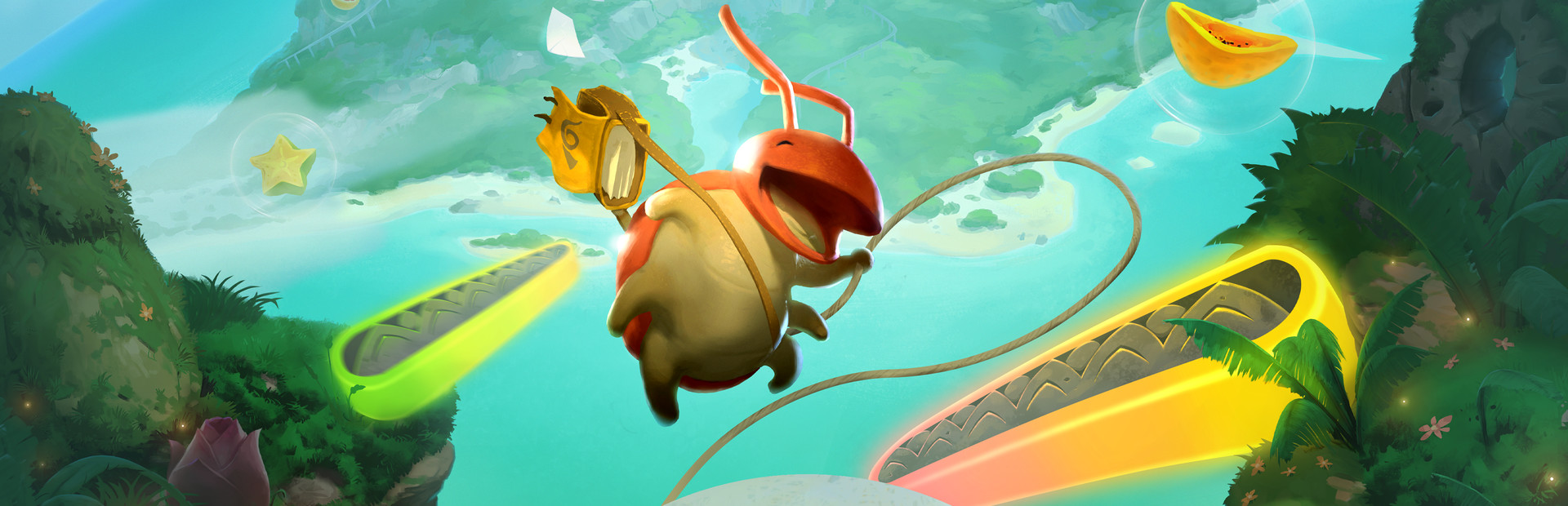
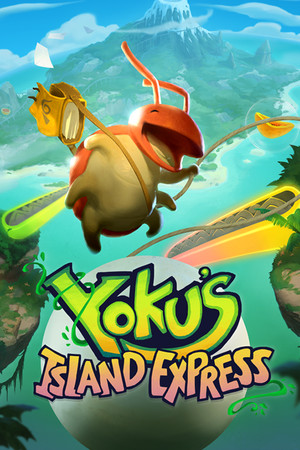
My first hour with Yoku's Island Express felt like the game was trying to convince me of something I didn't yet believe. A dung beetle, tethered to a ball, rolling around a tropical island with no jump button and no combat to speak of, navigating entirely through environmental pinball flippers. Villa Gorilla built this as a two-person Stockholm studio making their debut project, and the premise sounds paper-thin on the surface. But somewhere around the third flipper chain, when the jungle canopy opened up and a gentle marimba-led score drifted in, I stopped questioning it. The concept earns its credibility quickly and then quietly refuses to let it go. The structure is a proper Metroidvania, mapped across multiple biomes: tropical beaches, lush jungles, snowy mountains, dark underground caverns, and steamy hot spring regions. Yoku can move left and right on the ground but cannot jump. Everything vertical is handled through flippers, bumpers, and launchers built into the terrain itself, so the whole island functions as one enormous interconnected pinball table. Completing pinball sections rewards fruit, the game's currency, and unlocks new paths. Abilities accumulate in classic Metroidvania fashion: the Noisemaker wakes sleeping villagers and shatters obstacles, a slug vacuum lets you hoover up explosive slugs to clear blocked routes, and a sootling leash swings you from plant anchors across otherwise impassable gaps. Boss encounters flip the formula into something closer to traditional pinball, with Yoku's ball acting as the projectile. There is no fail state in the traditional sense. Falling off a board costs fruit and drops you back at the table entrance, which keeps frustration from calcifying into rage. The toughest pinball sections are mostly tucked behind optional side quests, meaning the critical path stays accessible even for players who would never voluntarily sit down at an actual pinball machine. What works is the tone, the craft, and the way the two genres reinforce each other rather than fight for space. The hand-painted art has a warmth that feels genuinely hand-touched, not procedurally generated or committee-approved. The soundtrack sits somewhere between island ambient and light chiptune, shifting register as zones change in a way that registers emotionally before you consciously notice it. The cast of island NPCs is weird and endearing in equal measure, and the side quests they generate give the world texture without demanding your time. A slower shortcut-post travel system unlocks over the course of the game, helping with return trips to earlier areas. The weaknesses are real though, and worth naming. The map screen has been criticized widely and fairly: it is pretty but underpowered, with two zoom levels that leave you guessing at named locations. Backtracking through completed pinball sections to reach new areas slows momentum in the mid-game in a way that occasionally tips from pleasantly meandering into genuinely tedious. And the sootling leash, while creative in concept, has a narrow attach range that can send you restarting a sequence more times than the game seems to intend. Players who prize tight, responsive platformer feel may also find the ball physics slightly imprecise at moments when precision matters. None of this kills the experience, but it is worth knowing before you sit down expecting a friction-free ride. The full story runs around 6 hours, and completionists chasing every collectible and side quest can push toward 10-11. For a game this focused and this intentionally paced, that length feels right. It knows when to end. Yoku's Island Express won the BAFTA for Best Debut Game in 2019, and that recognition is deserved. This is a studio with a clear vision, the craft to execute it, and the restraint not to overstay their welcome.

Indie & narrative
Tags
System Requirements
Minimum
- OS
- Windows 7
- Memory
- 4 GB RAM
- DirectX
- Version 10
- Storage
- 3 GB available space
- Graphics
- Nvidia GeForce GT 630 1GB / AMD Radeon 7770 1GB / Intel HD 530
- Processor
- Intel i3-2100 @ 3GHz / AMD A8-5500 @ 3.2GHz
Recommended
Requires a 64-bit processor and operating system
Keep exploring
Community Discussion
Be the first to comment on Yoku's Island Express.
Reviews & Ratings
Game Info
- Developer
- Villa Gorilla
- Publisher
- Team17 Digital Ltd
- Release Date
- May 29, 2018