
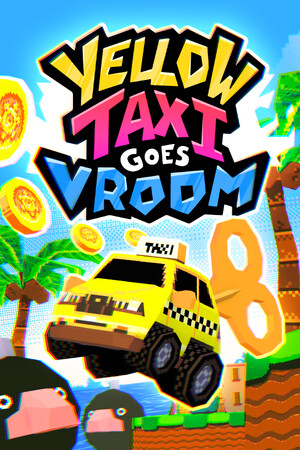
Yellow Taxi Goes Vroom
A no-jump collectathon that builds its entire identity around a tiny wind-up taxi and a move set most players will need an hour to trust. Worth every confused minute.
GamerScout Verdict
Best for collectathon fans patient enough to unlearn jumping - the movement clicks and refuses to leave your hands.
Compare Prices(8 stores)
Every store in this table quotes us in euros, so the EUR figure is the price the seller actually set, not our arithmetic — which is why EUR is also the currency we rank in. We only list an offer here when the store gives us its price in euros, so nothing in this table is a number we invented.
Pick USD, PLN, GBP, CAD or AUD in the header and we convert from EUR at the European Central Bank reference rate — converted amounts are prefixed with ~. Your bank or the store may apply a different rate at checkout. We never hide offers based on where you are: everyone sees this whole table.
We may earn a commission when you buy games through links on this page — at no extra cost to you. It never affects our rankings or verdicts.
Price History
Screenshots & Media
About Yellow Taxi Goes Vroom
My first twenty minutes with Yellow Taxi Goes Vroom felt like being handed a violin with no strings and told to play jazz. The Flip-o-Will dash is your only real tool at the start, and the game's hand-crafted levels immediately place green gears on ledges that look completely unreachable. That deliberate friction is the whole point. Panik Arcade, a two-person Italian studio, built their debut major release around a single audacious design choice: remove the jump button entirely from a 3D collectathon, then layer a surprisingly deep movement vocabulary on top of that absence. What that vocabulary actually looks like in practice is worth spelling out. You accelerate, you steer like a car, and you dash with the Flip-o-Will. Hit a ramp at speed and you go airborne. Cancel mid-dash and momentum pauses, giving you a precise hover. Double-tap the dash to flip upside-down and bounce off your own roof for a short hop. Time your brake before the dash fires and you backflip, which can chain into another dash for extra height. None of this is handed to you in a tutorial dump. Scattered robot NPCs across the hub world called Grandma's Island whisper tips, and the real revelations arrive organically as you realize a gear you thought was decorative is actually reachable with two chained moves you learned thirty minutes ago. That slow accumulation of personal mastery is where the game hums loudest, and it is genuinely rare. No ability unlocks, no upgrade trees - the taxi's move set never changes. You do. The level structure splits into two flavors. Open exploration stages scatter the 250 green gears across intricate environments - a gym world populated by bodybuilders, a surrealist bowling alley full of talking pin-people, Mediterranean rooftops that clearly adore Super Mario Sunshine. The other half adds a Crazy Taxi timer and actual passengers to deliver, which sounds stressful but plays closer to Tony Hawk's score-chasing flow: objectives cluster near each other, secret puzzle rooms pause the clock, and the pressure makes the movement feel purposeful rather than frantic. The hub itself quietly expands as you collect more gears, adding new NPCs, side challenges, and mini-levels - a small structural detail that makes returning feel rewarding rather than mechanical. A run to credits sits around seven hours; completionists hunting every gear and optional Golden Bunny will push significantly past that, and the late challenges ask for near-perfect execution of your full tool set. The presentation is unapologetically loud. Retro low-poly 3D, colors cranked past comfort, a soundtrack that several reviewers described as impossible to stop hearing after the fact, and a writing sensibility that ranges from genuinely funny - Morio the legally distinct moustachioed creator, Alien Mosk the evil oil baron - to jokes that scatter like the pin-people they contain. The humor lands visually more than verbally, and critics who wanted the satire to bite harder have a point. The writing aims for silly and lands there reliably, which is fine, but the premise has more edge than the dialogue ever uses. Occasional geometry jank in later stages can turn precise movement into frustration when the level itself misbehaves rather than your inputs. These are real flaws, not dismissible ones. But here is what stays with me: this is a game made by two people who clearly loved building every corner of it. The sound design has texture and warmth. The difficulty scales honestly - early gear placement is generous, late placement is diabolical, and the gap between those two states tracks almost perfectly with how much you have grown. Players who bounced off N64-era collectathons because of obscure progression will find this more respectful of their time. Players who loved Banjo-Kazooie for the movement feel will find the Flip-o-Will's depth surprisingly close to that same joy. The game knows what it is, knows when to end, and earns its runtime. That still matters.

Indie & narrative
Tags
System Requirements
Minimum
- OS
- Windows 10, 11
- Memory
- 4 GB RAM
- Storage
- 2 GB available space
- Graphics
- Intel Iris
- Processor
- Core i3
Recommended
- OS
- Windows 10, 11
- Memory
- 8 GB RAM
- Storage
- 2 GB available space
- Graphics
- Intel Iris
- Processor
- Core i5
Keep exploring
Community Discussion
Be the first to comment on Yellow Taxi Goes Vroom.
Reviews & Ratings
Game Info
- Developer
- Panik Arcade
- Publisher
- Xelu
- Release Date
- Apr 9, 2024