
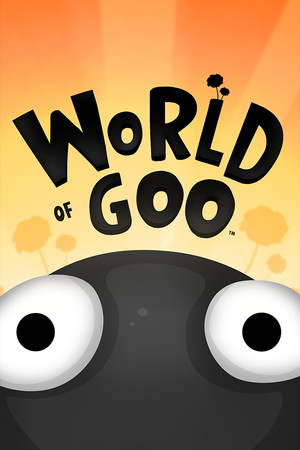
World of Goo
Ninety on Metacritic, built by two people, released in 2008 and still sitting at 92% positive on Steam. Either this goo-physics puzzler earned its legend or you've been sleeping on it for seventeen years.
GamerScout Verdict
Recommended for puzzle fans who appreciate handcrafted atmosphere and a physics sandbox with real personality, despite its age showing on modern displays.
Compare Prices(5 stores)
Every store in this table quotes us in euros, so the EUR figure is the price the seller actually set, not our arithmetic — which is why EUR is also the currency we rank in. We only list an offer here when the store gives us its price in euros, so nothing in this table is a number we invented.
Pick USD, PLN, GBP, CAD or AUD in the header and we convert from EUR at the European Central Bank reference rate — converted amounts are prefixed with ~. Your bank or the store may apply a different rate at checkout. We never hide offers based on where you are: everyone sees this whole table.
We may earn a commission when you buy games through links on this page — at no extra cost to you. It never affects our rankings or verdicts.
Price History
Screenshots & Media
About World of Goo
I keep coming back to World of Goo the way you return to a childhood book you only half-understood at the time. There's a gentleness to how Kyle Gabler and Ron Carmel, two former EA employees who left corporate comfort to make something genuinely strange, structured this game. It asks almost nothing of you in the first few minutes, then quietly dismantles every assumption you built on that easy foundation. The core loop is deceptively minimal: drag goo balls into structures, bridges, towers, and other improbable geometries to guide a minimum number of surviving goo balls into a pipe. Each goo ball you commit to the structure is one less you can save, so efficiency has real teeth. What keeps this tension interesting across five chapters and roughly 48 levels is the variety of goo types introduced at a measured, respectful pace. Black goo is your foundation. Then come green goo balls, which stay repositionable after placement, letting you course-correct without losing them permanently. Teardrop goo extends slowly downward. Floaty balloon goo lifts structures skyward. Bone goo, flammable goo, spiky goo, each one arrives with enough breathing room to learn before the game starts combining types in levels that feel more like physics riddles than puzzles with a single correct answer. Windmills will shred your careless structures. Froggy swamps punish an unbalanced bridge. Spike pits wait patiently beneath every ambitious tower. The game knows it's harder than it looks, and the sign-painter, a slyly omniscient background voice who leaves notes on signs throughout every level, seems mildly amused watching you figure that out. That storytelling approach is the part I find most quietly remarkable. There are no cutscene monologues, no voiced exposition. The narrative is told through those scattered signs and sparse environmental staging, touching on corporate consumption, curiosity, and something darker underneath all the whimsy. The art direction mirrors this: industrial shapes, muted tones that suggest something slightly macabre, a visual palette compared by multiple critics to Tim Burton by way of Dr. Seuss. For a game with this much personality in its world-building, it is almost aggressively non-flashy. The soundtrack deserves its own paragraph. Composer Kyle Gabler built something that genre-hops across jazz, choral arrangements, circus melody, and cinematic sweep, shifting register with each level's distinct atmosphere. It is not a looping background track you tune out after ten minutes. It is a soundscape that actively shapes how a level feels, and that attentiveness to audio craft is rare at any budget, let alone a two-person operation. Honestly, the weaknesses are real and worth naming. The game has not received meaningful updates in years, and on modern high-resolution displays the visuals can look stretched and low-fidelity in ways that were not originally intentional. Drag-and-drop precision gets genuinely frustrating in timed sequences, and grabbing the wrong goo ball under pressure can collapse minutes of careful construction. The OCD completion flags, secondary challenges demanding you finish levels under tight goo-ball budgets or within time limits, supply replay value for those who want it but can feel punishing enough that most players will clear the campaign once and consider that sufficient. The Goo Corporation sandbox mode, where surplus collected goo balls fuel a competitive tower-building leaderboard, extends the game in a lighter, freeform direction that suits the pacing well. What this is, stripped to its core, is a piece of handcraft from a specific moment in indie history, built when two people betting on a weird idea was genuinely audacious. It still holds. The puzzles are inventive, the atmosphere is singular, and a campaign completionist run lands around five to six hours without chasing OCD goals, which is exactly the right length for what this game wants to say.

Indie & narrative
Tags
System Requirements
Minimum
Requires a 64-bit processor and operating system
Recommended
Requires a 64-bit processor and operating system
Keep exploring
Community Discussion
Be the first to comment on World of Goo.
Reviews & Ratings
Game Info
- Developer
- 2D BOY
- Publisher
- 2D BOY
- Release Date
- Oct 13, 2008