WizardChess
Deceptively deep tactics roguelite that wraps chess-movement logic around a full deckbuilding economy - 20-minute runs with years of mastery ceiling hiding underneath.
GamerScout Verdict
Best for tactics fans who want chess-style positioning pressure married to a proper deckbuilding economy across tight, repeatable runs.
Compare Prices(0 stores)
Loading prices...
We may earn a commission when you buy games through links on this page — at no extra cost to you. It never affects our rankings or verdicts.
Price History
Screenshots & Media
About WizardChess
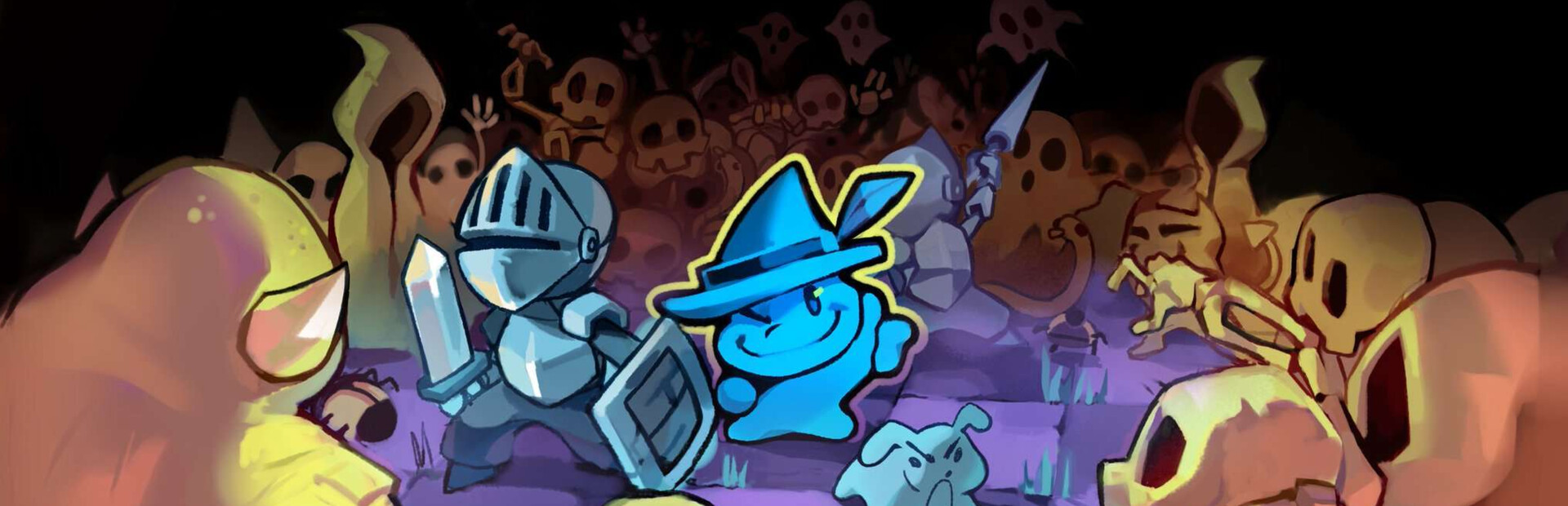
I went into WizardChess half-expecting a novelty: chess skins slapped onto a Slay the Spire clone. What I got instead was a legitimately layered tactics system that took about four failed runs before the structure clicked, and another dozen before I stopped making embarrassing positional errors. The chess DNA is real - units move in chess-derived patterns, one action per turn, and the board punishes sloppy positioning just as harshly as classical play does. But TwoPM Studios spent three years in early access building something much stranger on top of that skeleton. The central resource loop is built around recruiting, upgrading, sacrificing, and even gambling your units between encounters. Your hero piece is the Bard, who can attack, buff allies, and traverse the board - essentially your king, except this one has offensive presence. Every other slot in your formation comes from a pool of 50-plus unit classes, each carrying ATK, DEF, and SKL stats alongside class-specific skills. The procedurally generated runs mean each biome drops different rooms, enemy formations, and boss encounters with their own tactical "style" and scaling difficulty. Synergies between unit classes drive most of the decision-making: the right combination of a Lancer's threat range with a support piece's buff skill can compress a five-turn grind into a two-move knockout. Finding those synergies is the actual game, and it rewards players who read tooltips obsessively. For newcomers anxious about the chess movement rules: the Arcade mode runs clock in around 20 minutes, the tutorial covers piece roles, and the game's complexity reveals itself gradually rather than front-loading a wall of rules. That said, community feedback flags a real roughness in how certain class tutorials explain themselves - the Lancer in particular has a reputation for driving players toward the discussion board. The "one action per turn" constraint also draws some criticism, since trapping a resilient enemy unit can spiral into a slow multi-turn positioning exercise that feels more cumbersome than tactical. No mid-run save exists either, which is a friction point if your session windows are short. These are genuine friction points, not nitpicks. What the early player community consistently praises is the enemy AI quality - it plays to its own unit compositions rather than following scripted patterns, which gives each biome boss a distinct feel. The jazzy soundtrack adds personality that the pixel art aesthetic alone would not fully carry. The Story-mode Tournament path pits your Bard against the Fey Court with narrative framing, while Arcade mode strips that away and tests pure positional efficiency. Both modes share the same unit pool and deckbuilding economy, so time spent learning one carries directly to the other. After three years of early-access refinement, the 1.0 release that landed December 2024 feels like a complete product rather than a vertical slice.

Strategy & simulation
Tags
System Requirements
Minimum
- OS
- Windows 7
- Memory
- 4 GB RAM
- Storage
- 500 MB available space
- Graphics
- GTX 960
- Processor
- i5
Keep exploring
Community Discussion
Be the first to comment on WizardChess.
Reviews & Ratings
No ratings available
Game Info
- Developer
- TwoPM Studios
- Publisher
- 2 Left Thumbs
- Release Date
- Dec 14, 2024