Wink & the Broken Robot
A one-person Game Boy Color love letter that somehow out-weirds its retro inspirations, stuffing a surreal post-apocalyptic world into hardware constraints that would make most developers flinch.
GamerScout Verdict
Worth it for anyone who misses the weird, handcrafted edge of late-90s Game Boy platformers and wants an overworld that actually rewards wandering.
Compare Prices(1 stores)
Every store in this table quotes us in euros, so the EUR figure is the price the seller actually set, not our arithmetic — which is why EUR is also the currency we rank in. We only list an offer here when the store gives us its price in euros, so nothing in this table is a number we invented.
Pick USD, PLN, GBP, CAD or AUD in the header and we convert from EUR at the European Central Bank reference rate — converted amounts are prefixed with ~. Your bank or the store may apply a different rate at checkout. We never hide offers based on where you are: everyone sees this whole table.
We may earn a commission when you buy games through links on this page — at no extra cost to you. It never affects our rankings or verdicts.
Price History
Screenshots & Media
About Wink & the Broken Robot
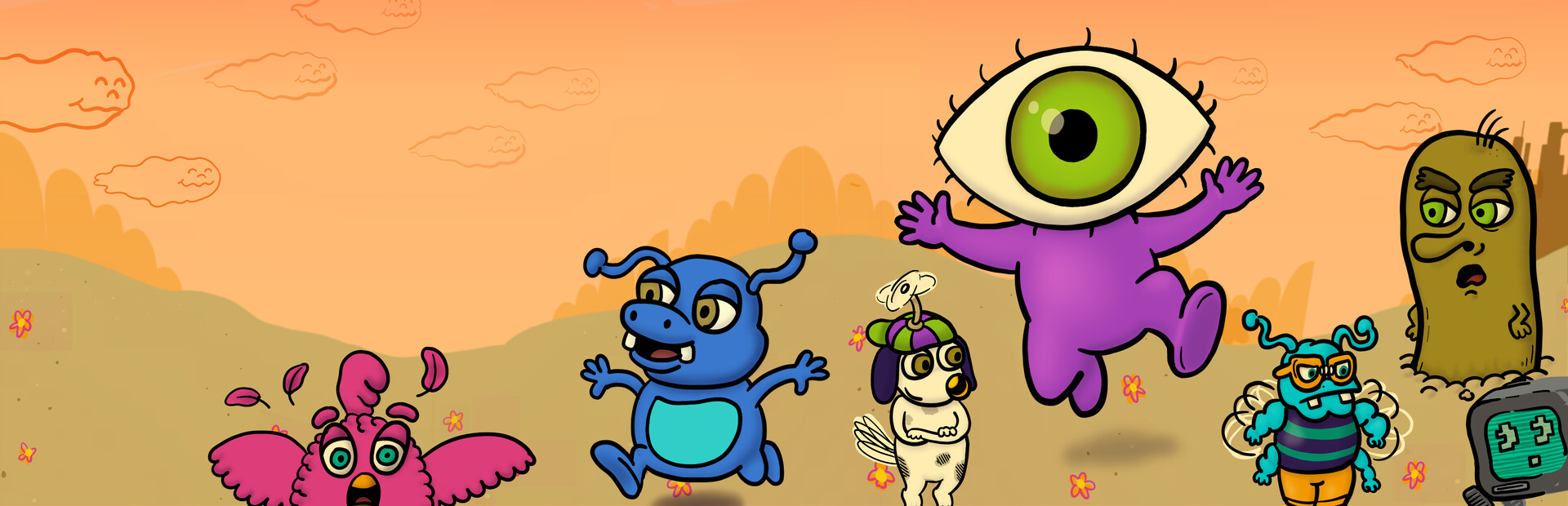
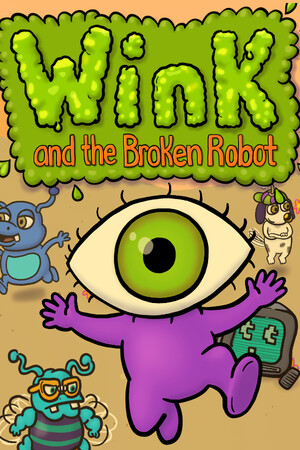
I have a soft spot for games that do more with less, and Wink and the Broken Robot is exactly the kind of quietly remarkable thing I stay in this job to find. Max Oakland built this solo, inside the strict palette and sound limits of Game Boy Color hardware, and the result feels less like a retro imitation and more like something that genuinely could have shipped in a clamshell box in 1999, except it's stranger and more self-assured than most things that actually did. The setup is simple: you play as Wink, an anthropomorphic eyeball living in a post-apocalyptic world called The Outskirts, and your job is to help a Broken Robot recover its stolen parts scattered across nine worlds. Each part is guarded by a boss, and you work through a series of stages to reach them, hopping on enemies or firing your laser to clear a path. The structure draws clear lines back to Super Mario Land 2 and Link's Awakening, and the community has called it a cross between Mega Man and Kirby, which is fair shorthand without being the full picture. What those comparisons don't capture is the tone: weird NPC dialogue, a world littered with cassette tapes and floppy disks as collectible relics, and a low-key surreal humor that gives The Outskirts its own internal logic. The hop-and-bop and shoot-em-up hybrid keeps moment-to-moment combat snappy, and power-ups layer in welcome variety, including a dual-direction laser shot and a milkweed seed transformation that lets you drift slowly downward through vertical sections. The open overworld is the thing that genuinely surprised me. You are not funneled through a linear world select. You pick your path across a large map, find secrets tucked into its edges, talk to odd strangers, and visit computers scattered around that let you review your collected items without backtracking to Wink's house. The nonlinear structure means the game respects your curiosity, and players who actually poke at corners will find easter eggs and mini-games the main path never requires. The boss fights are inventive and, critically, fair, each one designed with a distinct mechanic rather than recycled patterns. The early stages can feel a little plain compared to what comes later, and the chiptune soundtrack is a point of genuine debate, with some tracks landing and at least one generating complaints across multiple reviews. That is worth knowing going in, though Oakland composed the whole thing himself within accurate Game Boy Color sound restrictions, which is its own kind of craft. The art direction, once it opens up past the first couple of worlds, is where the handcraft really shows. The later stages use the hardware's limitations as a creative constraint rather than an excuse, and reviewers who pushed through to the middle and final worlds came away considerably more impressed than their first impressions suggested. The final world reportedly pulls together mechanics from across the whole game in a Metroidvania-adjacent structure, which is an ambitious way to end a tight platformer. For a solo release built in GB Studio and refined over years of community feedback, the polish level is genuinely high.

Indie & narrative
Tags
System Requirements
Minimum
Windows 7
Recommended
Latest
Keep exploring
Community Discussion
Be the first to comment on Wink & the Broken Robot.
Reviews & Ratings
No ratings available
Game Info
- Developer
- Max Oakland
- Publisher
- In the Junipers
- Release Date
- TBA