Wayward Strand
Forget combat loops and skill trees. Wayward Strand hands you a teenager's notebook and three days aboard a 1978 airborne hospital, then dares you to use your time wisely.
GamerScout Verdict
Worth it for fans of interactive fiction who can tolerate a bad save system and a low-key, unapologetically slow pace.
Compare Prices(4 stores)
Every store in this table quotes us in euros, so the EUR figure is the price the seller actually set, not our arithmetic — which is why EUR is also the currency we rank in. We only list an offer here when the store gives us its price in euros, so nothing in this table is a number we invented.
Pick USD, PLN, GBP, CAD or AUD in the header and we convert from EUR at the European Central Bank reference rate — converted amounts are prefixed with ~. Your bank or the store may apply a different rate at checkout. We never hide offers based on where you are: everyone sees this whole table.
We may earn a commission when you buy games through links on this page — at no extra cost to you. It never affects our rankings or verdicts.
Price History
Screenshots & Media
About Wayward Strand
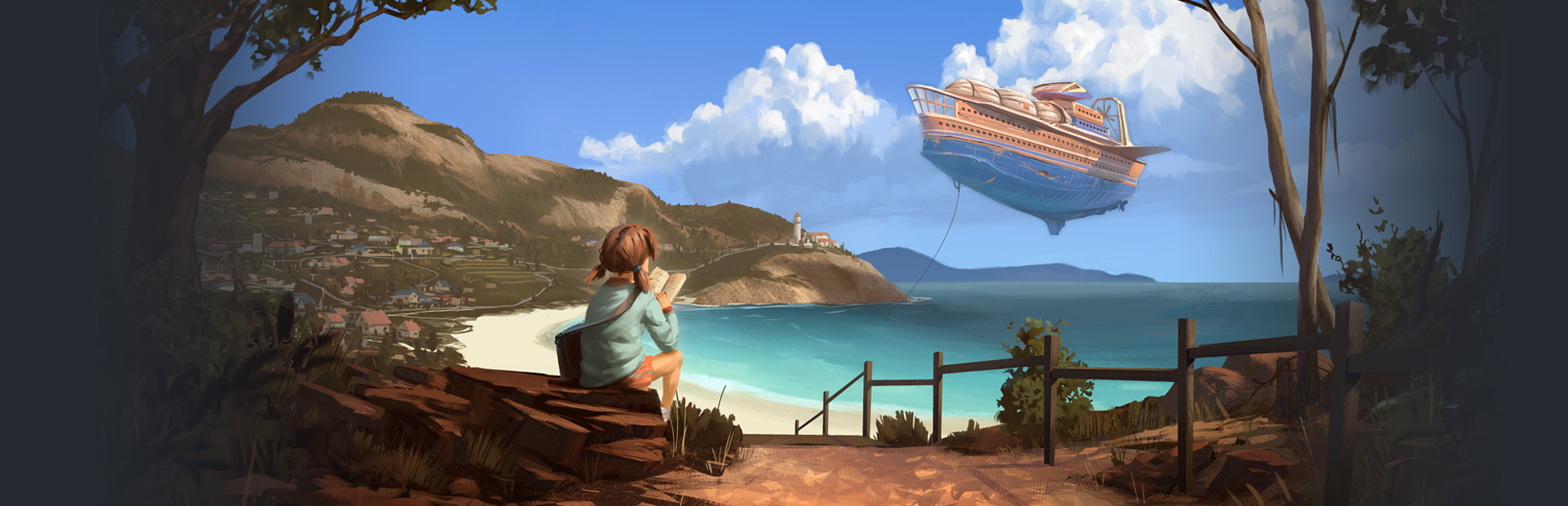
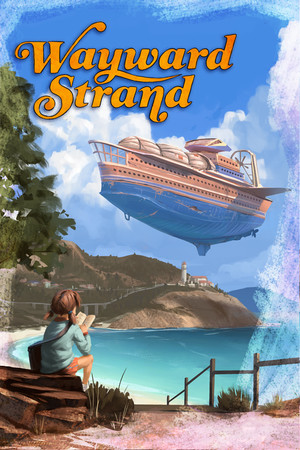
I went in expecting a gentle walking simulator, something to clear the palate between strategy sessions. What I got was a real-time scheduling puzzle wearing the skin of a quiet character drama, and that distinction matters more than any marketing blurb will tell you. The core mechanic is deceptively demanding: you control Casey, a 14-year-old aspiring journalist, aboard a converted airship-turned-hospital off the coast of Victoria, Australia. The in-game clock runs continuously. While you are listening to the pompous author Neil Avery hold court, the non-verbal patient Tomi is having an unrepeatable moment in the garden ward. That scene is gone if you miss it. Ghost Pattern built a genuine NPC schedule system here, where a dozen-plus characters pursue their own agendas in real time, crossing paths, gossiping, arguing, and grieving, completely indifferent to whether Casey shows up. For a strategy-oriented player, that is an optimization problem with no optimal solution, and I found it quietly compelling. The three-day structure is the tightest design choice in the game. Each day has a hard end point when Casey's mother, the head nurse, pulls her off the ward. You save only at day breaks, which is a real weakness I will come back to. But within those day-long sessions, the real-time clock pushes you to commit. Do you invest another twenty minutes peeling back the layers of the Austrian patient Heinrich Pruess, hoping he opens up about his past? Or do you cross the hall to sit with the knitter Ida Vaughan, who will share her grief freely but whose deeper story rewards patience too? Conversation choices feed into Casey's notebook, and those notebook entries become the breadcrumb trail for subsequent playthroughs. The designed-in FOMO is the point. One playthrough, clocking around four to five hours, will intentionally leave gaps. That is the replay hook, and it mostly works. The production quality clears a bar that a lot of indie narrative games miss. The voice cast, drawn almost entirely from Australian actors, sounds like actual people rather than video game characters. The 1978 setting gives the whole thing a period-soap-opera energy that keeps even the quietest scenes from feeling inert. Visually it lands somewhere between a children's illustrated novel and a stage set. Some character movement animations are stiff, with figures walking in rigid straight lines and pivoting in place like retail store dummies. The art direction carries enough charm that this rarely becomes a dealbreaker, but it is visible. Now for the real complaints, because the save system is genuinely bad. You can only lock in progress at the end of each of the three days. Quit mid-afternoon and you lose everything since morning. For a game with unskippable dialogue and no fast-forward, that is a friction problem that the genre solved years ago, and it is baffling that it shipped this way. The ending also splits critics: several reviews flag it as under-powered given the emotional weight the story builds across the weekend. Casey's notebook fills with material for an article we never actually see resolved. If you need closure with a bow on it, this will frustrate you. The game is interested in texture and relationship, not tidy payoffs. Worth knowing before you sit down. So who is this for? Not the person who needs a quest marker and an XP bar. The person who replays Disco Elysium to catch missed dialogue, who treats a visual novel save-scum session as a valid Saturday, who wants a game that feels less like a product and more like a short story they happened to walk around inside. Wayward Strand won Best Narrative at the Freeplay Independent Games Festival, and that recognition is earned. It is a focused, original piece of interactive fiction from Melbourne's Ghost Pattern, and the fact that it sits at a Metacritic 79 and an OpenCritic 81 with 82 percent of critics recommending it tells you the floor is solid even if the ceiling is not for everyone.

Strategy & simulation
Tags
System Requirements
Minimum
- OS
- Windows 10
- Memory
- 4 GB RAM
- Storage
- 5 GB available space
- Graphics
- DX10 compatible or better
- Processor
- 2.0GHz
Keep exploring
Community Discussion
Be the first to comment on Wayward Strand.
Reviews & Ratings
Game Info
- Developer
- ghost pattern
- Publisher
- ghost pattern
- Release Date
- Sep 15, 2022