Compare Warhammer 40,000: Gladius - Relics of War prices across trusted key stores and find the best deal. Developed by Proxy Studios. Published by Slitherine Ltd.. Released on 7/12/2018. Available on PC. Genres: Strategy. Metacritic score: 71/100.

Gladius strips 4X strategy down to pure combat on a hostile WH40K world. No diplomacy, no peace treaties, just four factions grinding each other into dust.

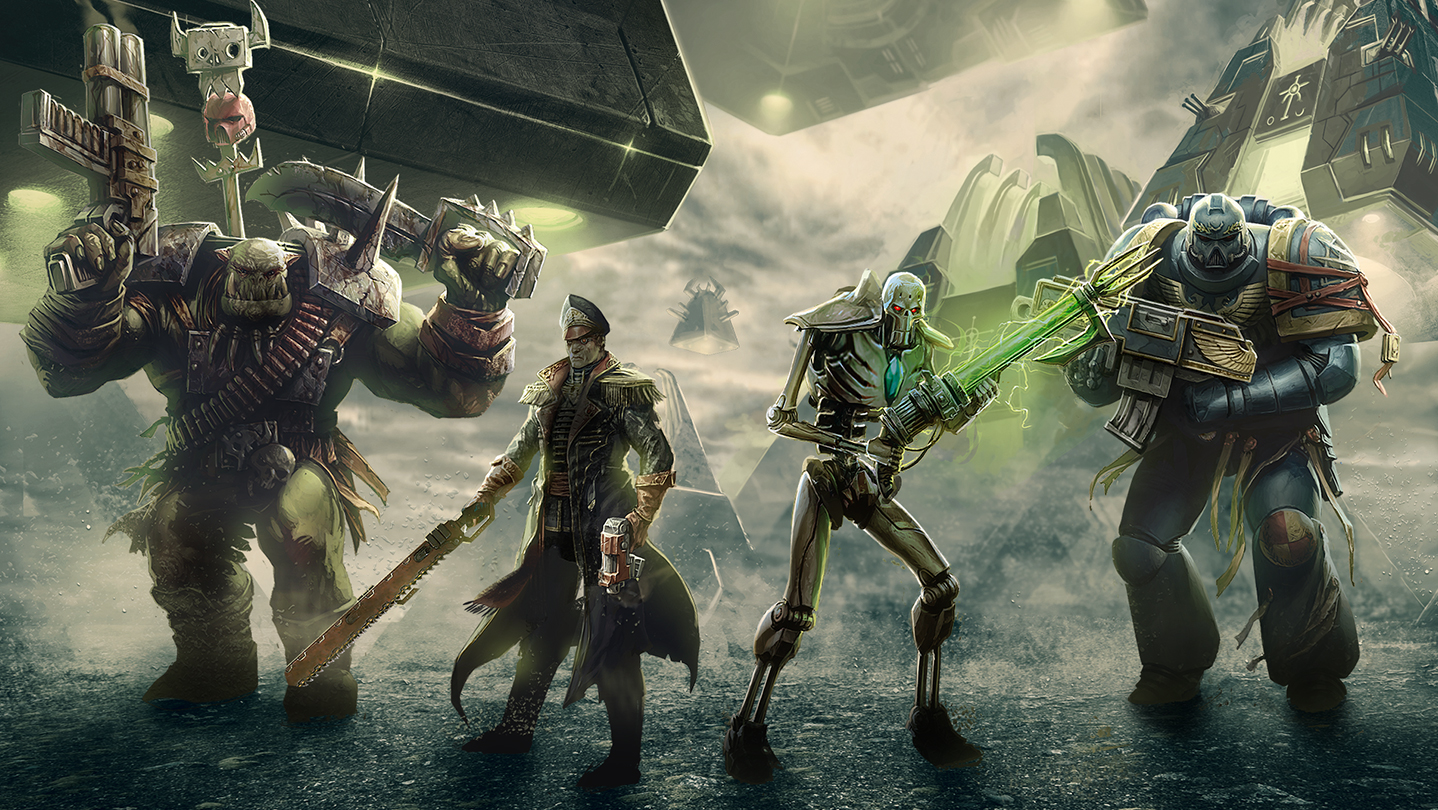
Warhammer 40,000: Gladius - Relics of War holds a specific and somewhat rare position in the 4X genre: it deliberately cuts diplomacy out of the formula entirely. There are no alliances to broker, no trade routes to optimize, no vassal states to manage. Every faction on the planet Gladius IV is hostile to every other faction, all the time. For players who have spent hundreds of hours babysitting AI relationships in Civilization or wrestling with the opinion-modifier system in Paradox titles, that single design decision is either a breath of fresh air or a dealbreaker, and it is worth knowing which camp you fall into before buying. The four base factions, Space Marines, Astra Militarum, Orks, and Necrons, play meaningfully differently from one another. Space Marines lean into high-quality, high-cost units with strong special abilities. Astra Militarum rewards players who understand attrition, flooding the map with cheaper troops and artillery support. Orks scale aggressively with map presence, generating momentum through sheer numbers. Necrons have a distinctive regeneration mechanic that makes them punishing to fight in a war of attrition but slow to project power early. Each faction has its own research tree, city-building logic, and unit roster, which means a second playthrough on the same map settings feels genuinely different rather than cosmetically altered. Post-launch DLC has expanded the roster substantially, adding factions like Chaos Space Marines, Tau, Tyranids, and others, each maintaining the same standard of mechanical differentiation. The tile-based map generation holds up well at higher difficulty settings, though the mid-game can develop a repetitive rhythm once your production engine is running. You will spend a lot of turns clearing the same categories of threats, neutral enemies, resource nodes, relic sites, and the lack of any political layer means the strategic decision space narrows to unit composition and front-line positioning. The AI is competent rather than impressive; it rarely makes catastrophically bad decisions, but it will not out-think a prepared human player on standard settings. Veteran 4X players should move to harder difficulties immediately. The tutorial is functional and respects the player's time, explaining faction mechanics clearly without becoming condescending, which is genuinely rarer than it should be in this genre. For newcomers to 4X strategy, Gladius is actually a reasonable entry point precisely because of its stripped-down design. Without diplomacy and economic complexity layered on top, the learning curve focuses on what most 4X games are secretly about anyway: unit counters, terrain advantage, timing your expansion relative to your opponents, and understanding when to push versus consolidate. The reduced system count lets you develop strategic intuition without drowning in modifier stacks. Once you have internalized the unit roster and research priorities for one faction, you have a solid mental framework to bring into more complex titles. The mod ecosystem on Steam is active, with additional factions, map scripts, and balance adjustments available, which meaningfully extends the lifespan beyond the base content. At 82% positive across more than seventeen thousand Steam reviews, the community consensus is consistent: this is a well-executed, deliberately focused game that delivers on its premise without overpromising. The Metacritic score of 71 reflects critical ambivalence about the removed features more than any execution failure. If you want WH40K flavour with a combat-centric 4X loop and genuine faction asymmetry, Gladius earns its place on the hard drive. Diego, Scout Team

Warhammer 40,000: Gladius - Relics of War

Warhammer 40,000: Gladius - Relics of War

Jul 12, 2018Proxy StudiosSlitherine Ltd.
GamerScout Says

Gladius strips 4X strategy down to pure combat on a hostile WH40K world. No diplomacy, no peace treaties, just four factions grinding each other into dust.

PC
Steam Deck PlayableProtonDB Gold
Best Price Available
€0.00
at N/A
Historical low: €0.80

GamerScout Verdict

Best for 4X fans who want faction-asymmetric combat without diplomacy overhead, especially at higher difficulty settings with DLC factions installed.

Compare Prices(0 stores)

Loading prices...

We may earn a commission when you buy games through links on this page — at no extra cost to you. It never affects our rankings or verdicts.

Price History

Historical low
€0.8010 Jun 2026
Keyshops
€0.72€1.00€1.29€1.575 Jun15 Jun25 Jun5 Jul15 Jul
5 Jun — 15 Jul
Create alert

Screenshots & Media

About Warhammer 40,000: Gladius - Relics of War

Warhammer 40,000: Gladius - Relics of War holds a specific and somewhat rare position in the 4X genre: it deliberately cuts diplomacy out of the formula entirely. There are no alliances to broker, no trade routes to optimize, no vassal states to manage. Every faction on the planet Gladius IV is hostile to every other faction, all the time. For players who have spent hundreds of hours babysitting AI relationships in Civilization or wrestling with the opinion-modifier system in Paradox titles, that single design decision is either a breath of fresh air or a dealbreaker, and it is worth knowing which camp you fall into before buying. The four base factions, Space Marines, Astra Militarum, Orks, and Necrons, play meaningfully differently from one another. Space Marines lean into high-quality, high-cost units with strong special abilities. Astra Militarum rewards players who understand attrition, flooding the map with cheaper troops and artillery support. Orks scale aggressively with map presence, generating momentum through sheer numbers. Necrons have a distinctive regeneration mechanic that makes them punishing to fight in a war of attrition but slow to project power early. Each faction has its own research tree, city-building logic, and unit roster, which means a second playthrough on the same map settings feels genuinely different rather than cosmetically altered. Post-launch DLC has expanded the roster substantially, adding factions like Chaos Space Marines, Tau, Tyranids, and others, each maintaining the same standard of mechanical differentiation. The tile-based map generation holds up well at higher difficulty settings, though the mid-game can develop a repetitive rhythm once your production engine is running. You will spend a lot of turns clearing the same categories of threats, neutral enemies, resource nodes, relic sites, and the lack of any political layer means the strategic decision space narrows to unit composition and front-line positioning. The AI is competent rather than impressive; it rarely makes catastrophically bad decisions, but it will not out-think a prepared human player on standard settings. Veteran 4X players should move to harder difficulties immediately. The tutorial is functional and respects the player's time, explaining faction mechanics clearly without becoming condescending, which is genuinely rarer than it should be in this genre. For newcomers to 4X strategy, Gladius is actually a reasonable entry point precisely because of its stripped-down design. Without diplomacy and economic complexity layered on top, the learning curve focuses on what most 4X games are secretly about anyway: unit counters, terrain advantage, timing your expansion relative to your opponents, and understanding when to push versus consolidate. The reduced system count lets you develop strategic intuition without drowning in modifier stacks. Once you have internalized the unit roster and research priorities for one faction, you have a solid mental framework to bring into more complex titles. The mod ecosystem on Steam is active, with additional factions, map scripts, and balance adjustments available, which meaningfully extends the lifespan beyond the base content. At 82% positive across more than seventeen thousand Steam reviews, the community consensus is consistent: this is a well-executed, deliberately focused game that delivers on its premise without overpromising. The Metacritic score of 71 reflects critical ambivalence about the removed features more than any execution failure. If you want WH40K flavour with a combat-centric 4X loop and genuine faction asymmetry, Gladius earns its place on the hard drive.

Diego
Diego · Scout Team

Strategy & simulation

Tags

steam4X StrategyFaction AsymmetryCombat-FocusedTurn-Based 4XNo DiplomacyExpandable RosterModdableBeginner-Friendly Entry PointTile-Based Map

System Requirements

Minimum

Processor
Intel Core i3 or equivalent
Memory
4 GB RAM
Graphics
OpenGL 3.3 compatible with 1 GB VRAM (NVIDIA GeForce GTS 450 (1 GB) / AMD Radeon HD 5750 (1 GB)) and up-to-date graphics driv…

Recommended

OS
Windows 10 (64-bit)
Processor
Intel Core i5 or equivalent
Memory
8 GB RAM
Graphics
Vulkan support with 3 GB VRAM (Nvidia GeForce 900 series / AMD…

Keep exploring

Community Discussion

Be the first to comment on Warhammer 40,000: Gladius - Relics of War.

Reviews & Ratings

Metacritic
71
Steam
82%(17,109)

Game Info

Developer
Proxy Studios
Publisher
Slitherine Ltd.
Release Date
Jul 12, 2018

Price Alert

Get notified when the price drops below your target!

Create Alert

No card? Pay another way

Top up your Steam Wallet or buy crypto with any card — instant delivery, no bank account needed.

More from Proxy Studios

Buy smarter: helpful guides

Warhammer 40,000: Gladius - Relics of War live on Twitch

Looking for more? See games like Warhammer 40,000: Gladius - Relics of War →

Frequently asked questions about Warhammer 40,000: Gladius - Relics of War

How much does Warhammer 40,000: Gladius - Relics of War cost?

Warhammer 40,000: Gladius - Relics of War pricing changes often and varies by store, edition and region. The live price table on this page compares the cheapest in-stock offers from trusted key stores like Eneba and Kinguin, so you always see the current lowest price before you buy.

Where can I buy Warhammer 40,000: Gladius - Relics of War cheapest?

Compare Warhammer 40,000: Gladius - Relics of War prices across every verified store in the price table on this page. We list the cheapest in-stock key and store offers, updated regularly, so you always see the best current deal before you buy.

What platforms is Warhammer 40,000: Gladius - Relics of War available on?

Warhammer 40,000: Gladius - Relics of War is available on PC.

When was Warhammer 40,000: Gladius - Relics of War released?

Warhammer 40,000: Gladius - Relics of War was released on 12 July 2018.

Who developed Warhammer 40,000: Gladius - Relics of War?

Warhammer 40,000: Gladius - Relics of War was developed by Proxy Studios and published by Slitherine Ltd..

Is Warhammer 40,000: Gladius - Relics of War worth buying?

Warhammer 40,000: Gladius - Relics of War holds a Metacritic score of 71/100, making it one of the standout Strategy titles. See the full reviews, ratings and how-long-to-beat times on this page to decide.