Warhammer 40,000: Gladius - Chaos Space Marines (DLC)
Gladius finally gets a faction that treats population as a sacrificial currency and turns infantry kills into a slot machine for daemonic ascension. Worth it if you can stomach a rough early game.
Compare Prices(0 stores)
Loading prices...
We may earn a commission when you buy games through links on this page — at no extra cost to you. It never affects our rankings or verdicts.
Screenshots & Media
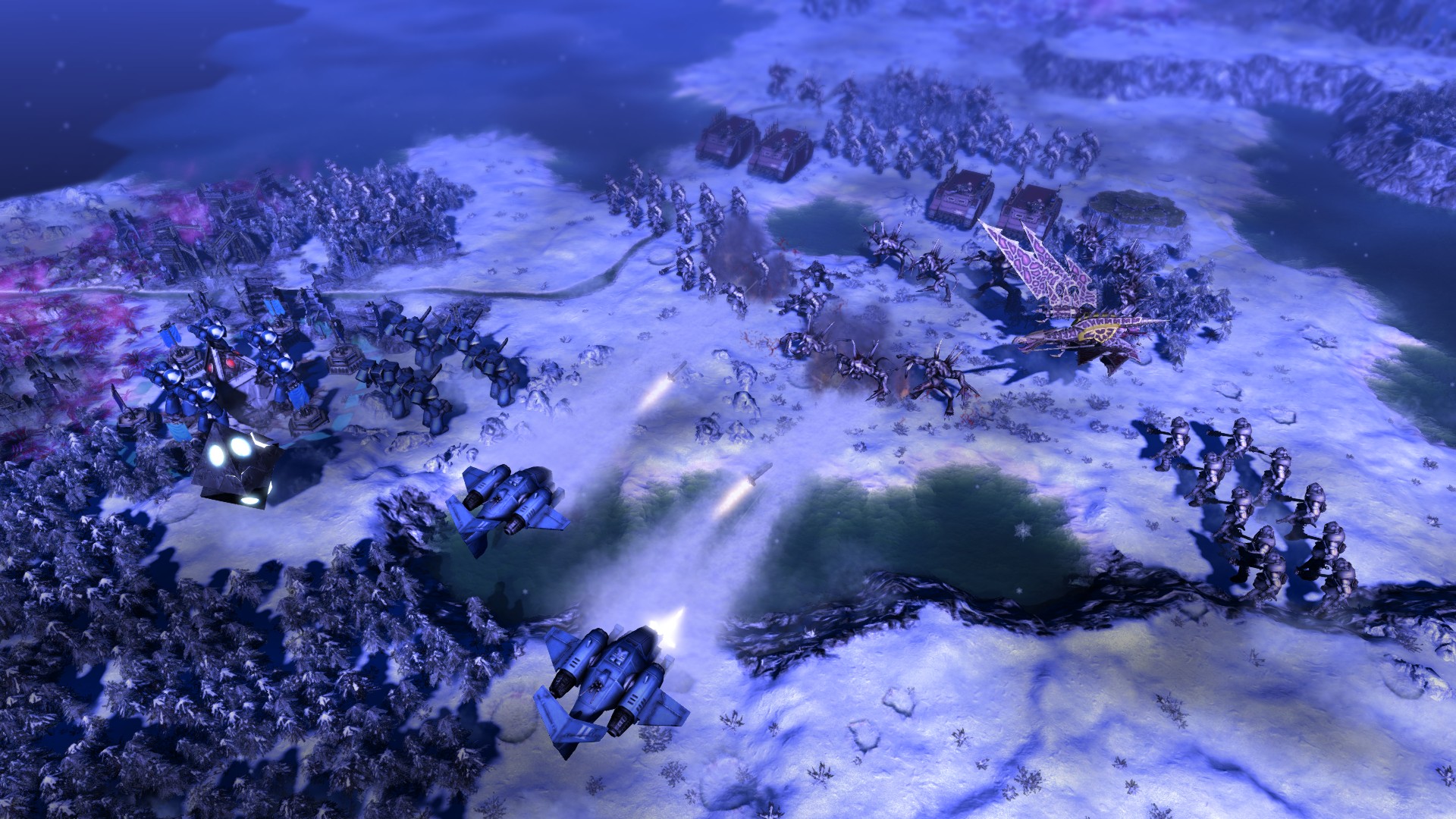
About Warhammer 40,000: Gladius - Chaos Space Marines (DLC)
I have a color-coded spreadsheet tracking every Gladius faction's mid-game power spike, and the Chaos Space Marines sit in a uniquely awkward column: weak opening, lethal window around turns 40-50, then a late game that depends heavily on how well you managed your research queue. That tension is exactly what makes this DLC interesting to me, and probably what will frustrate players who just want to roll over the AI from turn one. The faction is built around three interlocking systems that don't exist anywhere else in Gladius. First, population is a spending resource: you sacrifice city inhabitants via Unholy Rites to trigger temporary economic boosts tied to whichever of the four Chaos gods you favor. Nurgle, Khorne, Slaanesh, and Tzeentch each produce different city-level effects, which means you are making god-selection decisions every few turns rather than just queuing buildings passively. Second, Marks of Chaos let you brand individual infantry units with permanent stat buffs, and the Marks interact with the Boons of Chaos system - a kill-triggered chance for a Champion unit to gain a permanent bonus, transform into a Daemon Prince with its own abilities, or, on a bad roll, mutate into a Chaos Spawn instead. The Daemon Prince outcome is rare enough that you should never plan around it, but it happens often enough to make every combat feel weighted. Third, daemon engines like the Maulerfiend and Venomcrawler carry the "It Will Not Die" trait, regenerating hit points each turn and sustaining themselves in prolonged melee engagements where other factions' vehicles would need to pull back. The roster covers 16 units: Chaos Cultists as cheap city-founders and early chaff, core Chaos Space Marines as the backbone, specialist melee infantry in Khorne Berzerkers, disruption through Warp Talons (fast, teleporting, capable of blinding enemies), long-range weight from Havocs and Obliterators, and the Defiler as your answer to enemy super-heavies. Notably absent are Chaos Terminators, who appear prominently in the DLC artwork but are not actually in the game - a legitimate complaint from the community. The Master of Possession fills the psyker-adjacent role, summoning temporary daemonic units and buffing nearby forces, while the Warpsmith handles vehicle repair and economy support. Four heroes total gives this faction more hero diversity than most, which matters when you are trying to squeeze efficiency out of a faction that has no direct building-production bonuses and must rely on population sacrifice to compensate. The faction's clearest strategic identity is melee aggression with a mid-game infantry push. Their lack of long-range firepower is a real and exploitable weakness against human opponents, and the AI running this faction tends to over-invest in Rhinos early. Playing against CSM, you can hold range and bleed them out. Playing as CSM, you need to close distance fast and use terrain to funnel enemies into your daemon engines. The boons and mutations add genuine chaos (lowercase) to the decision loop, though community consensus holds that the proc rates feel low enough to be flavor rather than reliable strategy. Some players also note that the faction can feel incomplete without later DLC additions that expand the Chaos roster further. For a newcomer to Gladius who wants to learn faction depth, I would actually suggest starting with one of the base factions first, then coming back to CSM once you understand the game's overwatch mechanics and resource timing. The Cultist city-founding snowball is fast and forgiving of early mistakes - second city by turn 8, third by the early 20s is realistic - but the research investment required to make the infantry system pay off punishes players who spread their tech spending too thin. Experienced Gladius players will find the faction genuinely different from anything in the base game and worth the unlock just for the Marks-plus-Boons puzzle alone. Diego, Scout Team
Tags
System Requirements
Minimum
- OS
- Windows 10 (64-bit)
- Memory
- 4 GB RAM
- Storage
- 4 GB available space
- Graphics
- Vulkan support with 3 GB VRAM (Nvidia GeForce 900 series / AMD Radeon RX 400 series)
- Processor
- Intel Core i3 or equivalent
Recommended
- OS
- Windows 10 (64-bit)
- Memory
- 8 GB RAM
- Storage
- 8 GB available space
- Graphics
- Vulkan support with 3 GB VRAM (Nvidia GeForce 900 series / AMD Radeon RX 400 series)
- Processor
- Intel Core i5 or equivalent
Reviews & Ratings
No ratings available
Game Info
- Developer
- Proxy Studios
- Publisher
- SEGA
- Release Date
- Jul 18, 2019