
Wandering Sword
A wuxia tactical RPG that hides a genuinely deep progression engine behind its pixel-art prettiness - strategy players will lose hours optimising six move-type loadouts across five weapon disciplines before they notice the sun went down.
GamerScout Verdict
Best for tactics-RPG fans who want a mechanically rich wuxia world and don't mind wrestling with a rough-edged UI to get there.
Compare Prices(7 stores)
Every store in this table quotes us in euros, so the EUR figure is the price the seller actually set, not our arithmetic — which is why EUR is also the currency we rank in. We only list an offer here when the store gives us its price in euros, so nothing in this table is a number we invented.
Pick USD, PLN, GBP, CAD or AUD in the header and we convert from EUR at the European Central Bank reference rate — converted amounts are prefixed with ~. Your bank or the store may apply a different rate at checkout. We never hide offers based on where you are: everyone sees this whole table.
We may earn a commission when you buy games through links on this page — at no extra cost to you. It never affects our rankings or verdicts.
Price History
Screenshots & Media
About Wandering Sword
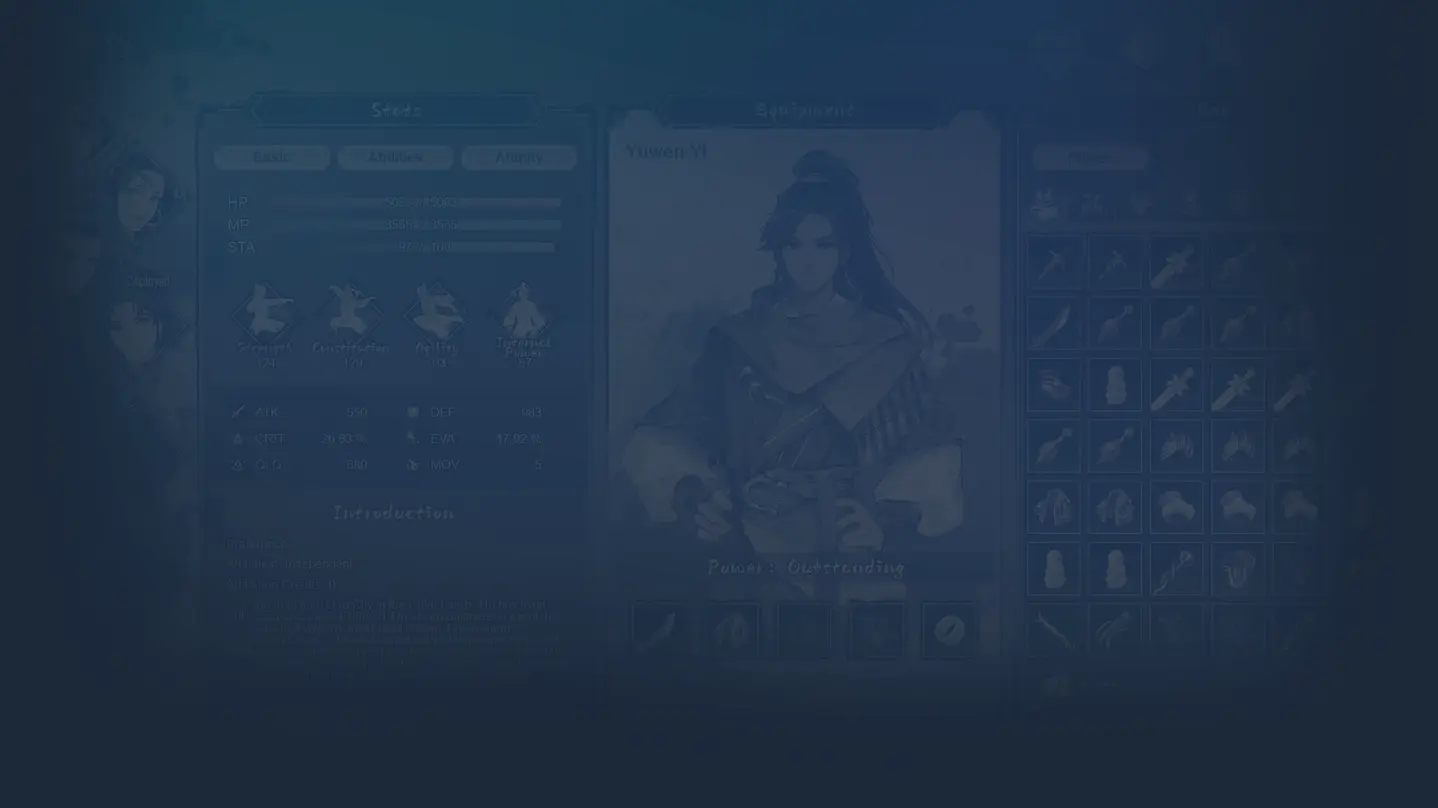
I went in expecting a light Octopath Traveler reskin with kung-fu flavouring. What I got was one of the more mechanically dense tactical RPGs released in years, wrapped in an HD-2D presentation that holds up against anything Square Enix has produced in the same visual style. The strategy credentials are real: grid-based combat where flanking earns bonus damage and backstabs hit hardest means positioning matters from the first fight, not just the last. Abilities slot into six categories - Normal, Special, Mighty, Unique, Lightness, and Cultivation - and optimising a loadout across those types, while also matching weapon disciplines like swords, polearms, sabres, fist arts, and hidden arms to your preferred range profile, is exactly the kind of build-order problem that will keep a spreadsheet open in the background. A toggle lets you switch the whole thing to real-time mode before any encounter, which turns the grid into a reflex-driven scrap; turn-based is strictly superior for hard multi-enemy fights, but real-time makes routine grinding painless. The progression system is where Wandering Sword earns genuine distinction. Martial Points earned in combat push abilities and stats upward, but only to a hard ceiling. Breaking through that ceiling requires finding skilled martial artists in the open world, learning their techniques, and - for the top-tier moves - beating their masters in one-on-one duels first. It is a mechanic that makes the world feel like a living curriculum rather than a backdrop. Layer in the Meridian system, where you spend Meridian Points to permanently unlock stat nodes across six vessel trees, plus an Affinity system that lets you recruit up to 14 companions by sparring or gifting items to NPCs, and the sheer number of interlocking systems starts to feel like a Paradox title that happened to walk into a wuxia novel. The quest design rewards attention. Multiple routes through the same quest can lead to dramatically different narrative outcomes, including life-or-death fates for named characters. A Legacy Points mechanic also gives subsequent playthroughs a head start - points accumulated across a run convert into bonus meridian points, starting techniques, and gear for the next attempt, which makes a second pass on harder difficulty feel structurally different rather than just numerically punishing. Completionists who explore thoroughly are looking at north of 50 hours on a first run. The complaints are real and worth flagging. The UI is functional but genuinely rough in places - fonts, layout, and menu navigation all carry the fingerprints of a small debut studio. Controller support at launch was poor, though post-launch patches have addressed many of the worst issues. The Martial Points scaling has drawn criticism: levelling an ability from rank one to ten can feel like a rounding error on actual damage output, which makes the upgrade loop feel less satisfying than it should. The inventory system also dumps a lot of materials on you before explaining what they are for, and the open world occasionally sends under-levelled players into fights they have no business being in. Save frequently. For strategy and tactics-RPG players, none of those rough edges will feel unfamiliar - this is the kind of game where the depth eventually overwhelms the polish complaints. Newcomers to wuxia fiction will find the tone welcoming rather than exclusionary; the world's faction politics and martial arts lore are explained at a reasonable pace, and the story's personal revenge hook lands before the political complexity piles on. If you have ever wanted Final Fantasy Tactics set in ancient China, with a progression system that actually makes you earn your power rather than just grind it, Wandering Sword is a very specific itch scratched very well.

Strategy & simulation
Tags
System Requirements
Minimum
- OS
- Windows® 7 SP1 / 8.1 / 10 64-bit
- Memory
- 8 GB RAM
- DirectX
- Version 11
- Storage
- 7 GB available space
- Graphics
- [Integrated graphics not supported]AMD Radeon™ RX 560 (4GB VRAM) / NVIDIA® GeForce® GTX 1050 (4GB VRAM)
- Processor
- AMD FX-4350 / Intel® Core™ i3-3210
- Sound Card
- DirectX Compatible Sound Card
Recommended
- OS
- Windows® 7 SP1 / 8.1 / 10 64-bit
- Memory
- 16 GB RAM
- DirectX
- Version 11
- Storage
- 7 GB available space
- Graphics
- Radeon™ RX 580(6GB VRAM) / NVIDIA® GeForce® GTX 1060 ti (6 GB VRAM)
- Processor
- AMD Ryzen™ 3 1200 / Intel® Core™ i5-6400
- Sound Card
- DirectX Compatible Sound Card
DLC & Add-ons for Wandering Sword1
Expansions, DLC packs and add-on content for this game. Click any item to see store offers.
Keep exploring
Community Discussion
Be the first to comment on Wandering Sword.
Reviews & Ratings
Game Info
- Developer
- The Swordman Studio
- Publisher
- Spiral Up Games
- Release Date
- Sep 14, 2023