
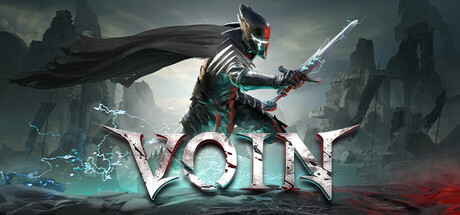
VOIN
One developer, six years of craft, and combat so snappy it shames studios ten times the size. VOIN is early access with real bones, but the content ceiling arrives fast.
GamerScout Verdict
Buy if you want a combat-first Early Access with genuine build depth; wait for full release if thin content frustrates you.
Compare Prices(9 stores)
Every store in this table quotes us in euros, so the EUR figure is the price the seller actually set, not our arithmetic — which is why EUR is also the currency we rank in. We only list an offer here when the store gives us its price in euros, so nothing in this table is a number we invented.
Pick USD, PLN, GBP, CAD or AUD in the header and we convert from EUR at the European Central Bank reference rate — converted amounts are prefixed with ~. Your bank or the store may apply a different rate at checkout. We never hide offers based on where you are: everyone sees this whole table.
We may earn a commission when you buy games through links on this page — at no extra cost to you. It never affects our rankings or verdicts.
Price History
Screenshots & Media
About VOIN
My first hour with VOIN felt like stumbling onto something I wasn't supposed to find yet. The movement alone does things that bigger, better-funded games fumble. You double-jump, air-dash, and Super Dash across open dark-fantasy landscapes, and the whole thing is tuned so tightly that the second you sheathe your blade you feel like a creature built purely for traversal. That responsiveness is not an accident. Sole developer Nikita Sozidar spent years iterating on a dodge system inspired by Hyper Light Drifter, one where your evasion is unlimited by stamina and combat lives entirely on reaction time. When an enemy flashes yellow and you nail the parry-dodge, time stutters for a brief, gorgeous window. That moment never gets old. The build space is where VOIN quietly earns the RPG label. Weapons are not just stat sticks. A hammer called the Bell Ringer summons ghostly bells that damage everything nearby when struck. A scythe tears reality as it swings, leaving frozen scars in the air. The Symbiosis Station in the hub lets you fuse two items together, and the combinations players have found, stacking poison to chain-explode entire rooms, layering fire and physical burst builds, rival mid-tier ARPGs with full production teams behind them. Ichor from kills fuels leveling, corrupted field loot needs to be cleansed at the hub before it becomes permanent, and every run layers a little more muscle memory on top of whatever build you're chasing. The loop is genuinely satisfying. But the Early Access label is load-bearing here, and you should feel it in your gut before buying. At launch the game shipped with two large zones, and while both are visually gorgeous, pulling from what the developer describes as an Albert Bierstadt-inspired landscape aesthetic, the enemy variety doesn't yet match the beauty of the arenas. Most enemies rush the player on a flat aggression script, and reviewers at launch flagged that the placement felt static. The Thunderborn and Permafrost updates have added a dungeon beneath the Cathedral of Veiled Lament and a new talent tree built around Soulfruits, which is real progress, but the core content budget is still thin by full-release standards. A committed player can see most of what's on offer in a handful of hours, which is the honest shape of where this thing sits right now. The studio DNA running through this project is fascinating to trace. The influences Sozidar names, Diablo, Doom, Borderlands, Witchfire, Elden Ring, aren't random. You feel Doom's momentum religion in the no-shield, always-moving combat. You feel Elden Ring in the way open areas gate off sections that only make sense later. The art toggles between a stylized modern look and a pixelated retro mode, and both options are striking rather than gimmicky. The soundscape, composed by a developer who is also a musician, threads through the zones with a weight that most small games don't attempt. This is a game built by someone who cares, deeply, about every system touching every other system. The community on Steam agrees, sitting comfortably above 90 percent positive across thousands of reviews well after launch. The question is purely temporal: the foundation is exceptional, the building is still going up.

Indie & narrative
Tags
System Requirements
Minimum
- OS
- Windows 10
- Memory
- 4 GB RAM
- DirectX
- Version 11
- Storage
- 4 GB available space
- Graphics
- NVIDIA® GeForce GTX 750 Ti / ATI Radeon HD 7950
- Processor
- Intel Core i3-2100 / AMD® FX-6300
- Sound Card
- Integrated
Keep exploring
Community Discussion
Be the first to comment on VOIN.
Reviews & Ratings
No ratings available
Game Info
- Developer
- Nikita Sozidar
- Publisher
- tinyBuild
- Release Date
- Dec 10, 2024
