
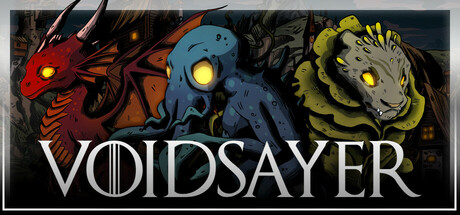
Voidsayer
Darkest Dungeon ate a Pokemon game and spat out something grimmer, leaner, and far less forgiving. Worth your time if you can handle the teeth.
GamerScout Verdict
Ideal for strategy-minded players who want creature-taming with real consequences - avoid if you need mid-run checkpoints or a welcoming difficulty curve.
Compare Prices(9 stores)
Every store in this table quotes us in euros, so the EUR figure is the price the seller actually set, not our arithmetic — which is why EUR is also the currency we rank in. We only list an offer here when the store gives us its price in euros, so nothing in this table is a number we invented.
Pick USD, PLN, GBP, CAD or AUD in the header and we convert from EUR at the European Central Bank reference rate — converted amounts are prefixed with ~. Your bank or the store may apply a different rate at checkout. We never hide offers based on where you are: everyone sees this whole table.
We may earn a commission when you buy games through links on this page — at no extra cost to you. It never affects our rankings or verdicts.
Price History
Screenshots & Media
About Voidsayer
I went into Voidsayer expecting a cozy creature-collector with edgy window dressing. What I got instead was a resource-scarce, decision-heavy roguelite that punishes complacency from the first expedition and doesn't ease up. The Pokemon-meets-Darkest-Dungeon comparison floating around the community is accurate enough to be useful: the expedition-and-return loop, the settlement upgrades, the all-or-nothing mission structure - all of it pushes you toward tight, deliberate play rather than casual grinding. The core of the game is assembling a team from a roster of over one hundred tameable Entities, each defined by a genetics system and distinct personality traits that shape combat performance in meaningful ways. Some run aggressive, some favour defensive positioning, and those tendencies interact with an elemental type chart that the game actually teaches you through a full-screen reference chart accessible at any time - a small design decision that I genuinely respect. The turn-based combat layers attack moves, passives, and status effects on top of that type system, and by the midgame you are absolutely reading the spreadsheet before every boss encounter. Bosses are not stat-padded reskins either: each one arrives at the end of a dedicated procedurally generated level and can restructure the underlying rules of the fight, forcing your team to adapt or wipe. The settlement system gives you something to build toward between runs. Materials from expeditions fund building upgrades that unlock things like free healing items at expedition start, expanded entity storage, and a creature index (the "dex") for tracking what you have seen and caught. None of it is complex enough to distract from the monster management, but the incremental pull is real and keeps the meta-progression feeling purposeful rather than arbitrary. That said, the all-or-nothing mission design is where the game divides opinion. If you die mid-expedition, you reload from before you left town. No checkpoint, no partial progress. Reviewers have correctly flagged this as the sharpest edge in the design - it can feel punitive when a bad random event cripples your team deep into a run. The procedural event system does build in a luck stat that rises as you take damage from bad rolls, which softens the worst-case scenarios, but newer players will still run headfirst into brick walls before they learn to read the map's colour-coded event connections and use the Scouting buff to avoid the genuinely nasty nodes. Atmosphere is the game's most unambiguous win. The creature designs lean corrupted and unsettling, the Gothic visual language runs from the fonts down to the color palette, and the music maintains tension without becoming irritating over long sessions. This is not a world that wants you comfortable. For strategy players who already log time in games where every resource decision matters, that pressure is the fun. For players coming from more relaxed creature-collectors like Cassette Beasts, the difficulty curve will likely feel steep and the UI can be briefly confusing while you learn which icons mean what. Steam user scores are sitting in mixed territory with roughly 68% positive at launch, which tracks: the design is committed and coherent, but it is not for everyone, and the difficulty without mid-mission saves will produce refund requests from the wrong audience.

Strategy & simulation
Tags
System Requirements
Minimum
- OS
- Windows XP, Vista, 7, 8/8.1, 10
- Memory
- 2 GB RAM
- Storage
- 2 GB available space
- Graphics
- 1Gb Video Memory, capable of OpenGL 3.0+ support (2.1 with ARB extensions acceptable)
- Processor
- 2.0 Ghz
Keep exploring
Community Discussion
Be the first to comment on Voidsayer.
Reviews & Ratings
No ratings available
Game Info
- Developer
- Pavel Auseitasau
- Publisher
- indie.io
- Release Date
- Jun 2, 2025