Voice of Cards: The Isle Dragon Roars
Yoko Taro wraps a lean, beginner-friendly JRPG in one of the most distinctive tabletop aesthetics in recent memory - but veteran RPG players may find the combat depth as shallow as a card flip.
GamerScout Verdict
Best for JRPG newcomers and Yoko Taro fans who want a relaxing 12-hour story over deep combat systems.
Compare Prices(4 stores)
Every store in this table quotes us in euros, so the EUR figure is the price the seller actually set, not our arithmetic — which is why EUR is also the currency we rank in. We only list an offer here when the store gives us its price in euros, so nothing in this table is a number we invented.
Pick USD, PLN, GBP, CAD or AUD in the header and we convert from EUR at the European Central Bank reference rate — converted amounts are prefixed with ~. Your bank or the store may apply a different rate at checkout. We never hide offers based on where you are: everyone sees this whole table.
We may earn a commission when you buy games through links on this page — at no extra cost to you. It never affects our rankings or verdicts.
Price History
Screenshots & Media
About Voice of Cards: The Isle Dragon Roars
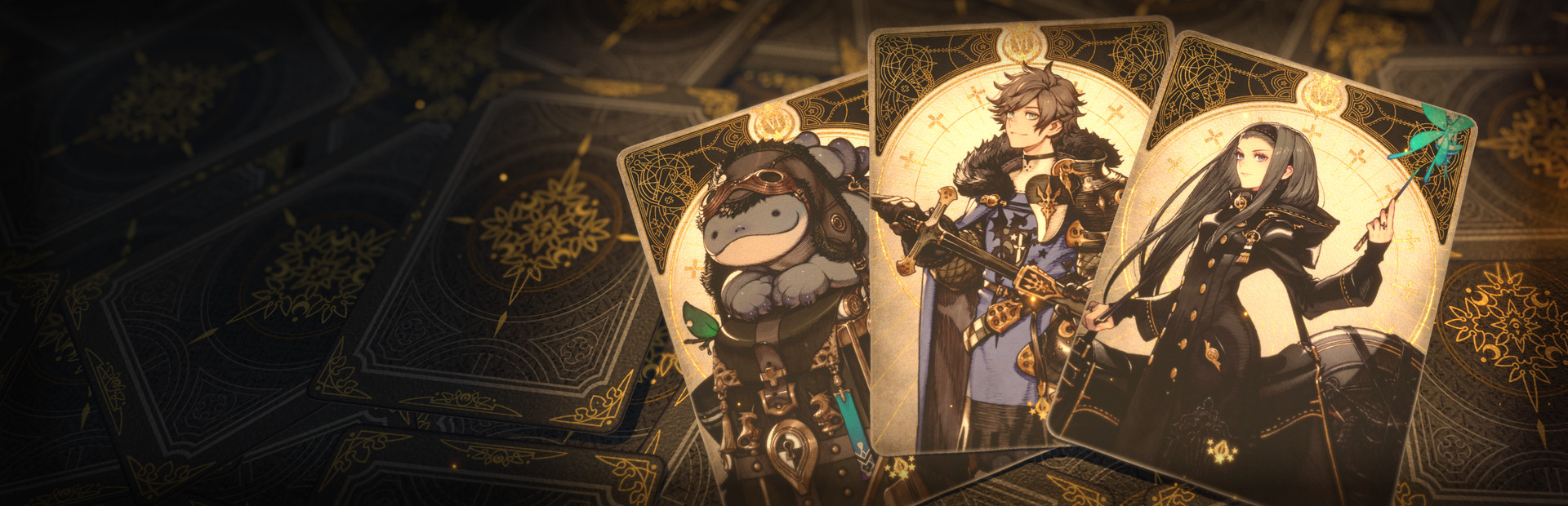
My instinct whenever I see the words 'Yoko Taro' and 'card game' in the same sentence is to sit up straight and start asking hard questions about systems depth. Voice of Cards: The Isle Dragon Roars answered most of those questions within the first hour, and the answer is: this is not the deep-cut strategy experience the name recognition implies. What it is, however, is something more interesting to recommend than its modest mechanics suggest. The entire world sits on a tabletop. Towns, overworld tiles, dungeon corridors - all of it is rendered as face-down cards that flip as your chess-piece avatar moves across adjacent spaces. A single Game Master narrates every line of dialogue, every battle result, every random event - and his performance genuinely sells the illusion of a late-night tabletop session with a very patient DM. Kimihiko Fujisaka's character art is gorgeous on those card faces, and Keiichi Okabe's score carries the same atmospheric Celtic weight you might expect from his Nier work. Presentation alone justifies most of the runtime. Combat is where the strategy-hungry part of my brain starts tapping its fingers. The core loop is classic JRPG: your four-card party takes turns attacking, healing, applying elemental skills, and managing status effects like poison and paralysis against enemies with listed attack and defense values. The gem system - where each completed turn deposits gems into a shared pool that you then spend on skills - is the one mechanical wrinkle worth noting, but the difficulty is low enough that gem management rarely becomes a meaningful decision. Happenstance cards add random buffs and debuffs mid-battle, which keeps things visually lively without adding real tension. For anyone who has run even a handful of turn-based RPGs before, the main campaign will be a brisk, undemanding ride. There is a separate card minigame available at Game Parlours in each town, playable solo or with up to four players locally, and that actually delivers the sharper moment-to-moment decisions the main combat lacks. Where the game earns genuine points is as an onboarding ramp. I rarely say this, but a person who has never touched a JRPG could finish this in a focused weekend - roughly 12 to 15 hours - without hitting a wall. All the genre furniture is here: equipment upgrades, elemental weaknesses, experience levels, a New Game Plus that unlocks a random-battle toggle. The story follows Ash and his companions Mar and Melanie as they chase a returning dragon under a royal bounty, and the narrative stays light in the first half before landing some better-constructed beats late. Collecting Mysterious Cards by talking to NPCs is tied to the best ending, so completionists have a concrete checklist. Four different endings based on choices at the finale give a thin but real reason to reload. One practical note: enable High Speed Mode the moment it appears in settings. At default pacing, card animations and menu confirmations drag the runtime out in a way that feels more like molasses than atmosphere. For the strategy-and-sim crowd I usually write for, this is not a resource-management puzzle or a build-order exercise. It is closer to a visual novel that occasionally asks you to pick Fire over Ice. But the free demo on Steam covers the prologue chapter in full, costs nothing, and gives an accurate picture of both the strengths and the ceiling. If the demo clicks, the full game delivers a consistent experience at that same register from start to finish - no bait-and-switch. It is also the first entry in a completed trilogy, so there is a clear path forward if the hook lands.

Strategy & simulation
Tags
System Requirements
Minimum
- OS
- Windows® 8.1/10 64-bit (ver.1909 and above)
- Memory
- 4 GB RAM
- DirectX
- Version 11
- Storage
- 5 GB available space
- Graphics
- AMD Radeon™ R7 260X / NVIDIA® GeForce® GTX 650 (VRAM 2GB)
- Processor
- AMD A8-7600 / Intel® Core™ i3-2100
- Sound Card
- DirectX® 11.0 Compatible Sound Card
Recommended
- OS
- Windows® 8.1/10 64-bit (ver.1909 and above)
- Memory
- 4 GB RAM
- DirectX
- Version 11
- Storage
- 5 GB available space
- Graphics
- AMD Radeon™ R9 270X / NVIDIA® GeForce® GTX 660
- Processor
- AMD A8-7600 / Intel® Core™ i3-2100
- Sound Card
- DirectX® 11.0 Compatible Sound Card
Keep exploring
Community Discussion
Be the first to comment on Voice of Cards: The Isle Dragon Roars.
Reviews & Ratings
No ratings available
Game Info
- Developer
- Square Enix
- Publisher
- Square Enix
- Release Date
- Oct 28, 2021