
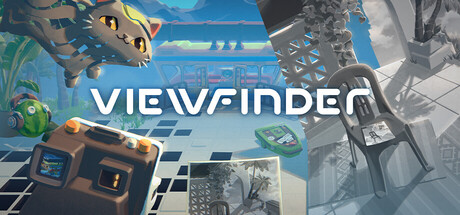
Viewfinder
A five-to-six-hour puzzle game built around one of the most genuinely original mechanics in recent memory - if you have ever wanted to fold a photograph into a bridge and walk across it, this is the only place that exists.
GamerScout Verdict
Built for puzzle fans who value craft and atmosphere over difficulty - a short, self-contained gem that sticks with you.
Compare Prices(8 stores)
Every store in this table quotes us in euros, so the EUR figure is the price the seller actually set, not our arithmetic — which is why EUR is also the currency we rank in. We only list an offer here when the store gives us its price in euros, so nothing in this table is a number we invented.
Pick USD, PLN, GBP, CAD or AUD in the header and we convert from EUR at the European Central Bank reference rate — converted amounts are prefixed with ~. Your bank or the store may apply a different rate at checkout. We never hide offers based on where you are: everyone sees this whole table.
We may earn a commission when you buy games through links on this page — at no extra cost to you. It never affects our rankings or verdicts.
Price History
Screenshots & Media
About Viewfinder
My first few minutes with Viewfinder felt like discovering a magic trick I couldn't explain. You pick up a photograph, hold it up to the world, and place it - and the flat image becomes solid three-dimensional space you can walk into, stand on, and puzzle through. That core "Polaroid Effect," as the developers privately called it during production, is not a gimmick dressed up as a mechanic. It is a mechanic that the entire game is honestly, carefully built around. Sad Owl Studios, a small Scottish team whose origins trace back to a solo developer experiment in 2019, structures Viewfinder across five hub worlds connected by a monorail inside a crumbling virtual simulation. The fiction matters just enough: a group of climate researchers tried to save Earth's plant life through this digital construct, and you are piecing together what went wrong, guided by your real-world partner and an AI Cheshire cat named Cait. The story lands its ending with genuine warmth even if the middle sections are thin. What keeps you moving is the puzzle design. Early levels ease you in with simple logic - find a photo of a bridge, place it across a gap, cross it. Collect batteries to power the exit teleporter. But the game escalates with real confidence: art in different styles can be projected to jump into entirely alternate realities, a photocopier lets you duplicate images into greyscale replicas, a Polaroid camera you eventually acquire lets you photograph the environment itself and reproduce it. Later puzzles introduce materials that resist being copied, forcing you to work with what the space gives you. The rewind mechanic, accessed by sitting in a chair scattered through each level, removes almost all friction from experimentation - you can undo literally anything, which keeps the mood curious rather than tense. The visual presentation earns its own attention. Floating islands, warm pastel tones, and a constantly shifting palette of art styles - watercolours, pencil sketches, child's drawings - mean that the world looks different depending on which images you have been layering into it. The soundtrack leans into jazz across the hub worlds, and that choice is deliberate: spontaneous, improvisational, unhurried. It matches the pace of a game that wants you to explore rather than rush. Collectibles are scattered throughout - notebooks, post-it notes from the researchers, rubber ducks, mahjong tiles - and they reward the curious without gating the main experience behind them. The honest criticisms are real but consistent across the critical reception: Viewfinder runs about five to six hours for a thorough playthrough, and the difficulty never reaches the point where seasoned puzzle veterans will feel truly challenged until optional late-game stages. The narrative structure is thin for most of its runtime. These are fair observations. But I would push back on treating them as disqualifying. This is a game that knows exactly when to end, introduces one brilliant idea and explores it from every angle without padding, and ships without a single rough edge in its core loop. It took a BAFTA for British Game and New Intellectual Property, won the Grand Prix at the Indie Game Award 2024, and sits at 84 on Metacritic with over 94 percent positive Steam reviews - the community response has been sustained and genuine. If you are coming in hoping for something close to The Witness in terms of density and difficulty, calibrate your expectations downward. If you want to spend an evening (or two) inside one of the most handcrafted, atmosphere-rich puzzle spaces released in the last few years, Viewfinder earns every hour it asks for.

Indie & narrative
Tags
System Requirements
Minimum
- OS
- Windows 10
- Memory
- 8 GB RAM
- DirectX
- Version 11
- Storage
- 20 GB available space
- Graphics
- GeForce GTX 970
- Processor
- Intel i5-9600K / AMD Ryzen 5
Recommended
Requires a 64-bit processor and operating system
Keep exploring
Community Discussion
Be the first to comment on Viewfinder.
Reviews & Ratings
Game Info
- Developer
- Sad Owl Studios
- Publisher
- Thunderful Publishing
- Release Date
- Jul 18, 2023