
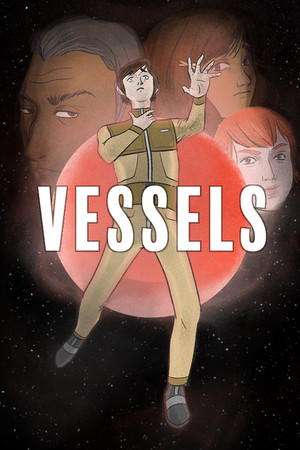
Vessels
A 2-3 hour student project that won an IGF award and still gets ignored. It deserves your afternoon more than most $60 releases deserve your weekend.
GamerScout Verdict
Essential for fans of tight narrative design who want a rare, writer-led sci-fi game that finishes before it overstays its welcome.
Compare Prices(2 stores)
Every store in this table quotes us in euros, so the EUR figure is the price the seller actually set, not our arithmetic — which is why EUR is also the currency we rank in. We only list an offer here when the store gives us its price in euros, so nothing in this table is a number we invented.
Pick USD, PLN, GBP, CAD or AUD in the header and we convert from EUR at the European Central Bank reference rate — converted amounts are prefixed with ~. Your bank or the store may apply a different rate at checkout. We never hide offers based on where you are: everyone sees this whole table.
We may earn a commission when you buy games through links on this page — at no extra cost to you. It never affects our rankings or verdicts.
Price History
Screenshots & Media
About Vessels
I keep a mental list of games that won awards and somehow still slipped past everyone, and Vessels sits near the top of it. It took an IGF 2021 Student Prize win and still couldn't land press coverage or a PR company willing to return calls. That obscurity is a genuine loss for anyone who enjoys science fiction that actually has something to say. You wake up quarantined in an airlock aboard the Kairos-03, a ship crewed by three people who are debating whether to space you. You have no name, no memories, and a mysterious Voice in your head that claims to be you. The loop-based structure gets going quickly: each time the crew ejects you, time resets and you carry forward what you learned. The early sessions are about something as small as discovering your own name. The later ones require you to understand the crew's fracture lines well enough to exploit them. It sounds bleak, and in the best way, it is. The three crew members, Rakesh, Peyton, and Marv, each want Esme (the host body you eventually possess) to be something different for them. Figuring out who needs what, and then weaponising that knowledge, is where the game's psychological texture lives. The possession mechanic is where Vessels separates itself from pure visual novel territory. Inhabiting the other crew members lets you physically explore the ship, overhear conversations you shouldn't have access to, and nudge events in ways that ripple across the dialogue later. The conversations themselves are the puzzles. There are no inventory items to combine or environmental switches to find. You are working with social levers, emotional pressure, and the accumulated context of prior loops. It sits, as one player put it, somewhere between a visual novel and a traditional adventure game, and the blend feels intentional rather than compromised. The writing carries real authorial weight. The director's background is in psychology and playwriting, and that shows in how each character is written as a bundle of competing self-images rather than a plot function. The game's thematic core, about performing versions of yourself to survive while your sense of a real self quietly collapses, gives every conversation a second layer that lingers past the credits. Multiple endings mean the two to three hour runtime is not entirely fixed, and subsequent runs feel worth doing rather than obligatory. If I am being honest about its limits: the visual presentation is functional and atmospheric but not lavish. This is a compact, intimate production with a small team and student-project origins. Players expecting environmental spectacle will be underwhelmed. What they will find instead is writing that punches above the weight of games with twenty times the budget, a mood that holds its tension without cheap horror tricks, and a structure that respects the player's time while quietly making them feel implicated in things they did not plan to do. That combination is rarer than it should be.

Indie & narrative
Tags
System Requirements
Minimum
- OS
- Windows 7 or higher
- Memory
- 4 GB RAM
- Storage
- 12 GB available space
- Graphics
- Video card with 512MB of VRAM or higher
- Processor
- Dual Core 2.1Ghz or higher
Recommended
Requires a 64-bit processor and operating system
Keep exploring
Community Discussion
Be the first to comment on Vessels.
Reviews & Ratings
No ratings available
Game Info
- Developer
- Local Space Survey Corps
- Publisher
- Local Space Survey Corps, LLC
- Release Date
- Dec 8, 2020