Verdant Village
A solo-dev farm-RPG with real craft behind it, stuck in Early Access limbo and undergoing an engine rebuild. Worth watching closely; worth buying cautiously.
GamerScout Verdict
Buy only if you are comfortable with a frozen Early Access build; the design ambition is real, but active development is unconfirmed.
Compare Prices(5 stores)
Every store in this table quotes us in euros, so the EUR figure is the price the seller actually set, not our arithmetic — which is why EUR is also the currency we rank in. We only list an offer here when the store gives us its price in euros, so nothing in this table is a number we invented.
Pick USD, PLN, GBP, CAD or AUD in the header and we convert from EUR at the European Central Bank reference rate — converted amounts are prefixed with ~. Your bank or the store may apply a different rate at checkout. We never hide offers based on where you are: everyone sees this whole table.
We may earn a commission when you buy games through links on this page — at no extra cost to you. It never affects our rankings or verdicts.
Price History
Screenshots & Media
About Verdant Village
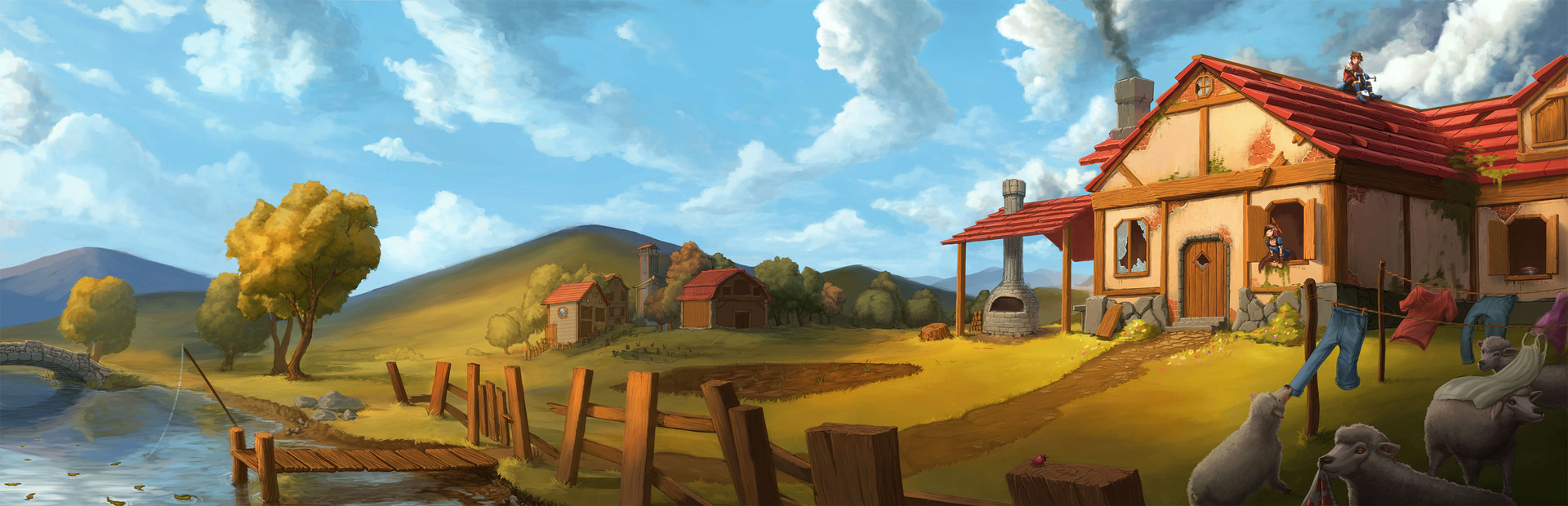
My spreadsheet instincts told me to flag this one immediately when I saw the Steam notice: the last developer update was over two years ago, the game is mid-engine-rebuild, and known bugs are being held until the new version ships. That context has to come first, because it shapes every other thing I say about Verdant Village. What you are buying right now is a functional but frozen snapshot of a solo-developed farm-RPG set in the medieval fantasy town of Amberglen, and your tolerance for that reality will determine everything. Once you set that caveat aside and actually play what is there, the design ambitions become clear. This is not a Stardew clone that swapped out the art. The developer made a deliberate choice to push the RPG side harder than the farming side, which gives the game a different rhythm from the start. Farming crops through spring, summer, and fall, with everything withering in winter, gives a seasonal planning loop that fans of the genre will find familiar. But the real texture comes from the skill paths: fishing, mining, cooking, alchemy, hunting, brewing, and archaeology each level independently, and none of them sits obviously above the others as the dominant money-making route. A five-level talent tree lets you spend accumulated experience on specific node bonuses rather than generic stat bumps, which is a cleaner progression design than most games in this tier manage. The stamina system, shared across nearly every action and replenished by food and sleep, is the core daily constraint that makes you actually think about what you are doing each in-game day. Tool upgrades reduce stamina drain per swing, so investment in your equipment has a tangible mechanical payoff, not just a number going up. The art direction is genuinely distinctive. The world-view character sprites recall SNES-era action RPGs, while NPC close-ups shift to a visual-novel anime style. Seasonal changes go well beyond palette swaps: summer nights bring fireflies, spring shifts the ambient lighting toward gold. It is handcrafted work that stands out in a crowded genre. Navigation, though, is a real friction point. Town layout and the placement of obstacles in outdoor zones like jungles and cliffs can force awkward diagonal shuffling that chews through in-game time. It is a solvable problem but it has not been solved yet, and with development paused for the engine migration, there is no timeline for a fix. The honest assessment for a strategy-minded buyer is this: the design bones are better than the Early Access competition at this price range usually delivers. The multi-path economy, the per-skill progression, and the seasonal planning loop all point to a developer who thought carefully about how systems interconnect. But combat is still absent from the live build, marriage and sailing remain listed as future features, and large sections of the map prompt "not yet implemented" messages. The engine rewrite is the wildcard. If it ships and restores feature parity plus the planned content, this becomes a much easier recommendation. Right now, with updates silent and bugs unfixed by design, you are buying a promise as much as a product. Patience is a prerequisite.

Strategy & simulation
Tags
System Requirements
Minimum
- OS
- Windows 7 or greater
- Memory
- 2 GB RAM
- Storage
- 400 MB available space
- Graphics
- 512 MB Video Memory
- Processor
- 2.0 GHz
Keep exploring
Community Discussion
Be the first to comment on Verdant Village.
Reviews & Ratings
No ratings available
Game Info
- Developer
- Exodus Software
- Publisher
- Exodus Software
- Release Date
- Aug 4, 2020