Vampire: The Masquerade — Parliament of Knives
Six hundred thousand words of cold-blooded Ottawa politics, and every choice you make leaves someone wanting you dead. For readers who want their fangs in a real story.
GamerScout Verdict
Best for World of Darkness fans who want dense political fiction over combat systems and will replay it at least twice to see the full shape.
Compare Prices(3 stores)
Every store in this table quotes us in euros, so the EUR figure is the price the seller actually set, not our arithmetic — which is why EUR is also the currency we rank in. We only list an offer here when the store gives us its price in euros, so nothing in this table is a number we invented.
Pick USD, PLN, GBP, CAD or AUD in the header and we convert from EUR at the European Central Bank reference rate — converted amounts are prefixed with ~. Your bank or the store may apply a different rate at checkout. We never hide offers based on where you are: everyone sees this whole table.
We may earn a commission when you buy games through links on this page — at no extra cost to you. It never affects our rankings or verdicts.
Price History
Screenshots & Media
About Vampire: The Masquerade — Parliament of Knives
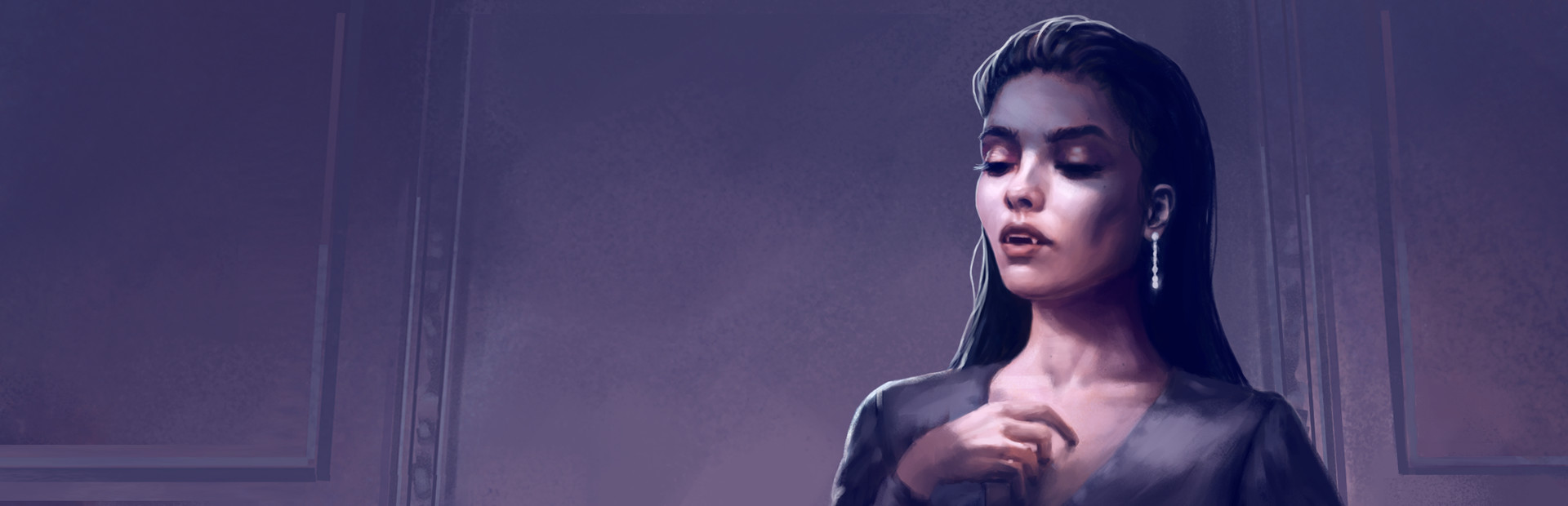
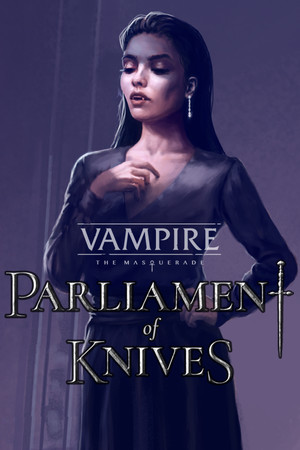
I have a soft spot for interactive fiction that trusts its premise completely, and Parliament of Knives trusts its premise completely. You are a fledgling ancilla in the Camarilla's Ottawa court, childe to Seneschal Eden Corliss, and the city's Prince has just vanished. That single absence cracks the ice the whole immortal court has been skating on for centuries, and within minutes of starting you are already triangulating loyalties, watching allies drift toward their own ambitions, and quietly deciding whether the chaos serves you better than stability ever did. Written by Jeffrey Dean and clocking in at over 600,000 words, this is a long read by any measure. The shape of it is pure Choice of Games: branching prose, stat tracking, and choices that ripple forward in ways you won't fully understand until a second or third playthrough. Clan selection gives you a genuine lens on events. The Ventrue lean on coercive dominance and social leverage, the Nosferatu work through dark stealth and information brokerage, and the Toreador bring heightened senses and an elegance that the other two lack. A later paid expansion adds Malkavian and Lasombra options with their own powers and dialogue threads. None of the three base clans feel cosmetic. The relationship system, which tracks your standing with individual vampires in percentage points rather than raw skill scores, is the mechanical spine the game builds everything else on. Burn a contact, and that door stays shut. The fair criticism, and it is a fair one, is that Parliament of Knives strips away much of the tabletop crunch that Night Road leaned into hard. There are no skill dots to distribute, no XP economy to optimize. If you arrived from Night Road expecting CRPG-adjacent stat management, this will feel softer. What it trades in mechanical density it earns back in political texture. Almost every character you meet is guilty of something. Corliss is not necessarily innocent. The Anarchs are not necessarily wrong. You can side with the Camarilla, court the Primogen, align with the Anarchs, or find the path that leads toward the Sabbat if you are patient and specific about your choices. The game has enough branching that early playthroughs will leave you with genuine blind spots, and the community around it is still mapping the full achievement list years after release. Steam reviews sit at 94 percent positive, which is a quiet but telling number for a text game with no spectacle to fall back on. The portrait art deserves a mention. The game is not a visual novel, but about a dozen character illustrations are scattered through the text, and they carry weight. They do not decorate the story so much as anchor specific faces to the voices you have been reading. The Nosferatu Sheriff looks nothing like you expect and the game knows it, and addresses it. That small bit of self-awareness is the tone Parliament of Knives plays in throughout: knowing, a little dark, never quite what the surface promises. If you are a World of Darkness reader first and a gamer second, this is the entry point the series has been building toward. If you need systems to feel agency, Night Road is still the stronger mechanical experience. But for mood, political writing, and the specific pleasure of a conspiracy that only fully clicks on run two, Parliament of Knives earns its length.

Indie & narrative
Tags
System Requirements
Minimum
Windows 7
Recommended
Requires a 64-bit processor and operating system
Keep exploring
Community Discussion
Be the first to comment on Vampire: The Masquerade — Parliament of Knives.
Reviews & Ratings
No ratings available
Game Info
- Developer
- Choice of Games
- Publisher
- Choice of Games
- Release Date
- Oct 28, 2021