Vampire Hunters
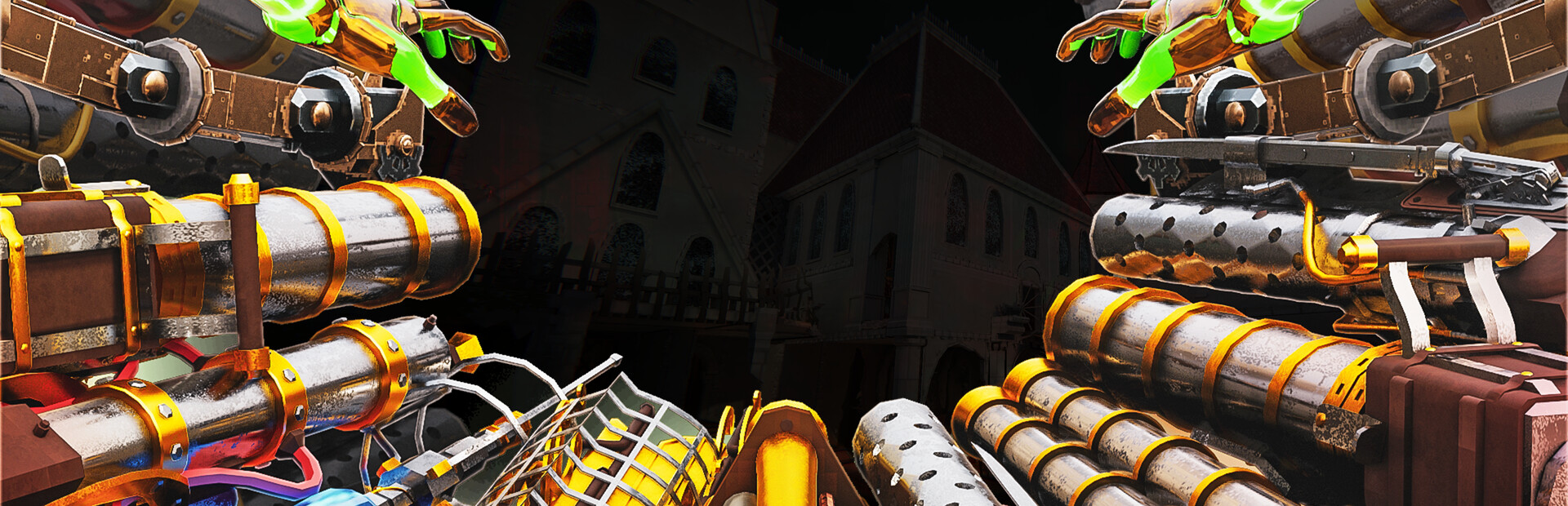
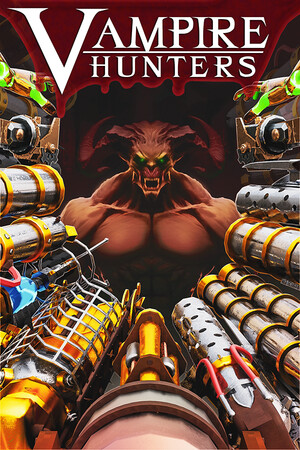
Stack up to 14 guns simultaneously and watch the screen dissolve into glorious chaos - this is the bullet-heaven roguelite formula dragged into first-person, and it works more often than it has any right to.
GamerScout Verdict
Best for survivors-genre fans ready to go first-person, with the caveat that long-term replayability runs thinner than its best-in-class peers.
Compare Prices(7 stores)
Every store in this table quotes us in euros, so the EUR figure is the price the seller actually set, not our arithmetic — which is why EUR is also the currency we rank in. We only list an offer here when the store gives us its price in euros, so nothing in this table is a number we invented.
Pick USD, PLN, GBP, CAD or AUD in the header and we convert from EUR at the European Central Bank reference rate — converted amounts are prefixed with ~. Your bank or the store may apply a different rate at checkout. We never hide offers based on where you are: everyone sees this whole table.
We may earn a commission when you buy games through links on this page — at no extra cost to you. It never affects our rankings or verdicts.
Price History
Screenshots & Media
About Vampire Hunters
I'll admit my expectations were modest when I first loaded this one up. The bullet-heaven genre has been cloned relentlessly since Vampire Survivors blew up, and most imitators just reskin the formula without asking what the perspective actually changes. Vampire Hunters asks that question, and the answer turns out to be surprisingly interesting. The core loop will read as familiar: you drop into an arena, enemies pour in from every direction, you level up by collecting souls and orbs, and each level-up hands you a random choice of new weapons or upgrades. What shifts everything is the first-person viewpoint. Enemies can slip in behind you, the levels have genuine verticality that forces you to climb, jump, and pivot, and suddenly positioning matters in a way it never did in a top-down survivors game. The weapon-stacking system is the real draw, though. You can equip up to fourteen weapons simultaneously, pulling from a roster that ranges from revolvers and SMGs to flamethrowers, miniguns, and a holy-water hose. Early runs feel thin - a couple of stiff-feeling guns that don't have much feedback - but the moment your build fills out and the screen becomes a dense corridor of overlapping projectiles and blood-mist gibbing, the whole thing clicks. Individual weapon feel is genuinely the game's weakest mechanical point, and a handful of guns remain underwhelming even at full build, but the cumulative chaos drowns it out. Two modes give the experience some shape. Survival mode drops you into crafted 3D arenas with multi-story layouts and coffin-spawners to destroy. Classic mode swaps arenas for long corridors chased by a deadly creeping fog, pushing you forward at a constant pace. Classic leans harder on timing and pacing, and introduces some mechanics - weapon combining, an engineering stat - that the game explains poorly and leaves you to figure out mid-run. The roster of playable characters is small but deliberate: each one has a distinct skill tree and individual upgrade paths, so swapping characters between runs genuinely changes how you build. Constellation cards and artifact unlocks add modifier-style challenge runs that can flip the whole ruleset if you want escalating difficulty. Permanent meta-progression through gold and base-stat upgrades means early deaths still feel productive rather than punishing. Visually, the game wears its retro roots openly. Angular, polygonal enemies and modest arena texturing put it somewhere in the territory of mid-90s PC gaming, and that is a deliberate aesthetic choice rather than a budget shortcut - it holds performance impressively well even when the screen is saturated with particle effects. The soundtrack leans into an electronic, almost disco-inflected energy that sits at an odd but oddly fitting angle to the Gothic setting, and the audio cues for different weapons give each run a tactile audio layer that the visual side alone could not carry. Where the presentation does genuinely struggle is the UI, which has been flagged by reviewers across the board as cluttered and sometimes opaque, particularly for new players sorting out the Classic mode. The honest ceiling on Vampire Hunters is that the loop runs out of surprises faster than the best entries in this genre. Once each character's tree is explored, runs start to converge on similar slaughterfests, and the lack of any multiplayer option keeps it strictly a solo experience. Players who cleared Vampire Survivors and Halls of Torment and want their next 15-20 hours in this space will find it a rewarding, distinct-feeling cousin rather than a step forward. Steam players have rated it around 89-90% positive across well over a thousand reviews, which is not a fluke score. It earned that by doing the thing it sets out to do - put you behind the eyes of someone wielding an absurd arsenal against endless undead - with enough craft to justify its running time.

Indie & narrative
Tags
System Requirements
Minimum
- OS
- Windows 10 64-bit or later
- Memory
- 4 GB RAM
- DirectX
- Version 11
- Storage
- 7 GB available space
- Graphics
- GTX 460 or equivalent
- Processor
- 2.4 GHz Quad Core processor or higher
- Sound Card
- One that can handle more than 5 sounds playing at the same time
Recommended
- OS
- Windows 10 64-bit or later
- Memory
- 8 GB RAM
- DirectX
- Version 11
- Storage
- 7 GB available space
- Graphics
- GTX 1650 or equivalent
- Processor
- 3.0 GHz Quad Core processor or higher
- Sound Card
- One that will make your ears bleeeeed
Keep exploring
Community Discussion
Be the first to comment on Vampire Hunters.
Reviews & Ratings
No ratings available
Game Info
- Developer
- Gamecraft Studios
- Publisher
- Gamecraft Studios
- Release Date
- Oct 30, 2024