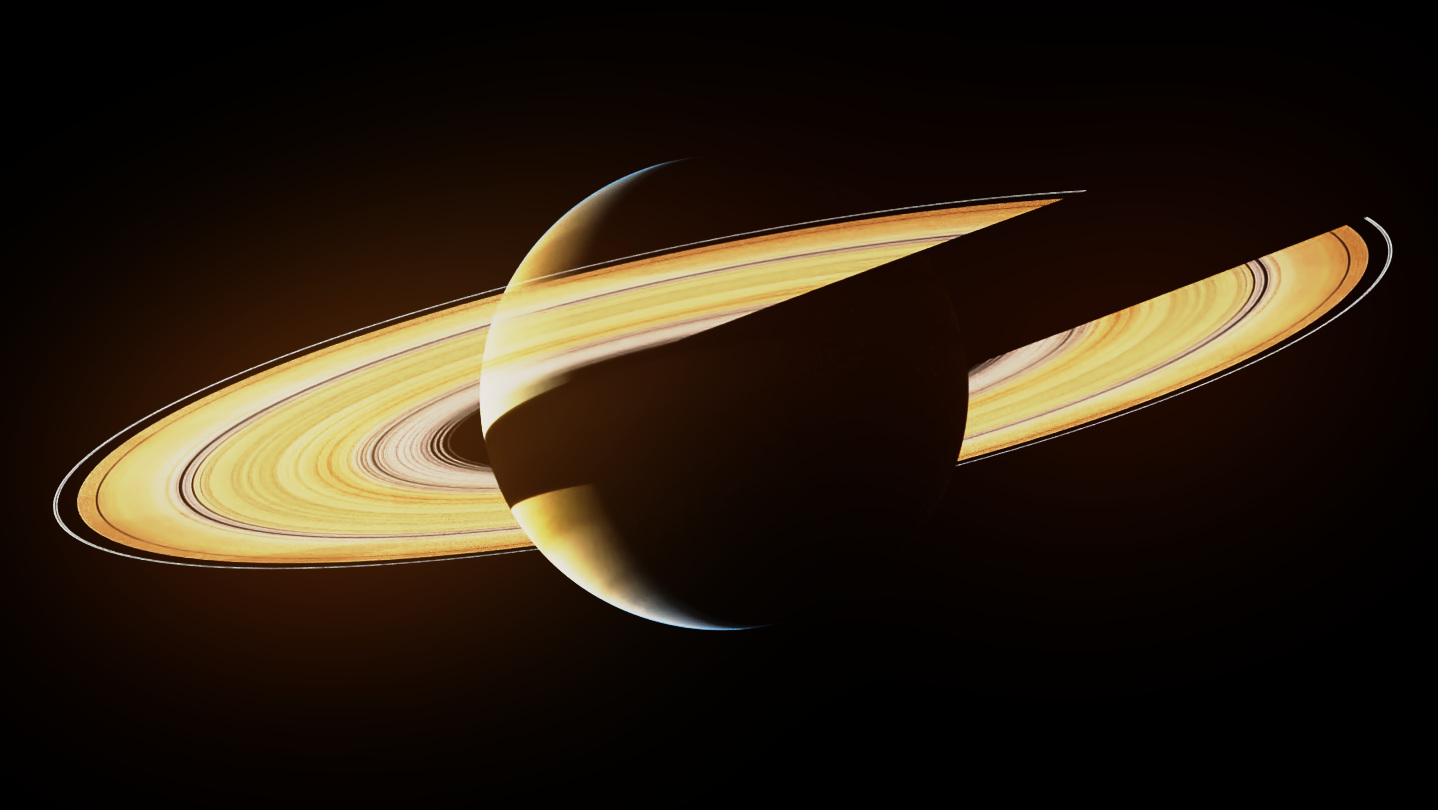
ΔV: Rings of Saturn
Hard-science mining sim set in Saturn's rings where Newtonian physics governs every decision. One thruster misfire can end your run.
GamerScout Verdict
Best for sim players who want their mining loop grounded in real physics and are willing to lose a ship learning the difference.
Compare Prices(5 stores)
Every store in this table quotes us in euros, so the EUR figure is the price the seller actually set, not our arithmetic — which is why EUR is also the currency we rank in. We only list an offer here when the store gives us its price in euros, so nothing in this table is a number we invented.
Pick USD, PLN, GBP, CAD or AUD in the header and we convert from EUR at the European Central Bank reference rate — converted amounts are prefixed with ~. Your bank or the store may apply a different rate at checkout. We never hide offers based on where you are: everyone sees this whole table.
We may earn a commission when you buy games through links on this page — at no extra cost to you. It never affects our rankings or verdicts.
Price History
Screenshots & Media
About ΔV: Rings of Saturn
ΔV: Rings of Saturn is a top-down, physics-based mining and survival sim that takes Newtonian mechanics seriously. You pilot a mining vessel through the dense debris field of Saturn's rings, using lasers to cut ore loose, managing momentum to dock without crumpling your hull, and treating your thruster output as both propulsion and, in a pinch, a weapon. There are no "go here, shoot that" quest markers. The game hands you a ship, a starting load-out, and a market board, and expects you to figure out the margins yourself. For players who like to build mental models of systems, this is crack. The physics simulation is the headline feature and it earns every piece of praise it gets. Lasers are invisible in vacuum - you only see the beam when it hits particulate matter, which means reading your environment is an active skill. Inertia persists exactly as it should, so combat and collision avoidance are the same problem with different time pressure. Stopping requires as much planning as accelerating, and collisions with ring debris are rarely forgiving. On paper this sounds punishing. In practice, once your brain recalibrates to thinking in vectors rather than directions, it becomes deeply satisfying in the way that a well-tuned spreadsheet model clicks into place. Progression runs through equipment upgrades and crew hiring. Different thruster configurations, laser mounts, and hull modules change the tactical calculus of each run meaningfully. A heavily armored barge plays nothing like a nimble scout with overclocked lasers. The crew system adds a layer of resource management: crew members have skills that affect specific subsystems, and keeping them paid and alive is a persistent background obligation. The trade loop - mine ore, read the market, haul to the best buyer, reinvest - is simple enough to grasp in the first hour but has enough variance in ore prices, field density, and equipment costs to stay interesting well into the mid-game. There is also a storyline woven into the rings that rewards exploration without demanding it. Where the game shows its indie seams is in the tutorial pacing and early UI friction. The physics model is taught incrementally and reasonably well, but the economic side - which stations buy what, how contracts interact with free trading - gets thin documentation. New players should expect to lose a ship or two to confusion rather than skill. The AI of neutral and hostile vessels is competent but not particularly clever; experienced players will find the threat level plateaus once they understand relative velocities. Mod support is present but the ecosystem is modest compared to larger titles, so do not bank on community content extending your hours dramatically. For the strategy-and-sim crowd, this sits in an interesting niche: it has the mechanical depth of a proper sim and the session structure of a roguelite-adjacent run-based game. If you have ever wished Elite Dangerous had a slower, crunchier, physics-honest version of its mining loop, this is very close to that. The 93% positive rating on over three thousand reviews is not an accident. Approach it with patience for the learning curve, keep notes on market prices your first few sessions, and the depth rewards you generously.

Strategy & simulation
Tags
System Requirements
Minimum
- Processor
- I5
- Memory
- 1 GB RAM
- Graphics
- Intel UHD 630
- Storage
- 512 MB available space
Recommended
Requires a 64-bit processor and operating system Additional Notes: Check the demo for performance - it is identical to full game build.
Keep exploring
Community Discussion
Be the first to comment on ΔV: Rings of Saturn.
Reviews & Ratings
Game Info
- Developer
- Kodera Software
- Publisher
- Kodera Software
- Release Date
- Jul 21, 2023