URBO
Closer to Threes than SimCity, URBO is the rare puzzle game that disguises genuine spatial strategy inside a deeply calming aesthetic. Worth it for anyone who needs their brain just busy enough to stop overthinking.
GamerScout Verdict
Best for puzzle fans who want meditative challenge without pressure - skip it if you expect a true city simulation.
Compare Prices(6 stores)
Every store in this table quotes us in euros, so the EUR figure is the price the seller actually set, not our arithmetic — which is why EUR is also the currency we rank in. We only list an offer here when the store gives us its price in euros, so nothing in this table is a number we invented.
Pick USD, PLN, GBP, CAD or AUD in the header and we convert from EUR at the European Central Bank reference rate — converted amounts are prefixed with ~. Your bank or the store may apply a different rate at checkout. We never hide offers based on where you are: everyone sees this whole table.
We may earn a commission when you buy games through links on this page — at no extra cost to you. It never affects our rankings or verdicts.
Price History
Screenshots & Media
About URBO
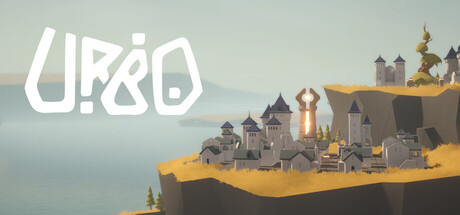
I loaded up URBO expecting ten minutes of low-stakes distraction and came back to check the clock two hours later, mildly stunned. That kind of quiet seduction is a craft in itself, and Door 407 have pulled it off with a game that looks like a screensaver but plays like a sneakily demanding logic puzzle. The core loop is a merge mechanic in the Threes / 2048 lineage: you receive buildings one at a time, place them on a geometric grid, and when three matching-level structures sit adjacent, they collapse into a single higher-tier one. Three level-one houses become a level-two, three level-twos become a level-three, and the chain can cascade all the way up to a level-eight tower that genuinely dominates the skyline. The satisfying crunch of a four-building merge triggering a power-up card - things like "swap two buildings" or "merge a structure with its surroundings" - gives each session a rhythm that pulls you forward. Sessions run roughly ten to twenty minutes each, which makes this an excellent lunchtime game, but the "just one more town" pull is real. What separates URBO from a bare-bones mobile clone is the surrounding craft. Six distinct landscapes are available, from Mediterranean fishing villages to desert canyon capitals and futuristic space-floating cities, each with its own color palette and ambient texture. Three times of day shift the light and mood. The audio design deserves a particular mention: the soundtrack is unhurried and almost architectural in structure, layering soft tones that feel tuned to the pace of the grid itself rather than bolted on. The whole soundscape is the kind of thing you might leave running on a second monitor just to ease the room. Beyond the main freeform mode, there is a puzzle mode with fixed grids that caught more than one reviewer off guard with its actual difficulty, and a sessional mode that imposes a hard building limit, forcing tighter planning. The honest caveats are mild but worth naming. The buildings are purely cosmetic in function - they do not have individual roles or needs, so players hoping for systemic city simulation will find the genre label a touch misleading. Growth through unlocking new landscapes and building types requires meeting in-game objectives, which can feel gated if you arrive expecting immediate variety. And the base game's content, while replayable, is finite enough that players who demand endless procedural sprawl (the Dorfromantik crowd) may want to temper expectations. A post-launch update did address an early criticism about building levels being hard to read visually, so the version on shelves now is cleaner than what launched. For the right player - someone who wants their hands occupied without their stress levels rising, who appreciates visual minimalism, who finds genuine joy in a well-timed merge cascade - this is an exceptionally well-made small thing. Rock Paper Shotgun called it "a small but perfectly formed puzzle game... that keeps you coming back for more", and that lands accurately. It knows exactly what it is, it executes that thing with care, and it ends each session with a photo mode so you can admire the little city you just grew before you close the lid.

Indie & narrative
Tags
System Requirements
Minimum
- OS
- Windows 7, 8, 10 64 bit
- Memory
- 4 GB RAM
- DirectX
- Version 11
- Storage
- 500 MB available space
- Graphics
- Nvidia GeForce GTX 750
- Processor
- Core i3 6xxx or better
- VR Support
- OpenXR, requires motion controller
Recommended
- OS
- Windows 7, 8, 10 64 bit
- Memory
- 8 GB RAM
- DirectX
- Version 11
- Storage
- 500 MB available space
- Graphics
- Nvidia GeForce GTX 960
- Processor
- Core i3 7xxx or better
- VR Support
- OpenXR, requires motion controller
Keep exploring
Community Discussion
Be the first to comment on URBO.
Reviews & Ratings
No ratings available
Game Info
- Developer
- Door 407
- Publisher
- Door 407
- Release Date
- Sep 13, 2023