Urbek City Builder
Urbek City Builder strips city-building back to resource chains and tech-gating, no mayor ratings, no budgets, just logistics puzzles that quietly eat your afternoon.
GamerScout Verdict
A tight resource-chain puzzler for build-order thinkers - just don't expect late-game chaos to keep pushing you past hour fifteen.
Compare Prices(10 stores)
Every store in this table quotes us in euros, so the EUR figure is the price the seller actually set, not our arithmetic — which is why EUR is also the currency we rank in. We only list an offer here when the store gives us its price in euros, so nothing in this table is a number we invented.
Pick USD, PLN, GBP, CAD or AUD in the header and we convert from EUR at the European Central Bank reference rate — converted amounts are prefixed with ~. Your bank or the store may apply a different rate at checkout. We never hide offers based on where you are: everyone sees this whole table.
We may earn a commission when you buy games through links on this page — at no extra cost to you. It never affects our rankings or verdicts.
Price History
Screenshots & Media
About Urbek City Builder
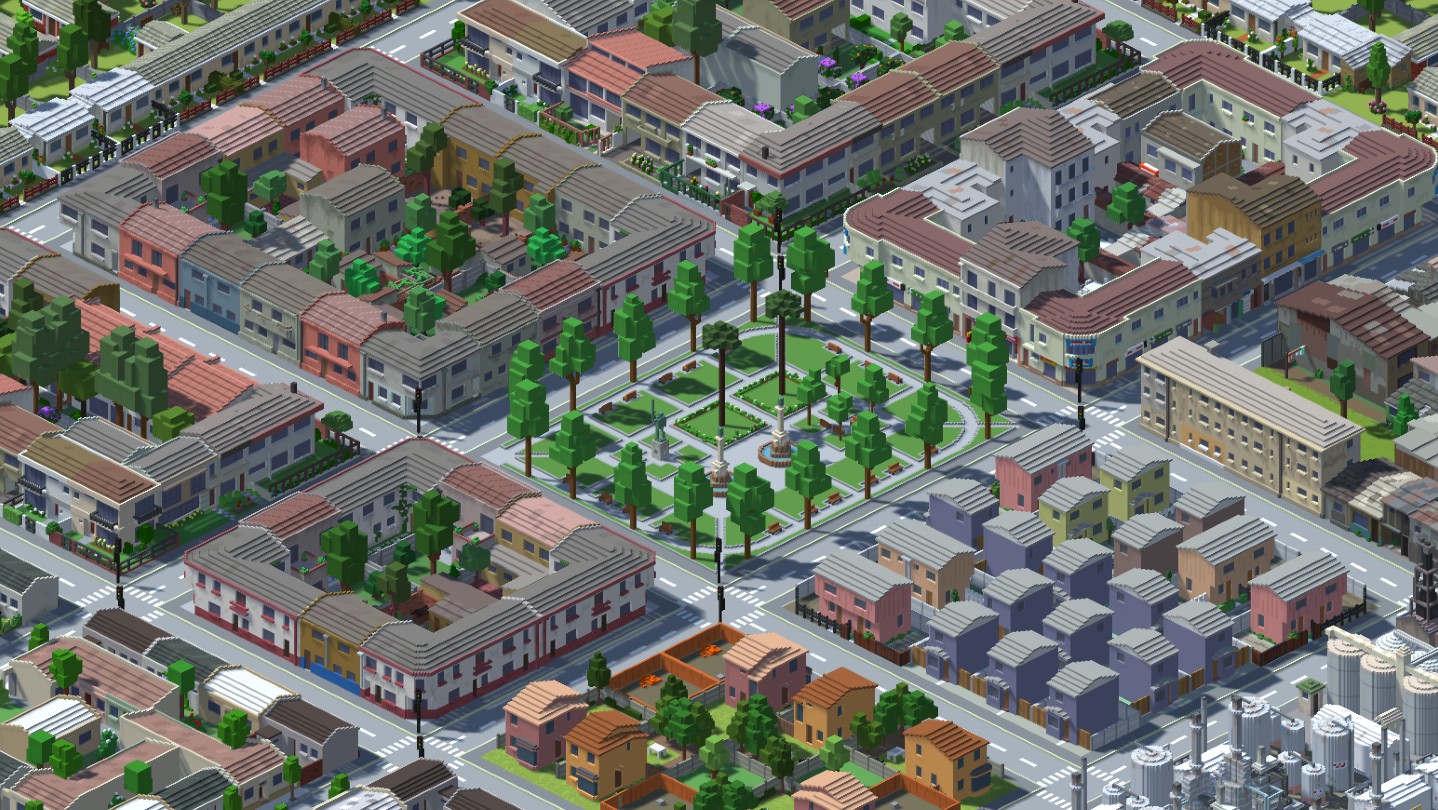
Urbek City Builder is a lean, resource-chain-focused city builder where the real game is not zoning land or managing citizen happiness meters but keeping a cascade of production lines fed without running your forests or ore deposits into the ground. You place buildings, those buildings consume raw inputs and produce outputs, and the whole thing scales in complexity as your population grows and unlocks more efficient structures. Think of it less like SimCity and more like a compact factory-builder that happens to produce a city-shaped silhouette. The central tension, and what separates Urbek from most of its genre neighbours, is the resource depletion mechanic. Natural resources are finite. Cut too many trees before you have the research and workforce to unlock sustainable lumber operations and you will hit a hard wall mid-game. That pressure forces you to think in build-order terms: which production chains need to come online first, which resource nodes to tap carefully, and when to prioritise education buildings so your population can staff the more efficient tier-two and tier-three structures. For anyone who has ever optimised a supply chain in a grand strategy game or mapped out a production tree on graph paper, this loop will feel immediately legible and satisfying. The district system adds a light layer of urban identity. You can cluster buildings into specialisations, nightlife districts, industrial zones, residential neighbourhoods, and each configuration has downstream effects on what workers are available and what amenities are satisfied. It is not a deep political simulation, nobody is going to riot over a tax hike, but it gives your cities a narrative shape beyond pure efficiency. Where Urbek falls short is in late-game variety. Once you have unlocked the main tech tiers and stabilised your resource loops, the challenge flattens noticeably. There is no crisis system, no rival city, no environmental pressure beyond what you create through your own mismanagement. Players who chase emergent chaos rather than optimisation targets may find the endgame quiet. For newcomers to the builder genre, Urbek is genuinely approachable. The tutorial covers the essentials without drowning you in menus, and the maps are small enough that mistakes are recoverable without a four-hour restart. That said, the game does respect your intelligence: it will not explain why your lumber supply crashed, it expects you to trace the chain yourself. That is the right call. Veterans will run through an initial map in a few hours, but the real hook is replaying with tighter resource constraints or self-imposed efficiency goals. A small but active mod community exists on Steam Workshop, extending build variety and adding new scenarios, which meaningfully extends the shelf life beyond the base campaign. If you are the kind of player who opens a second monitor to track production ratios, Urbek will scratch that itch in a compact, low-friction package. It is not trying to be a 500-hour simulation and it is better for that restraint. Ninety percent positive across nearly two thousand Steam reviews from a small indie release is a signal worth respecting, and the developer has continued to patch and balance the game post-launch.

Strategy & simulation
Tags
System Requirements
Minimum
- OS
- Windows 7 64 Bit / Windows 8 64 Bit / Windows 10 64 Bit
- Processor
- Intel Core i5-2500k or equivalent
- Memory
- 4 GB RAM
- Graphics
- NVIDIA GeForce GTX 770 2GB or equivalent
- DirectX
- Version 11
- Storage
- 2 GB available sp…
Recommended
- OS
- Windows 10 64bit
- Processor
- Intel Core i5-4590 or equivalent
- Memory
- 8 GB RAM
- Graphics
- NVIDIA GeForce GTX 960 4GB or equivalent
- DirectX
- Version 11
- Storage
- 2 GB available space
DLC & Add-ons for Urbek City Builder2
Expansions, DLC packs and add-on content for this game. Click any item to see store offers.
Keep exploring
Community Discussion
Be the first to comment on Urbek City Builder.
Reviews & Ratings
Game Info
- Developer
- Fridus
- Publisher
- RockGame S.A.
- Release Date
- Jul 13, 2022