
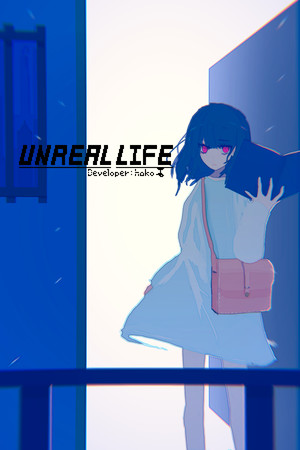
UNREAL LIFE
A five-to-seven-hour walk through grief and surrealism that trusts pixel art and an exquisite soundtrack to do the heavy lifting. If Yume Nikki or Ib ever made you feel seen, this one is waiting for you.
GamerScout Verdict
For players who want a quietly devastating five-to-seven-hour story and can tolerate a clunky UI, this handcrafted gem earns its place.
Compare Prices(7 stores)
Every store in this table quotes us in euros, so the EUR figure is the price the seller actually set, not our arithmetic — which is why EUR is also the currency we rank in. We only list an offer here when the store gives us its price in euros, so nothing in this table is a number we invented.
Pick USD, PLN, GBP, CAD or AUD in the header and we convert from EUR at the European Central Bank reference rate — converted amounts are prefixed with ~. Your bank or the store may apply a different rate at checkout. We never hide offers based on where you are: everyone sees this whole table.
We may earn a commission when you buy games through links on this page — at no extra cost to you. It never affects our rankings or verdicts.
Price History
Screenshots & Media
About UNREAL LIFE
My first instinct when I saw UNREAL LIFE was recognition. Something in the muted color palette, the liminal street scene, the sense that the world had rules it wasn't going to explain upfront. Solo developer hako life built this thing from the ground up, handling art, design, and much of the music personally, and that singular authorial voice bleeds through every corner of it. You play as Hal, a young woman who wakes on a city street with no memory, unable to read, accompanied only by Unit 195, a wireless AI traffic light who appoints herself as Hal's guardian. The central mechanic is psychometry: Hal can touch highlighted objects to read the memories locked inside them. It is a gentle puzzle hook, not a demanding one. Solutions occasionally require logic that runs counter to standard game conventions, like stepping into pure darkness where a wall ought to be, and once you calibrate to the world's internal rules the puzzles mostly give way quietly. A few reviewers noted that the puzzle difficulty sits closer to atmospheric storytelling device than brain-teaser, and they are not wrong. If you want grueling logic challenges, look elsewhere. If you want a mechanic that feels emotionally coherent with what the story is doing, the memory-reading fits like a hand in a glove. The writing carries tones of loss, displacement, and quiet longing, and the localization from Japanese to English is careful and clean. Hal's inability to read is a story choice hako life actually commits to, so when she and 195 encounter a retro video game minigame together, all the text renders as illegible pixel clusters. You play it blind, just as Hal would. That level of internal consistency in world-building is the kind of handcraft I pay attention to, and it shows up repeatedly. The soundtrack, composed partly by Hiraoka (DIA), earns its place too. Piano passages in locations like the Blue Whale hotel carry a dreamlike stillness, and the sound design underneath, ambient clatter of plates, distant running water, has real texture. Fair warnings before you go in. The story touches on bullying and suicidal ideation and the game carries no explicit content notice, so check yourself on that. The UI has some friction: the memory log and inventory are list-based and can become unwieldy in later chapters, and mouse navigation on PC is fiddly enough that a controller is genuinely the better call. Walk speed is slow and there is backtracking; the lack of a run button is a mild but recurring annoyance. Some players find the narrative threads confusing and exit feeling unsatisfied, which is a legitimate reading. Others find the deliberate gaps and multiple endings, with the game helpfully saving right at the branch point, land as poetry. Which camp you fall into probably depends on how much you trust a game to withhold cleanly. Runtime sits between five and seven hours. For a story this carefully assembled, that length feels right. UNREAL LIFE is not the game that changes what the medium is capable of, but it is the kind of game that reminds you why a single person with a specific vision can still make something that sticks around in your chest for days. Fans of Ib, Yume Nikki, Ghost Trick, or GRIS will find themselves on familiar emotional ground, and the developer's own published influence list confirms those comparisons are not accidental.

Indie & narrative
Tags
System Requirements
Minimum
- OS
- Windows 7/8/10
- Memory
- 2 GB RAM
- Processor
- Intel Core i5
Keep exploring
Community Discussion
Be the first to comment on UNREAL LIFE.
Reviews & Ratings
No ratings available
Game Info
- Developer
- hako life
- Publisher
- room6
- Release Date
- Nov 19, 2020