
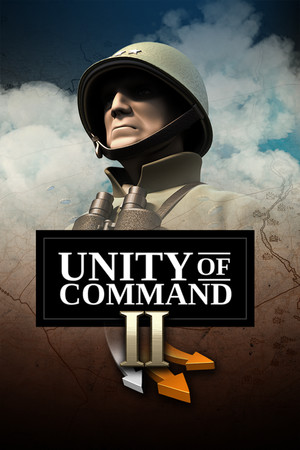
Unity of Command II
Supply lines decide battles here, not unit counts. If cutting off a Panzer corps feels more satisfying than destroying one, UoC2 is your game.
GamerScout Verdict
Closest thing to a modern wargame standard at this scale: mandatory for hex-and-counter fans, worthwhile for patient strategy players willing to read the manual.
Compare Prices(8 stores)
Every store in this table quotes us in euros, so the EUR figure is the price the seller actually set, not our arithmetic — which is why EUR is also the currency we rank in. We only list an offer here when the store gives us its price in euros, so nothing in this table is a number we invented.
Pick USD, PLN, GBP, CAD or AUD in the header and we convert from EUR at the European Central Bank reference rate — converted amounts are prefixed with ~. Your bank or the store may apply a different rate at checkout. We never hide offers based on where you are: everyone sees this whole table.
We may earn a commission when you buy games through links on this page — at no extra cost to you. It never affects our rankings or verdicts.
Price History
Screenshots & Media
About Unity of Command II
I keep a mental list of wargames I'd hand to someone who has never touched the genre, and Unity of Command II sits near the top. Not because it holds your hand, but because it respects your time. Scenarios run to tight turn limits, the map is clean and readable, and every decision you make feeds directly into a consequence you can trace. The Western Allied campaign opens in North Africa in 1943 and pushes north through Italy and into France, which is a dramatically different kind of war than the open steppe sprints the first game was built around. Where the original Unity of Command rewarded dash and encirclement on wide terrain, this one demands patience in mountain passes, attritional grinding through hedgerows, and careful reading of chokepoints that punish any overreach. The core system is built around supply, and that is not a minor sub-system bolted on for realism points. It is the whole game. Supplies flow from harbors or rail yards, distributed across the battle map by a limited pool of trucks and forward depots. Push your armor too far ahead of your supply network and those divisions go combat-ineffective, turning a breakthrough into a disaster. Cut the Axis supply line behind an enemy stack, and that stack withers without you firing a shot. The surround-and-starve loop is deeply satisfying, and the maps are designed specifically to reward flanking moves and rail seizures over frontal assaults. Units themselves are measured in steps, with specialist attachments like artillery, engineers, and self-propelled anti-tank guns changing how you approach each engagement. Engineers let you ignore river crossing penalties in set-piece assaults; artillery softens a fortified hex before your infantry goes in. Getting the right specialists to the right hex before a tight sub-objective deadline is the closest this game gets to having a build order, and it scratches that itch well. New in this sequel is the Headquarters system, which places army HQs on the map as active assets. Each HQ generates command points spent on special actions including emergency resupply, motorizing infantry, bridging operations, and combo attacks that chain artillery suppression into an armored breakthrough. Between scenarios, you attend conferences where Prestige earned from previous battles buys theater asset cards, things like extra air strikes per turn, additional supply trucks, or powerful one-time area strikes. The card hand size scales with difficulty, so harder settings genuinely change your resource ceiling and not just enemy stats. The AI holds up reasonably well, adapting to the varied terrain across campaigns, though some players have flagged it as overly passive in certain defensive situations. Here is the honest caveat for newcomers: the tutorial does not carry its full weight. Icon-heavy unit data cards, specialist assignments, and the distinction between suppressed and eliminated steps are all things you will learn from the external manual or community guides rather than in-game tooltips. That is a real friction point. The tight turn limits also push some scenarios closer to a puzzle than an open strategic sandbox, and players who want the freedom to lose a campaign slowly on their own terms may bounce off the difficulty of chasing gold-star objectives. The Workshop is active enough to expand the scenario pool, and the built-in scenario editor is straightforward to start using. Multiple DLC campaigns covering Blitzkrieg, Barbarossa, and Stalingrad extend the content well past the base Allied campaign, each bringing different operational conditions. The Metacritic score of 88 reflects a strong critical consensus that this is one of the better-designed wargames of its generation, and after spending considerable time with it I have no serious argument against that reading.

Strategy & simulation
Tags
System Requirements
Minimum
- OS
- Windows® 10 or newer (64-bit)
- Memory
- 4 GB RAM
- Storage
- 5 GB available space
- Graphics
- OpenGL 3.3+ supporting GPU with 1GB VRAM
- Processor
- Dual core processor
Recommended
- OS
- Windows® 10 64-bit
- Memory
- 8 GB RAM
- Storage
- 5 GB available space
- Graphics
- NVIDIA® GeForce® GTX 970 or AMD equivalent
- Processor
- 6th Generation Intel® Core™ i5 Processor or AMD equivalent
Keep exploring
Community Discussion
Be the first to comment on Unity of Command II.
Reviews & Ratings
Game Info
- Developer
- 2x2 Games
- Publisher
- 2x2 Games
- Release Date
- Nov 12, 2019